
Just a short walk from St James' Park sits one of Newcastle's best-loved neighbourhood pubs, but many visitors have little idea that The Cosy Dove stands in an area packed with centuries of fascinating history.
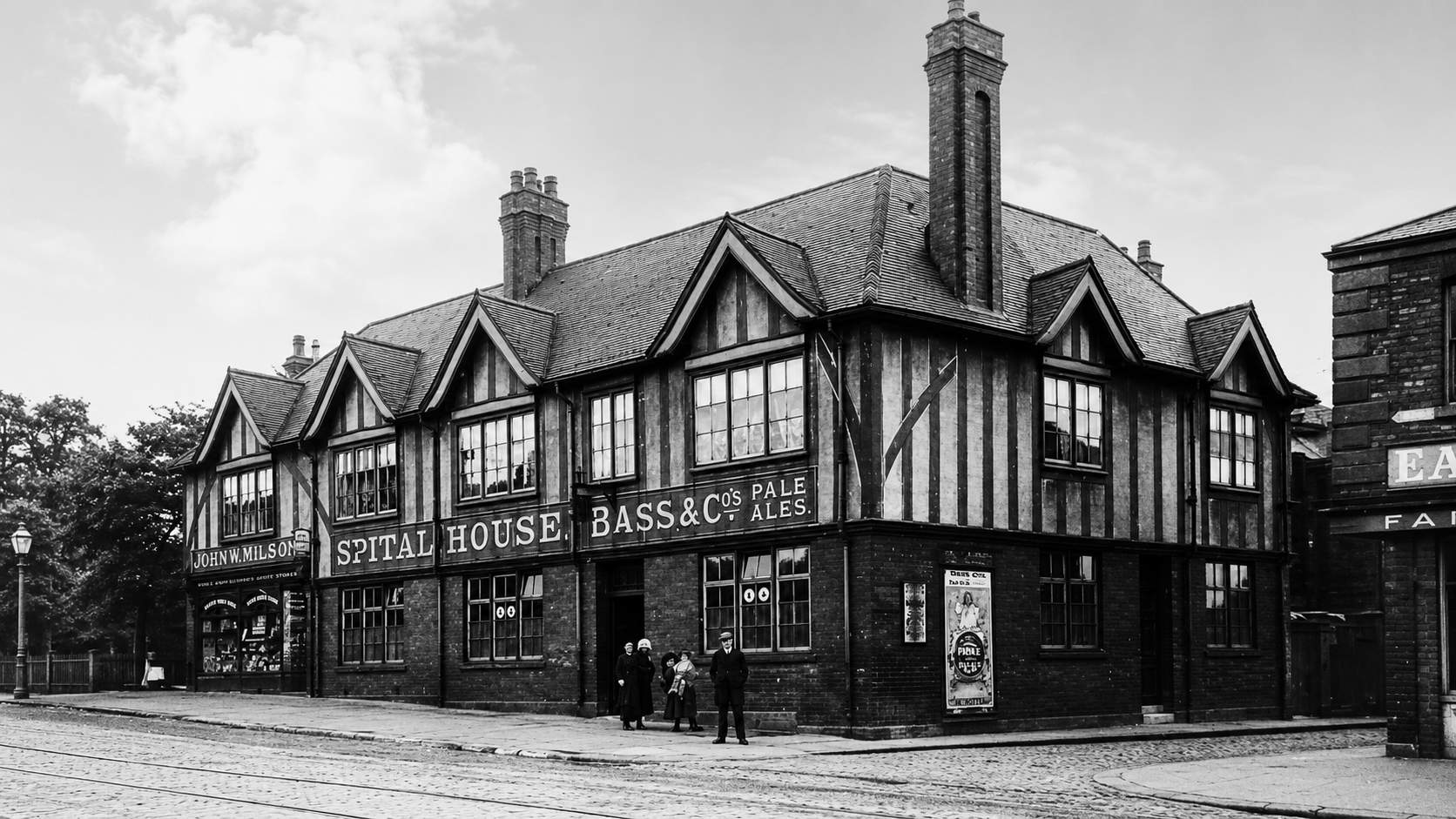
Known for its welcoming atmosphere, craft beers and roaring fire, the pub was formerly called Spital House, a name that reflected the remarkable heritage of Spital Tongues itself. Long before Newcastle expanded into the thriving city we know today, this quiet corner was home to hospitals, coal mines, grand houses and one of the city's earliest communities outside the medieval walls.
Today, the Cosy Dove has become a favourite among locals, students and football supporters, but its story is inseparable from the history of one of Newcastle's most unique districts.
Where does the name Spital Tongues come from.
The unusual name dates back more than 700 years.
"Spital" is an old word for hospital, while "tongues" referred to narrow strips of land. Historians believe King Edward I granted two parcels of land, or "tongues", to the medieval Hospital of St Mary Magdalene, which stood just outside Newcastle's city walls. Over time, the surrounding settlement became known as Spital Tongues.
For centuries the area remained largely rural, separated from Newcastle by the Town Moor, with farms, open fields and country houses dominating the landscape.
Even today, that sense of separation remains, despite the city centre being only minutes away on foot.
From quiet village to thriving community.
Everything changed during the Industrial Revolution.
The opening of Leazes Main Colliery, often known as Spital Tongues Colliery, in 1836 transformed the area almost overnight. Hundreds of miners moved into newly built housing, while shops, churches, schools and public houses soon followed.
Coal extracted beneath Spital Tongues travelled through the famous Victoria Tunnel, completed between 1839 and 1842, before reaching the River Tyne for export across the world.
Although the colliery itself closed in 1860 after little more than two decades, its influence shaped the neighbourhood for generations.
The story behind Spital House.
The building now occupied by The Cosy Dove operated for many years as Spital House, becoming a familiar landmark on Hunters Road.
It earned a reputation as a traditional community pub, attracting generations of local residents alongside workers, university staff and students from nearby Newcastle University.
Following a major refurbishment in 2016, the venue reopened under its current name, The Cosy Dove, with an emphasis on quality food, cask ales and creating what many describe as a village pub atmosphere within walking distance of Newcastle city centre.
Despite the rebrand, many long-time residents still fondly remember the building as Spital House.
Why the Cosy Dove remains so popular.
Part of the pub's appeal comes from its location.
Sitting just ten minutes from Haymarket Metro and close to St James' Park, it attracts a remarkably varied crowd. Matchday supporters, students, hospital workers and local families regularly share the same bar.
The venue offers changing cask ales, live sport, folk music evenings, quizzes and a large outdoor seating area, helping it retain its place as one of Newcastle's most popular neighbourhood pubs.
Unlike many city centre venues, it has managed to preserve a relaxed community atmosphere while adapting to changing tastes.
Spital Tongues is packed with hidden history.
The Cosy Dove is only one chapter in Spital Tongues' remarkable past.
The district was once home to Belle Grove Retreat, Newcastle's first private mental health hospital, later renamed Whiteknights.
Nearby Hunter's Moor Hospital also became an important healthcare institution after opening in 1893 and remained in use until the twenty-first century.
The area also contained furniture factories, tram routes, Victorian terraces and several historic public houses that served the growing mining community.
Many of these buildings have disappeared, but traces of their stories remain throughout the neighbourhood.
A place shaped by artists and industry.
Spital Tongues has long attracted creative figures as well as industrial workers.
Just a short distance from the Cosy Dove stood the Belle Grove Public House, where neighbouring house number 19 was once home to celebrated North East artist Ralph Hedley, whose paintings captured everyday Victorian life across Tyneside.
His work remains some of the most important visual records of Newcastle during the industrial era.
It is another reminder that this relatively small district played a surprisingly significant role in the city's cultural history.
Statistics that highlight the area's importance.
Several figures help explain why Spital Tongues remains such an interesting part of Newcastle.
The Hospital of St Mary Magdalene dates back to the 12th century, giving the area more than 800 years of recorded history.
Leazes Main Colliery operated from 1836 until 1860, helping fuel Newcastle's industrial expansion.
The Victoria Tunnel stretches for approximately 2.2 miles (3.5 kilometres) beneath Newcastle.
Newcastle University today educates more than 29,000 students, many of whom regularly visit pubs around Spital Tongues.
St James' Park has a capacity of just over 52,000, bringing thousands of supporters through nearby streets on matchdays.
These figures demonstrate how history, education, football and community life continue to overlap in this unique part of Newcastle.
A neighbourhood that continues to evolve.
Modern Spital Tongues looks very different from the mining village of the nineteenth century, yet its distinctive character remains.
Tree-lined streets, Victorian buildings and green spaces create an atmosphere unlike many other parts of the city. The Cosy Dove reflects that identity perfectly, balancing modern hospitality with a strong sense of local heritage.
For newcomers, it is simply an excellent place for food or a drink before the football.
For long-time residents, it represents decades of memories and a link to the area's remarkable past.
As Newcastle continues to grow, places like the Cosy Dove remind us that some of the city's most fascinating stories are found not in the busiest streets, but in the quieter corners where history has never really disappeared.
Share your experiences.
Have you ever stopped by the Cosy Dove for a quick drink?
Newcastle History
The Cosy Dove - A Local Newcastle Pub With An Incredible Past
Advertisement



Comments (0)
You must be logged in to post comments.
Don't have an account? Register here
No comments yet. Be the first to share your thoughts!