
More than six years after COVID-19 first emerged, the debate around vaccines continues to shape public health discussions across the UK. While the vast majority of people accepted COVID-19 vaccinations during the pandemic, a significant minority remained hesitant or openly opposed to vaccination programmes. That sentiment has not disappeared.
In Newcastle and across the North East, health officials have increasingly focused on understanding why some residents continue to distrust vaccines and how those attitudes could affect future public health campaigns. Although COVID-19 restrictions have long ended, experts warn that anti-vaccination sentiment remains one of the biggest challenges facing healthcare providers today.
Recent research involving more than 1.1 million people in England found that while many initially hesitant individuals eventually chose to get vaccinated, a smaller group continued to express strong anti-vaccine beliefs, low trust in health authorities and concerns about vaccine safety.
The North East's experience during COVID-19.
The North East was among the regions hardest hit during various stages of the pandemic. Communities across Newcastle, Gateshead, Sunderland and County Durham experienced prolonged pressure on healthcare services, businesses and families.
Vaccination centres became a familiar sight throughout the region, with thousands attending GP surgeries, pharmacies and mass vaccination sites. Early uptake rates were generally strong among older residents, helping reduce severe illness and hospital admissions.
However, health leaders also encountered pockets of resistance. Social media groups, online forums and community networks became channels for sharing vaccine misinformation. Claims about vaccine safety, effectiveness and long-term health impacts spread rapidly, often reaching people faster than official guidance.
Many public health experts now believe the pandemic exposed a growing trust gap between some communities and public institutions. That gap did not begin with COVID-19, but the pandemic brought it into sharper focus.
Why some people became vaccine sceptics.
Understanding vaccine hesitancy is often more complicated than simply labelling someone anti-vaccine.
Research has identified several recurring concerns among hesitant individuals. These include fears about side effects, concerns over how quickly vaccines were developed, distrust of pharmaceutical companies and scepticism towards government messaging.
Social media also played a major role. During the pandemic, misinformation circulated widely across platforms, often using emotional stories and personal experiences to challenge official health advice.
Some Newcastle residents interviewed by local organisations during the pandemic reported feeling overwhelmed by conflicting information. Others said they struggled to determine which sources could be trusted.
The result was a climate where uncertainty often replaced confidence, particularly among younger adults who perceived themselves as being at lower risk from COVID-19.
What the statistics tell us.
The overall picture remains encouraging. Millions of people across England accepted COVID-19 vaccines, helping reduce hospitalisations and deaths throughout the pandemic. NHS figures show more than 11.4 million COVID-19 vaccinations were delivered during the 2023 autumn campaign alone.
Yet the data also highlights ongoing challenges.
A major England-wide study found that among vaccine hesitant individuals tracked over several years, around 65 percent eventually received at least one COVID-19 vaccine dose. However, a persistent minority remained unvaccinated due to entrenched distrust and anti-vaccine beliefs.
Researchers have also found that vaccine hesitancy is often linked to factors such as deprivation, lower trust in institutions and exposure to misinformation. Certain ethnic minority communities have experienced lower vaccination rates, with some groups significantly more likely to be under-vaccinated than the national average.
These findings matter because vaccine uptake is not just about COVID-19. Public health officials worry that declining confidence in one vaccine programme can affect attitudes towards others.
The wider impact beyond COVID-19.
One of the most significant concerns among health experts is the effect vaccine scepticism may have on childhood immunisation programmes.
Recent reports show vaccination rates for several childhood diseases have declined across England. No routine childhood vaccine currently meets the World Health Organization's recommended 95 percent coverage target.
Approximate figures that may interest readers include:
MMR vaccination coverage among five-year-olds in England stands at around 84 percent.
The WHO recommends 95 percent coverage to maintain herd immunity.
Thousands of measles cases have been recorded in recent outbreaks across the UK.
Most measles infections occur among unvaccinated individuals.
For Newcastle and the wider North East, maintaining strong vaccination rates remains critical. Public health officials warn that diseases once considered largely under control could return if vaccine uptake falls significantly.
Newcastle's public health challenge.
Newcastle has traditionally benefited from strong healthcare infrastructure, including support from the NHS, local authorities and academic institutions such as Newcastle University.
However, local health leaders face many of the same challenges seen elsewhere in the UK. Misinformation can spread quickly online, while declining trust in institutions has become a broader social issue.
Public health campaigns increasingly focus on engagement rather than instruction. Instead of simply telling people to get vaccinated, healthcare professionals are spending more time answering questions, addressing concerns and building trust.
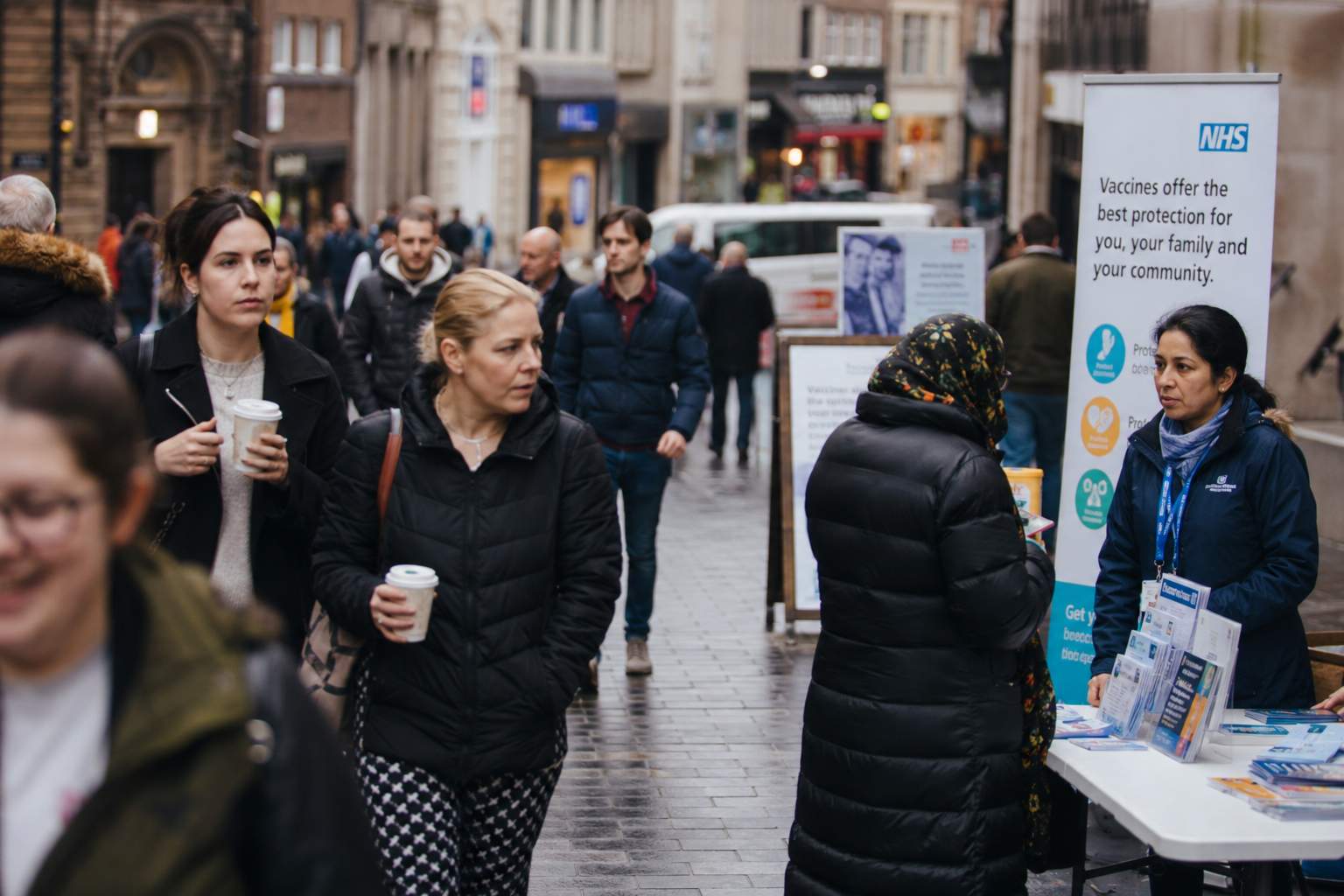
Community outreach programmes, local health events and targeted information campaigns have become important tools for improving confidence in vaccination.
Experts argue that trust is often built through personal conversations rather than national advertising campaigns alone.
How social media changed the debate.
Few factors have influenced vaccine sentiment more than social media.
During the pandemic, platforms such as Facebook, X, TikTok and YouTube became key battlegrounds for information. Accurate medical guidance often competed directly with conspiracy theories, misleading videos and unverified claims.
Researchers studying vaccine hesitancy in the UK identified misinformation and distrust as two of the strongest drivers of vaccine resistance.
Unlike traditional media, social platforms allow content to spread rapidly through personal networks. A claim shared by a friend or family member can sometimes carry more influence than advice from an official source.
This creates challenges for public health officials, particularly when misinformation appeals to emotions rather than evidence.
For younger audiences in Newcastle and across the North East, social media remains one of the primary ways health information is consumed, making digital literacy increasingly important.
Lessons learned from the pandemic.
The COVID-19 vaccination programme remains one of the largest public health initiatives in British history.
While debates over lockdowns, restrictions and vaccine policies continue, many experts agree that future health emergencies will require stronger public trust and better communication.
Studies suggest that most vaccine hesitancy is not permanent opposition. Many people simply want reassurance, evidence and transparent information before making healthcare decisions.
This distinction is important because it highlights opportunities for engagement rather than confrontation.
In Newcastle, as elsewhere in the UK, public health professionals increasingly recognise that listening to concerns may be just as important as delivering information.
Looking ahead.
Anti-vaccination sentiment remains a visible part of the UK's post-pandemic landscape. Although most people accepted COVID-19 vaccines, mistrust continues to influence a smaller but significant group of residents.
For Newcastle and the wider North East, the challenge now is ensuring that lessons learned during the pandemic are not forgotten. Future vaccination campaigns, whether for seasonal illnesses or emerging health threats, will depend heavily on public confidence.
The debate surrounding vaccines is unlikely to disappear anytime soon. What may change is how communities, healthcare providers and policymakers work together to address concerns before they become barriers to public health.
Vaccination remains one of the most effective tools available to modern medicine, but maintaining trust may prove just as important as developing the vaccines themselves.
Have your say.
What do you think has driven vaccine hesitancy in Newcastle and across the UK?
Health News
Anti-Vaccine Misinformation's Lasting Impact Revealed
Advertisement





Comments (0)
You must be logged in to post comments.
Don't have an account? Register here
No comments yet. Be the first to share your thoughts!