
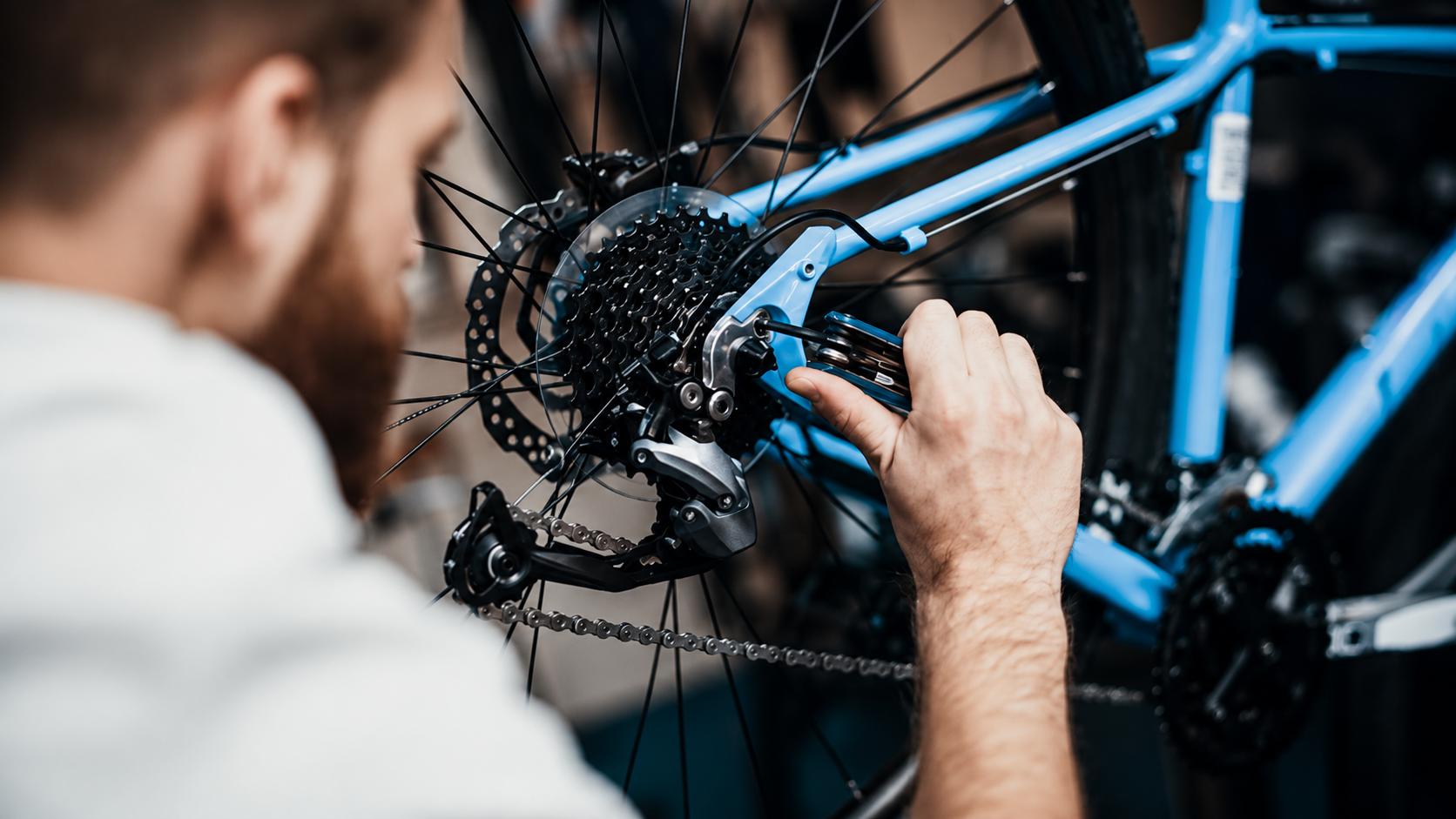
A bicycle is a remarkably simple machine, and yet an enormous number of them sit unused in sheds across Newcastle because something minor went wrong and nobody knew how to fix it. Flat tyre, squealing brakes, a chain that jumps: all of these are twenty-minute problems that turn into permanent retirement.
The skills involved are genuinely basic. A person capable of assembling flat-pack furniture is comfortably capable of maintaining a bike, and the tools cost less than a single visit to a shop.
The check before every ride takes a minute.
The traditional shorthand is air, brakes, chain.
Squeeze the tyres. They should be firm, and the correct pressure range is printed on the sidewall. Underinflated tyres cause punctures, make pedalling harder and handle badly, and most bikes on the road are running well below where they should be.
Pull both brake levers. They should engage firmly without reaching the handlebar, and the wheels should not turn when applied.
Look at the chain. It should be clean enough to see the individual links and should have a light film of lubricant rather than a black paste or a dry grey finish.
Lift each wheel a few inches and drop the bike. Anything loose will rattle and announce itself.
Check quick releases and thru-axles are properly closed, since a wheel coming out at speed is the one genuinely dangerous failure on this list.
Tyre pressure is the single biggest easy win.
Buy a track pump with a gauge. It costs a modest amount, lives in the shed and inflates a tyre in ten seconds rather than the several exhausting minutes a mini pump requires.
Check pressures weekly, since all tyres lose air gradually and narrow high-pressure tyres lose it noticeably faster than wide ones.
Getting the pressure right transforms how a bike rides more than any other single adjustment.
Fixing a puncture is a fifteen-minute skill.
Learn it once and you will never be stranded again.
Remove the wheel, release any remaining air, and use tyre levers to lift one bead of the tyre off the rim. Remove the tube, then run your fingers carefully around the inside of the tyre to find whatever caused the puncture, because putting a new tube in on top of a thorn achieves nothing.
Either patch the tube or fit a new one. Inflate the tube slightly so it holds its shape, seat it inside the tyre, work the bead back on to the rim with your thumbs rather than levers where possible, and check the tyre is seated evenly all the way round before inflating fully.
Carry a spare tube, two levers and a pump or a carbon dioxide inflator on any ride you would not want to walk home from.
Chain care makes everything work better.
A dirty chain wears itself and the more expensive components it drives. Cleaning and lubricating it is the highest-value maintenance task there is.
Degrease it, dry it, then apply lubricant to each link while backpedalling, leave it a few minutes and wipe off all the excess. The lubricant needs to be inside the rollers, not coating the outside, and excess simply attracts grit.
Use wet lubricant in winter and dry lubricant in summer if you want to be precise about it, though any bicycle-specific lubricant is far better than none.
Chains stretch as they wear, and a worn chain destroys the cassette and chainrings. A chain wear indicator tool costs very little and tells you when to replace, which saves considerably more than it costs.
Brakes and cables.
Rim brake pads wear and have a wear line marked on them. Replacing them is straightforward, and pads should contact the rim squarely without touching the tyre.
Disc brakes are more powerful and less forgiving of contamination. Never touch the rotors or pads with oily fingers, and clean rotors with isopropyl alcohol rather than anything else.
Cable-operated brakes and gears have barrel adjusters that take up slack. Turning the adjuster outwards tightens the cable, which fixes both weak brakes and gears that will not shift onto a larger sprocket.
Fraying cables should be replaced before they break, and a snapped brake cable is worth avoiding.
Storage and security.
Storing a bike outside in Newcastle weather without protection will corrode chains, cables and bearings within a season. A cover, a shed or an indoor space extends a bike's life enormously.
Security matters. Use a good D-lock rather than a cable, lock the frame to something immovable, and lock through the frame and rear wheel rather than only the front.
Register the frame number on a national bicycle database and photograph the bike. Recovered bikes are frequently never returned to owners simply because there is no way to prove ownership.
Where to get help locally.
Newcastle has a number of community bike projects and reuse organisations that refurbish donated bikes, sell them affordably and run workshops where you can learn to do repairs yourself with tools and guidance available.
These are excellent value, environmentally sensible and considerably friendlier than the intimidating end of the cycling world. They are also frequently short of volunteers and donated bikes.
Bike shops will do a full service, and an annual service on a bike used regularly is money well spent for the things that are harder to do at home, including wheel truing, bearing adjustment and gear indexing.
Share your thoughts.
Is there a bike sitting unused in your shed because of something small you never got round to fixing?
Lifestyle News
Basic Bike Maintenance Everyone Should Know
Advertisement




Comments (0)
You must be logged in to post comments.
Don't have an account? Register here
No comments yet. Be the first to share your thoughts!