
Capital punishment remains one of the world's most controversial legal punishments. While many countries have abolished the death penalty entirely, others continue to use it for crimes ranging from murder to drug trafficking and terrorism. The differences between legal systems are striking, and they continue to shape political debate across the globe.
The topic has attracted renewed attention in Britain following recent opinion polls suggesting support for restoring the death penalty has increased among some sections of the public. In Newcastle and across the North East, where universities, legal professionals and historians regularly examine criminal justice issues, the international comparison provides an opportunity to understand how Britain's laws differ from those of other major nations.
Britain's approach to capital punishment.
The United Kingdom abolished the death penalty for murder in 1965 before making the change permanent in 1969. The final remaining offences carrying capital punishment were removed from UK law in 1998, bringing Britain fully into line with European human rights standards. Today, life imprisonment represents the maximum criminal sentence available.
Newcastle's legal history reflects that wider national journey. Historic courts, former prisons and local archives preserve records from an era when executions formed part of Britain's justice system. Those records now serve as reminders of how dramatically criminal law has evolved over the past century.
The United States remains divided.
Unlike Britain, the United States continues to retain the death penalty in many parts of the country. Laws vary from state to state, with some jurisdictions actively carrying out executions while others have abolished capital punishment or imposed long-standing moratoriums.
According to the Death Penalty Information Center, more than half of US states have now either abolished the death penalty or have not carried out executions for many years. However, executions continue in several states each year, making the United States the only G7 nation that still regularly carries out capital punishment.
Public opinion also remains divided, with support varying depending on the type of crime and the wording of surveys.
France, Germany and Italy reject capital punishment.
France carried out its last execution in 1977 before abolishing the death penalty in 1981. Germany abolished capital punishment after the Second World War through its post-war constitution, while Italy has prohibited the death penalty for ordinary crimes for decades and now bans it under all circumstances.
These countries share Britain's commitment to the European Convention on Human Rights, which prohibits the use of capital punishment in peacetime.
Across Europe, abolition has become the legal norm, with almost every European nation removing the death penalty from its criminal justice system.
Australia and Canada follow a similar path.
Australia abolished the death penalty across all jurisdictions by 1985, while Canada ended capital punishment for ordinary criminal offences in 1976 before removing it completely under military law in 1998.
Both countries continue to cooperate closely with Britain on criminal justice matters while maintaining legal systems that focus on long prison sentences for the most serious crimes rather than executions.
Like Newcastle and other British cities, Australian and Canadian communities continue to debate sentencing, rehabilitation and crime prevention without capital punishment forming part of modern law.
Iran remains one of the world's leading executioners.
The legal position in Iran is dramatically different. Capital punishment remains available for a wide range of offences, including murder, some drug offences and certain crimes against the state.
According to Amnesty International, Iran carried out at least 972 known executions during 2024, accounting for around 64 percent of all confirmed executions recorded globally that year. Iran, Iraq and Saudi Arabia together were responsible for approximately 91 percent of known executions worldwide.
Human rights organisations continue to express concern about the scale and application of the death penalty in the country.
Global statistics highlight changing trends.
Recent international figures show that capital punishment is becoming less common overall, even though executions increased in a small number of countries.
Amnesty International recorded 1,518 known executions across 15 countries during 2024, representing the highest confirmed total since 2015. The figure does not include China, where execution data remains a state secret and is believed to number in the thousands each year.
Globally, 144 countries have now abolished the death penalty in law or practice, while 110 have abolished it completely for all crimes. Only 54 countries continue to retain and actively use capital punishment.
Drug-related offences also remain a major factor. Amnesty estimates that more than 42 percent of known executions in 2024 were linked to drug offences, despite international human rights standards generally restricting capital punishment to the "most serious crimes".
What does it mean for Newcastle and the North East.
Although capital punishment is no longer part of British law, the subject continues to generate discussion among legal experts, students and historians throughout the North East.
Newcastle University and Northumbria University both have respected law schools where criminal justice, sentencing policy and international legal systems are regularly studied. Comparing Britain's legal framework with those of the United States, Iran and other countries provides valuable insight into how different societies approach punishment, public safety and human rights.
The debate is also relevant because public opinion can change over time. While Britain has abolished the death penalty for decades, surveys continue to show that a significant proportion of the public support its return for certain offences. Whether that opinion should influence future law remains one of the most controversial questions in modern criminal justice.
A debate that continues worldwide.
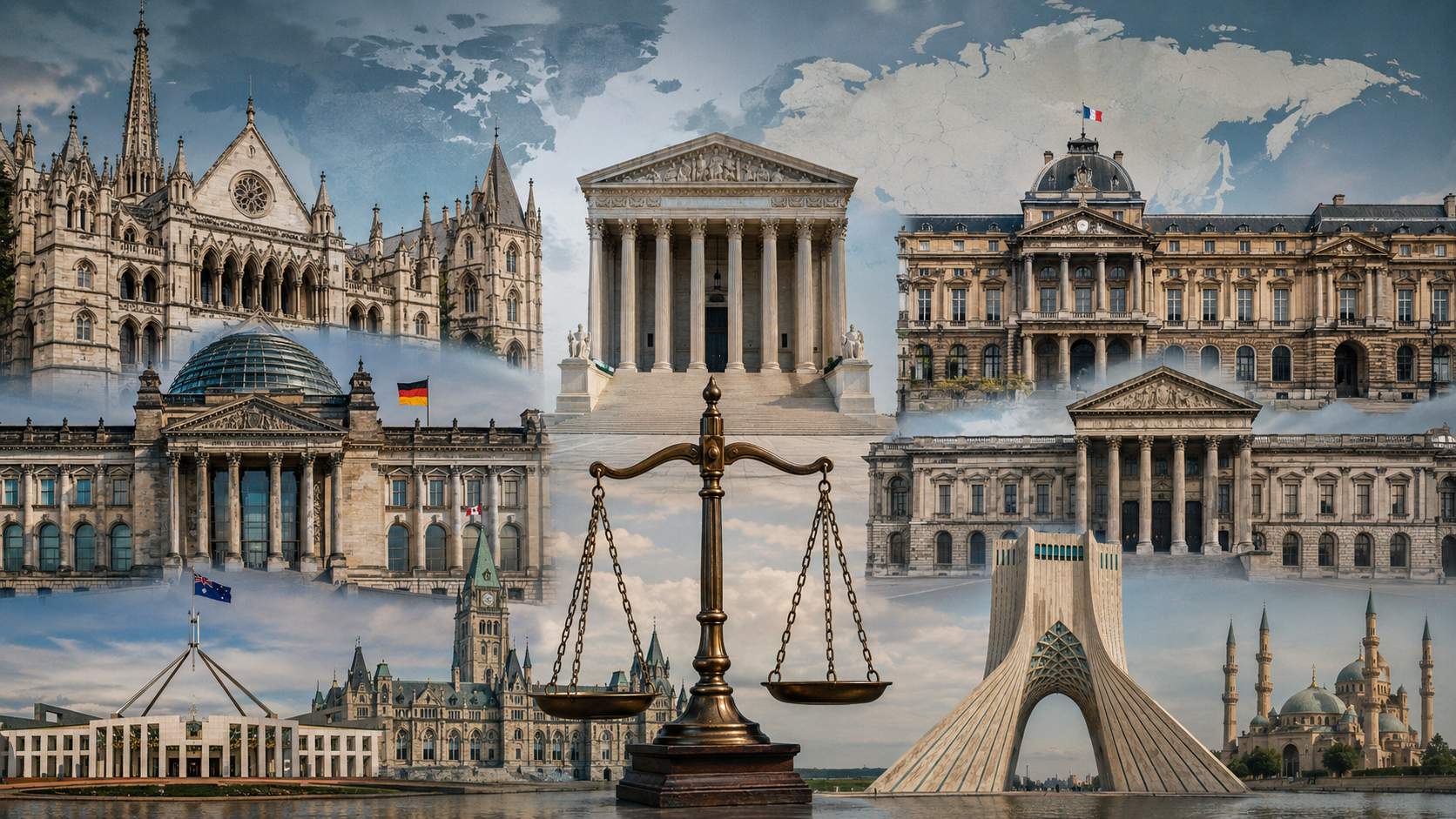
International comparisons show there is no single global approach to capital punishment. Britain, France, Germany, Italy, Australia and Canada have all rejected executions as a criminal sentence, while the United States remains divided and Iran continues to make extensive use of capital punishment.
For readers in Newcastle and across the North East, these differences offer a fascinating insight into how legal systems evolve alongside public opinion, politics and human rights. As countries continue to review their criminal justice policies, the global debate surrounding the death penalty shows no sign of disappearing.
Share your opinions below.
How do you think Britain's approach compares with other countries?
Crime News
Britain's Death Penalty Ban in Global Context
Advertisement





Comments (0)
You must be logged in to post comments.
Don't have an account? Register here
No comments yet. Be the first to share your thoughts!