
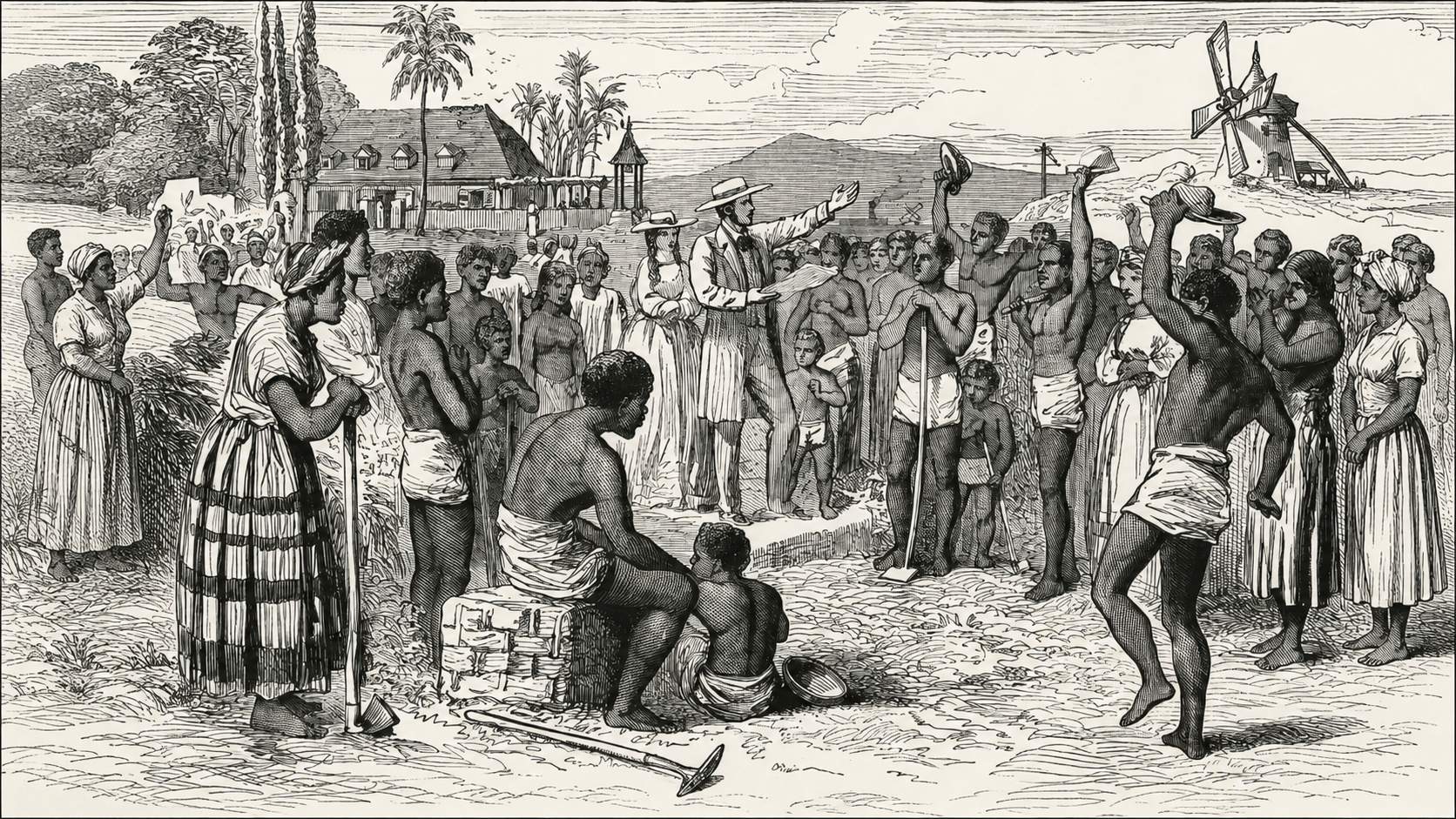
Today marks the anniversary of one of the most significant moments in British history. On 1 August 1834, the Slavery Abolition Act officially came into force across most of the British Empire, legally ending the institution of slavery for hundreds of thousands of enslaved people. It was the result of decades of campaigning, public pressure and political debate, yet it was also a compromise that left many people waiting even longer for genuine freedom.
Although Newcastle and the wider North East were never major slave trading centres like Liverpool or Bristol, the region was far from disconnected from Britain's colonial economy. Wealth generated through imperial trade, shipping, banking and investment reached communities across the North East, while local campaigners also played their part in the growing abolition movement. Nearly two centuries later, historians continue to uncover how deeply Britain's regions were connected to one of the darkest chapters in world history.
What happened on 1 August 1834.
The Slavery Abolition Act had been passed by Parliament in 1833, but it officially became law on 1 August 1834. More than 800,000 enslaved people across British colonies were legally emancipated, making it one of the largest acts of emancipation in history.
However, freedom did not arrive equally for everyone.
Most formerly enslaved adults over the age of six were forced into an "apprenticeship" system, meaning they continued working without full wages for former owners for several more years. Full emancipation was eventually granted in 1838 after growing criticism of the scheme.
The North East's connection to abolition.
While the North East did not dominate the slave trade in the way some other ports did, Newcastle's merchants, industrialists and investors were linked to Britain's expanding empire through shipping, coal exports, manufacturing and finance.
The city's busy port supplied coal to ships travelling across the Atlantic, while industrial products made in the North East entered global trade networks that were supported by colonial economies. Historians have also identified individuals from Newcastle and neighbouring counties who invested in plantations or later claimed government compensation after abolition through family and business connections.
At the same time, the region was home to religious groups, churches and reformers who supported abolition. Public meetings, fundraising events and petitions were organised across northern England during the late eighteenth and early nineteenth centuries, reflecting growing opposition to slavery among many ordinary people.
The controversial compensation payments.
One of the most debated aspects of abolition remains who received compensation.
Rather than compensating formerly enslaved people, the British Government paid £20 million to slave owners for the loss of what was legally regarded as property. At the time, this represented around 40 percent of annual government spending, making it one of the largest public financial commitments ever undertaken by Britain.
Modern research has shown that thousands of compensation claims were made, with payments reaching investors, plantation owners and business figures across Britain. Records from these payments continue to help historians trace how wealth linked to slavery spread throughout the country.
Five remarkable facts about abolition.
Several statistics continue to surprise readers today.
More than 800,000 enslaved people were legally emancipated when the Act came into force.
The Government borrowed £20 million to compensate slave owners, an extraordinary sum for the period.
Britain is estimated to have transported around 3.1 million Africans across the Atlantic during its involvement in the transatlantic slave trade before abolition of the trade in 1807.
The financial arrangements connected to compensation continued to affect public finances for generations, with the associated government borrowing only finally being settled in 2015.
Researchers have identified approximately 13,500 compensation-related financial transactions handled through the Bank of England following abolition.
Why the anniversary still matters today.
The anniversary continues to prompt reflection not only on Britain's role in slavery but also on the people who fought tirelessly to end it.
For Newcastle and the wider North East, it provides an opportunity to better understand how local communities fitted into a much larger global story. Museums, archives and universities continue to investigate regional links with slavery, colonial trade and abolition, helping present a fuller picture of Britain's past.
Understanding this history is not about assigning blame to modern communities. Instead, it offers valuable context for explaining how Britain's economy, politics and society developed during the nineteenth century, and why conversations about heritage remain important today.
Remembering history through local stories.
As communities across the UK mark the anniversary of the Slavery Abolition Act coming into effect, the North East's own connections deserve to be remembered alongside the national story. From merchants and industrial wealth to campaigners calling for justice, the region formed part of a movement that ultimately helped reshape the British Empire.
Nearly 192 years later, the anniversary remains a reminder that lasting social change rarely happens overnight. It is often the result of decades of determination, public pressure and the courage of those prepared to challenge injustice.
Share your thoughts.
How do you think the North East should remember its links to abolition and empire?
Newcastle History
Britain's Greatest Reform? The End of Slavery Today in 1834
Advertisement



Comments (0)
You must be logged in to post comments.
Don't have an account? Register here
No comments yet. Be the first to share your thoughts!