
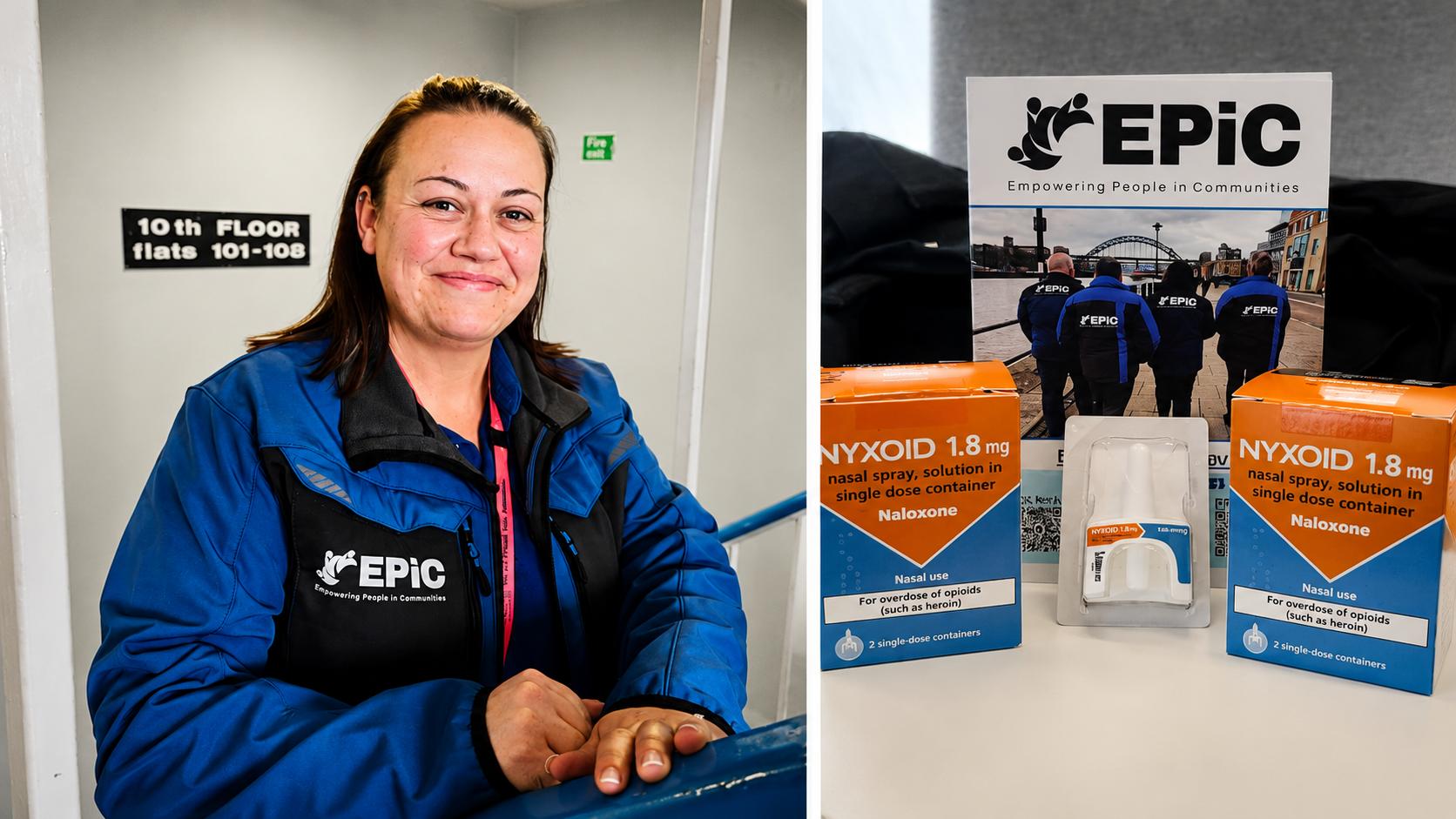
A Newcastle community safety officer has used naloxone training to respond during an overdose incident in Cruddas Park, in a case that highlights the growing role frontline council staff are playing in emergency harm reduction response.
What Naloxone Actually Does.
Naloxone is an opioid antagonist, meaning it works by rapidly blocking the effects of opioids including heroin and synthetic substitutes on the brain, temporarily reversing the breathing difficulties that make opioid overdose so dangerous. It has no effect on someone who has not taken opioids, and has been available in the UK since 2015 as a take-home emergency medication that can be supplied without a prescription through drug services.
Community safety officer Nicola Oliver was among those to have received naloxone training as part of a wider programme equipping frontline staff to respond to overdose emergencies before paramedics are able to arrive, buying crucial time during exactly the kind of transition points research has identified as being at highest risk of fatal overdose.
A National Effort to Save Lives.
The case comes against a backdrop of persistently high drug-related deaths across the UK, with opioid-related deaths making up the largest single share of all drug deaths nationally, averaging around 40 a week according to government figures. Drug-related deaths in England and Wales have roughly doubled since 2012, a trend that has driven a significant national policy response in recent years.
As part of a ten-year drugs strategy, the government has committed additional funding to expand naloxone access and strengthen the specialist workforce supporting people at risk, with an explicit ambition to prevent close to a thousand drug-related deaths in England. Around 95 percent of local authorities now provide take-home naloxone in some form, and pilot schemes training police officers to carry and administer it have already been run in areas including North Wales, Durham and the West Midlands.
Cruddas Park's Wider Context.
Cruddas Park, in Newcastle's west end, has undergone significant redevelopment in recent decades, with a mix of high-rise and lower-level housing shaping an area that, like many parts of urban Newcastle, has not been immune to the wider pressures around drug use and deprivation affecting communities across the UK.
Training frontline staff who are not medically qualified, including community safety officers, housing staff and outreach workers, has become an increasingly important part of the wider harm reduction picture, extending the reach of emergency intervention well beyond paramedics and specialist drug services alone.
Training Frontline Staff Beyond Paramedics.
Cases like the one in Cruddas Park offer a genuinely concrete illustration of why this kind of training matters in practice, since overdoses frequently happen in ordinary community settings where medical staff are simply not present, and where a witness equipped with both naloxone and the confidence to use it can make the difference between life and death in the minutes before an ambulance arrives.
Newcastle City Council has not detailed how many of its own staff currently carry naloxone, though cases like this one are likely to add further momentum to calls for wider training across council and community-facing roles, both in Newcastle and more widely across the region.
A Model Other Areas May Follow.
Newcastle City Council has not confirmed whether naloxone training will be extended further across its own frontline workforce, though cases demonstrating its practical, life-saving value in the community are likely to feature in future decisions about where such training is prioritised next.
Public health bodies across the North East continue to monitor drug-related harm closely, with naloxone availability increasingly viewed as one part of a wider package of measures needed to address the underlying causes of substance dependency, rather than a solution in isolation.
The Human Cost of Delay.
Public health researchers have consistently found that the minutes immediately following an opioid overdose are the most critical, with breathing difficulties capable of proving fatal considerably before an ambulance would typically be able to reach many community settings.
This is precisely the gap frontline naloxone training is designed to close, equipping people already present in a community, rather than specialist medical staff alone, with the tools needed to intervene during that critical early window.
Recognising the Signs of Overdose.
Public health guidance encourages anyone who suspects a person may be experiencing an opioid overdose to look for signs including slow or stopped breathing, blue-tinged lips or fingertips, and an inability to wake the person, all indicators that immediate emergency intervention, including naloxone where available, may be required.
Building Confidence to Act.
Training alone is only part of what makes interventions like this one successful, with experts stressing that ongoing refresher training and genuine organisational support both matter enormously in ensuring staff feel properly confident enough to actually act during a genuine emergency, rather than simply having completed a course at some point in the past without ever using those skills again.
Join the discussion.
Should more council staff be trained to carry naloxone?
Health News
Community Safety Officer's Naloxone Training Used to Save a Life in Cruddas Park
A Newcastle community safety officer has used naloxone training to respond during an overdose in Cruddas Park, highlighting the growing role of frontline harm reduction training.
Advertisement





Comments (0)
You must be logged in to post comments.
Don't have an account? Register here
No comments yet. Be the first to share your thoughts!