
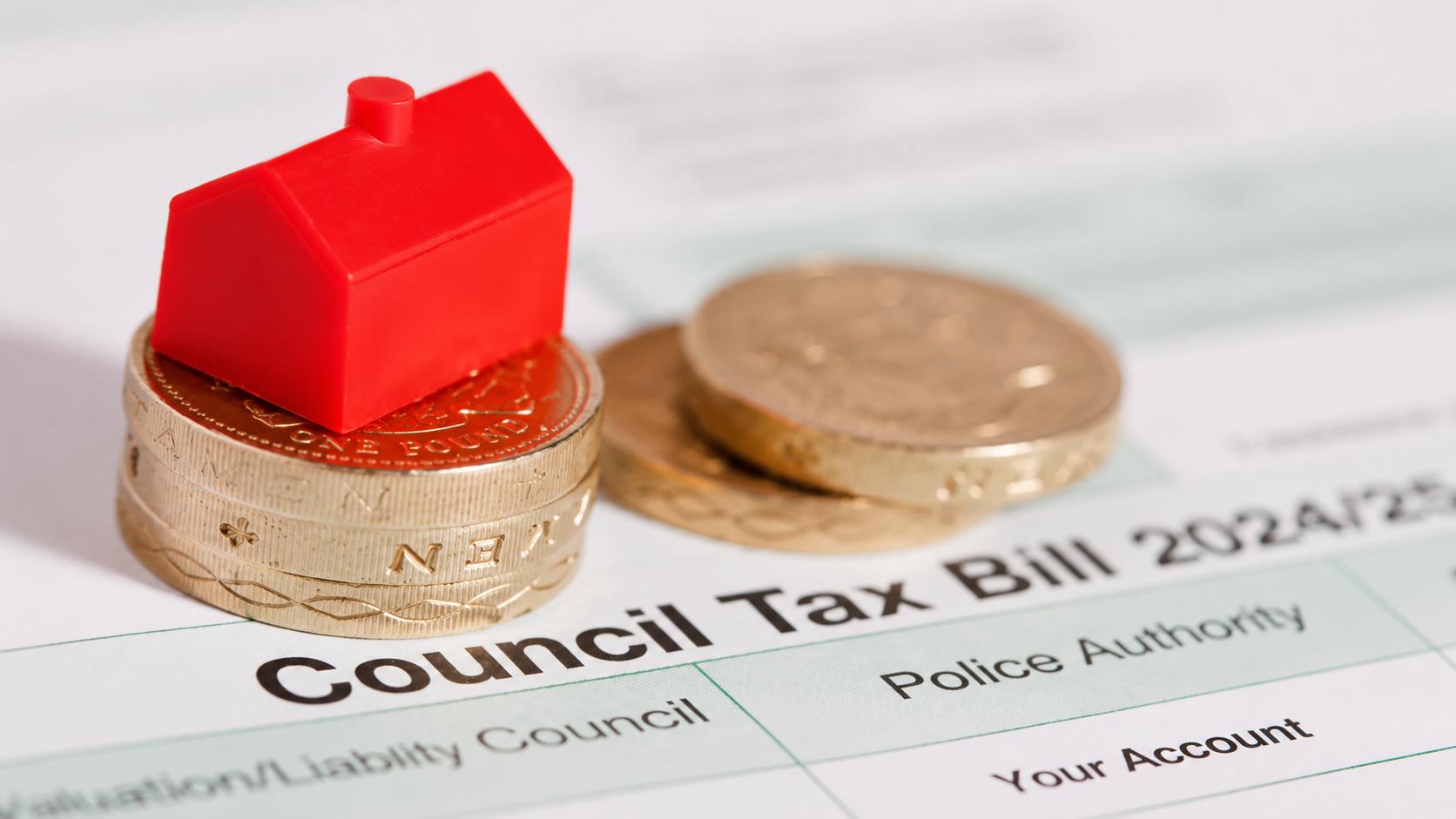
Council tax is one of the larger fixed household costs, and a substantial number of households pay more than they need to because they have never applied for a discount they qualify for.
Some of these are well known. Several are not, and one in particular is significantly under-claimed nationally.
Here is what exists and how to apply.
Discounts are not automatic.
The most important point is that most discounts require an application. The council does not know your circumstances unless you tell it.
Applications go to the billing authority for your address, which for most readers is Newcastle City Council, or Gateshead, North Tyneside, South Tyneside, Sunderland, Northumberland or Durham depending on where you live.
Each authority operates its own application process, though the statutory discounts and exemptions are broadly consistent.
The single person discount is the best known.
A 25 per cent discount applies where only one adult lives in the property.
It must be applied for and must be cancelled when circumstances change. Failing to cancel it when someone moves in is a common cause of overpayment recovery and, where deliberate, of penalties.
Councils carry out reviews of single person discounts using data matching, so accuracy matters.
Some people are disregarded entirely.
Certain people are not counted when working out how many adults live in a property. If everyone in the household is disregarded, an exemption may apply. If all but one are disregarded, the single person discount applies.
Disregarded groups include full-time students, student nurses, apprentices on low pay, people under 18, care leavers up to a specified age in many authorities, live-in carers providing substantial care to someone who is not a partner or child, and people in prison.
Severe mental impairment is the big one.
This is the discount most often missed, and it can be worth a great deal.
A person medically certified as severely mentally impaired, and who receives one of a list of qualifying benefits, is disregarded for council tax purposes.
The definition covers a wide range of conditions including dementia, Alzheimer's disease, stroke resulting in cognitive impairment, Parkinson's disease in some cases, severe learning disabilities and certain other conditions.
Where the person lives alone, a full exemption may apply. Where they live with one other adult, a 25 per cent discount applies.
Crucially, this discount can frequently be backdated to when the condition was diagnosed and the benefit awarded, which can produce refunds running into thousands of pounds.
It requires a doctor's certificate and evidence of the qualifying benefit. Many families caring for a relative with dementia have never been told it exists.
Disabled band reduction is separate.
Where a property has been adapted for a disabled resident, the disabled band reduction scheme may apply, charging council tax at the band below the property's actual band.
Qualifying adaptations include an additional bathroom or kitchen for the disabled person's use, a room predominantly used by them for their needs, or sufficient space for wheelchair use indoors.
This is separate from the severe mental impairment disregard and from council tax reduction, and can apply alongside them.
Council tax reduction is income based.
Council tax reduction, sometimes still called council tax support, reduces the bill for households on low incomes.
It is administered by the council rather than the DWP, and it is not included in a Universal Credit claim. A separate application is required.
Schemes differ between authorities, so entitlement in Newcastle may not match a neighbouring council, and pensioners are covered by a national scheme with different rules from working-age claimants.
Your band may be wrong.
Council tax bands in England were set in 1991 and were assessed rapidly, with some properties banded on limited information.
If you believe your band is incorrect, you can challenge it through the Valuation Office Agency, which is free.
Before doing so, check the bands of comparable neighbouring properties, which are published, and consider whether your property genuinely differs. A successful challenge can produce a refund backdated to when you became liable.
Be aware that a review can result in a band going up as well as down, though in practice increases are uncommon where evidence supports the challenge.
Empty and second properties.
Rules on empty properties have tightened considerably, and many authorities now charge premiums on long-term empty homes and on second homes rather than offering discounts.
Short exemptions may apply for properties undergoing major repair or left empty following a death, and the rules on the latter are worth understanding when dealing with an estate.
Annexes occupied by a relative may qualify for a discount.
How to apply.
Applications are made through your council's website, and most take a few minutes.
Have to hand the property address, council tax account number, details of everyone living there and any supporting evidence such as benefit award letters or student certificates.
If you think a discount should have applied in the past, ask about backdating explicitly rather than assuming it will be applied automatically.
Newcastle City Council's welfare rights service and Citizens Advice can both help, particularly with severe mental impairment claims where the paperwork can be daunting.
Share your thoughts.
Had you heard of the severe mental impairment exemption before?
Lifestyle News
Council Tax Discounts You Might Be Missing
Several council tax discounts go substantially unclaimed, and at least one can be backdated for years.
Advertisement




Comments (0)
You must be logged in to post comments.
Don't have an account? Register here
No comments yet. Be the first to share your thoughts!