
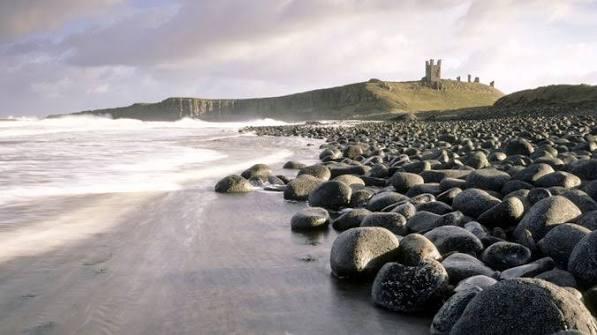
On a lonely headland along the Northumberland coast stand the haunting ruins of one of the most dramatic castles in England. Dunstanburgh Castle, reached by a beautiful coastal walk from the village of Craster, occupies one of the most spectacular settings imaginable, its broken towers rising against the sea and sky. For lovers of history, scenery and bracing coastal walks, it is an unforgettable destination.
A Castle in a Wild Setting.
What makes Dunstanburgh so special is its remote and dramatic location. Unlike many castles that sit within or beside a town, Dunstanburgh stands alone on a windswept promontory, surrounded by the sea on three sides and accessible only on foot. This isolation gives the ruins a powerful, almost melancholy atmosphere, a sense of grandeur fallen into romantic decay. The great gatehouse towers, though ruined, still rise impressively above the headland, and the whole scene, with the waves crashing below and the wide skies above, is one of the most evocative on the entire Northumberland coast. It is a place that stirs the imagination and lingers in the memory.
A Proud and Turbulent History.
Dunstanburgh Castle was built in the fourteenth century by a powerful and ambitious noble, Thomas, Earl of Lancaster, at a time of great political tension, and it was designed to be both a stronghold and a statement of his status. Later it came into the hands of John of Gaunt, one of the most powerful figures of his age, who strengthened its defences. The castle played a part in the turbulent conflicts of the medieval period, including the Wars of the Roses, before gradually falling into ruin. Today, the weathered remains tell the story of these dramatic centuries, and exploring them offers a vivid sense of the ambitions and struggles of medieval England.
The Walk From Craster.
Part of the joy of visiting Dunstanburgh is that there is no road to the castle; it can only be reached by a beautiful walk of around a mile and a half from the charming fishing village of Craster. This gentle coastal path follows the shoreline, with the castle drawing slowly closer and growing ever more impressive as you approach. The walk itself is a delight, offering lovely views of the sea, the rocky coast and the surrounding countryside, and the anticipation of reaching the ruins adds to the sense of occasion. For many visitors, this approach on foot is an essential part of the experience, making the arrival at the castle all the more rewarding.
The Village of Craster.
The starting point for the walk, the village of Craster, is a destination in its own right and well worth exploring. This small, picturesque fishing village, with its stone harbour and cobbled streets, is famous throughout the country for its kippers, oak-smoked herring produced in the traditional way at the village smokehouse. The smell of wood smoke drifting through the village is part of its charm, and visitors can buy the celebrated kippers to take home or enjoy them in a local eatery. With its harbour, its history and its renowned local delicacy, Craster makes the perfect base for a visit to Dunstanburgh.
Wildlife and Natural Beauty.
The stretch of coast between Craster and Dunstanburgh is not only scenic but also rich in wildlife and natural interest. The rocky shores, grassy slopes and coastal grasslands are home to a variety of birds and other creatures, and the area is valued for its natural beauty and ecological importance. Seabirds wheel around the castle headland, and the ever-changing interplay of sea, rock and sky provides a constantly shifting spectacle. For nature lovers, the walk offers much to enjoy beyond the castle itself, and the unspoilt character of this part of the coast is a large part of its appeal.
A Photographer's Dream.
It is little wonder that Dunstanburgh Castle is a favourite subject for photographers and artists. Its dramatic ruins, set against the sea and sky in a constantly changing light, offer endless possibilities for striking images, and the castle has inspired painters, including some of the great names of British art, over the centuries. Whether bathed in golden evening light, silhouetted against a stormy sky or reflected in the still water of a calm day, the castle never fails to impress. Capturing its haunting beauty is a reward in itself, and a visit offers countless memorable views.
A Northumberland Masterpiece.
Dunstanburgh Castle and the Craster coast together offer one of the finest experiences the North East has to offer: a magnificent ruined castle, a beautiful coastal walk, a charming village and a stretch of unspoilt shoreline rich in history and natural beauty. It is a destination that rewards effort with deep satisfaction, combining the pleasures of the outdoors with the romance of the past.
For anyone exploring the Northumberland coast, the walk to Dunstanburgh is an absolute must, a journey into one of the most dramatic and beautiful corners of the region.
A Ruin Shaped by Time.
The romantic, ruined state of Dunstanburgh is central to its appeal, and the story of its decline is as evocative as that of its building. Once a mighty fortress and a statement of noble power, the castle gradually lost its strategic importance and fell into disrepair over the centuries, until it became the magnificent ruin seen today. Rather than diminishing the castle, this decay has only added to its romantic grandeur, its broken towers and crumbling walls speaking powerfully of the passage of time. Today the ruins are carefully looked after, allowing visitors to explore safely while preserving the atmosphere of ancient decay. The ever-changing light and weather of the Northumberland coast lend the castle a constantly shifting character, dramatic and brooding one moment, serene and beautiful the next. It is this combination of history, romance and natural beauty that has made Dunstanburgh such an enduring subject for artists and such a beloved destination for visitors, who come to wander among its haunting remains and soak up its timeless spirit.
We want to hear from you.
Share your memories and opinions with fellow readers below, especially if you have walked the path from Craster to Dunstanburgh.
Would you make the coastal walk to Dunstanburgh, kippers in hand from Craster?
Travel News
Dunstanburgh Castle and the Craster Coast
A guide to Dunstanburgh Castle and the beautiful coastal walk from Craster, one of the most dramatic stretches of the Northumberland coast.
Advertisement



Comments (0)
You must be logged in to post comments.
Don't have an account? Register here
No comments yet. Be the first to share your thoughts!