
Veterinary emergency admissions for poisoning overwhelmingly involve ordinary household items rather than anything exotic.
Cleaning products, medicines, garden chemicals and houseplants account for the majority, and most incidents are preventable with fairly simple changes.
Here is what to watch for room by room, and what to do if something happens.
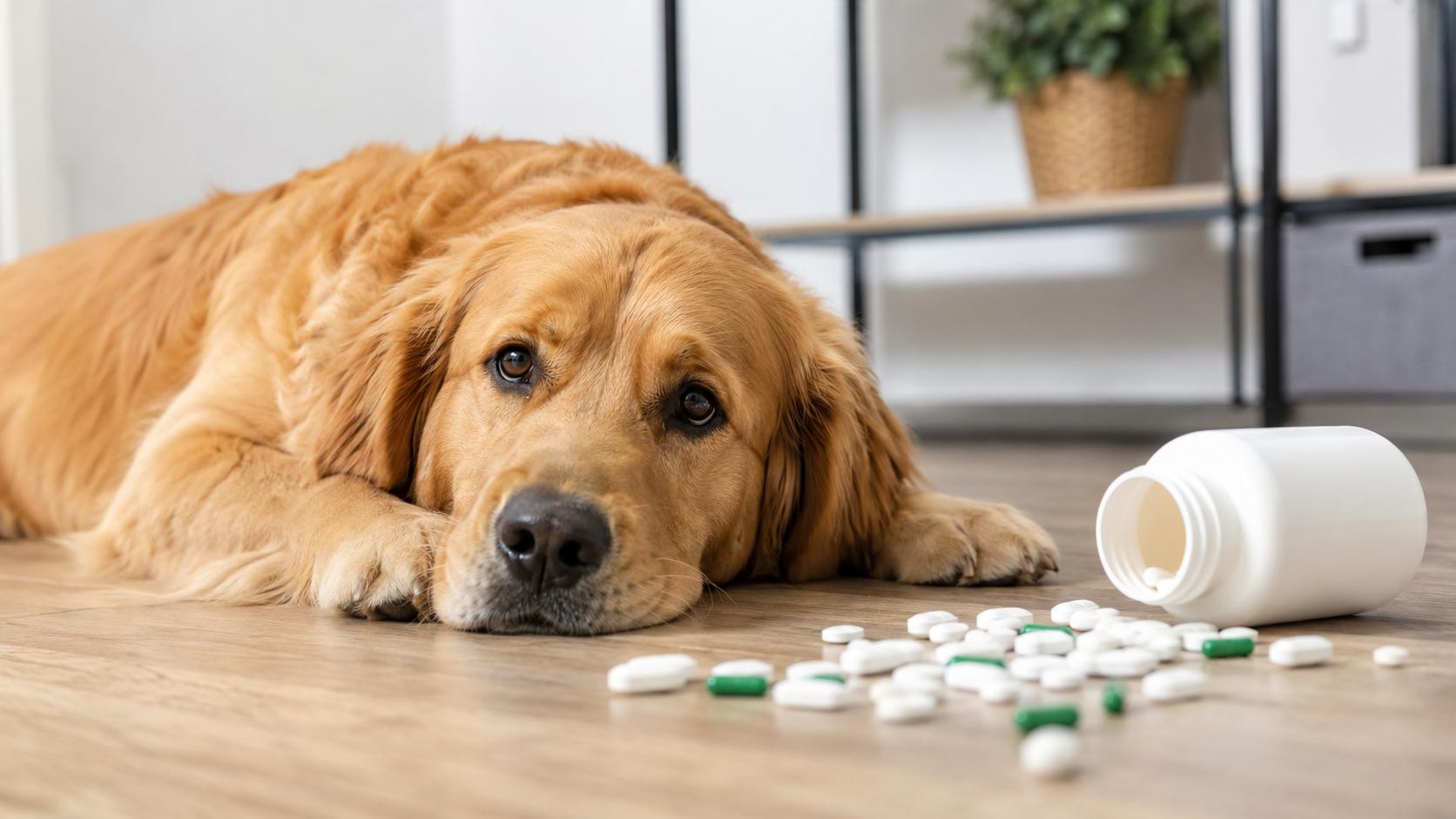
Human medicines are the largest single category.
Paracetamol is extremely toxic to cats, which lack the enzyme needed to process it safely. Even a small dose can be fatal. It is also dangerous to dogs at higher doses.
Ibuprofen and other anti-inflammatory drugs cause stomach ulceration and kidney damage in both dogs and cats.
Never give human medication to an animal without veterinary instruction. Dosing that is safe for a person can be lethal for a small animal, and some medicines have no safe dose at all in cats.
Keep tablets in closed cupboards rather than on bedside tables and worktops. Handbags left on the floor are a very common source, and dogs will chew through blister packs and containers.
Antifreeze is the classic garage danger.
Ethylene glycol, used in antifreeze and screenwash, tastes sweet and animals will drink it readily. It causes acute kidney failure and is frequently fatal.
Very small quantities are dangerous to cats. Spills on driveways, leaking radiators and unsealed containers all present risk, and it is a particular hazard in cold weather when topping up is common.
Clean spills immediately, store containers sealed and out of reach, and consider products using propylene glycol, which is less toxic, where available.
Early treatment substantially improves outcomes, so suspected exposure is an emergency even if the animal seems well.
Garden chemicals cause serious cases.
Slug pellets containing metaldehyde have been banned from sale and use in the UK, but old stock in sheds remains a risk and should be disposed of properly through a household waste recycling centre.
Rodenticides cause internal bleeding, and secondary poisoning is possible if an animal eats a poisoned rodent. If you use them, use enclosed bait stations and keep records of what was placed where.
Weedkillers, fertilisers and lawn treatments should be applied following the label, keeping animals off treated areas until dry or for the stated period.
Cocoa mulch, sold as a garden product, contains theobromine and is dangerous to dogs.
Plants deserve checking.
Lilies are the most serious risk to cats. All parts, including pollen, cause acute kidney failure, and contact alone can be sufficient since cats groom their coats.
Other plants of concern include daffodil bulbs, tulip bulbs, foxglove, yew, azalea, oleander, sago palm and dieffenbachia. Poinsettia is frequently overstated as a danger but can cause irritation.
Spring bulbs are a specific seasonal problem, since dogs dig them up and bulbs contain the highest concentration of toxins.
Cut flowers brought into the house are worth checking before arranging, particularly if the household contains cats.
Small objects cause obstructions.
Not everything dangerous is poisonous. Foreign body obstruction is one of the most common emergency surgeries in small animal practice.
Cats are drawn to string, tinsel, hair ties, dental floss and ribbon, and linear foreign bodies are particularly dangerous because they can concertina the intestine. Never pull anything protruding from an animal at either end; go straight to a vet.
Dogs swallow socks, toys, stones, corn cobs, bones and, notably, batteries. Button batteries cause chemical burns very quickly and are an immediate emergency.
Silica gel sachets are usually low toxicity but can cause obstruction. Nicotine products, including vape liquid and pouches, are toxic and increasingly common in incidents.
Kitchen and bathroom risks.
Cleaning products, particularly bleach, drain cleaners and dishwasher tablets, cause chemical burns to the mouth and throat.
Store them behind closed doors, and keep animals out of the room while cleaning. Rinse surfaces the animal will walk on, since cats groom their paws.
Hot hobs, open oven doors and boiling pans are hazards for cats that jump onto worktops. Washing machines and tumble dryers should be checked before use, as cats climb inside.
Ordinary safety measures help.
Fitting childproof catches to low cupboards containing chemicals costs very little.
Keeping bins closed and out of reach prevents a substantial number of incidents involving food waste, particularly cooked bones, mouldy food and fat.
Wheelie bins in yards should be secured, since foxes and dogs both get into them.
Know the emergency route before you need it.
Store your vet's number and their out-of-hours emergency service number in your phone now.
The Animal PoisonLine, operated by the Veterinary Poisons Information Service, provides advice to pet owners for a fee and can advise whether veterinary attention is required, which can save an unnecessary emergency visit or prompt a necessary one.
Do not attempt to make an animal vomit at home. Some substances cause additional damage on the way back, and inducing vomiting requires veterinary drugs and judgement.
Take packaging with you. Knowing the exact product, active ingredient and concentration allows the vet to treat accurately rather than generically.
Share your thoughts.
Have you ever had a scare with something your pet got into?
Lifestyle News
Everyday Household Hazards for Pets
Most pet poisonings happen in the home, and the substances involved are the ones sitting in ordinary cupboards and garages.
Advertisement





Comments (0)
You must be logged in to post comments.
Don't have an account? Register here
No comments yet. Be the first to share your thoughts!