
Fast, reliable internet has become as essential as any utility, vital for work, education, business, healthcare and staying connected. Yet not everyone enjoys it equally, and a major national effort is under way to bring the fastest broadband to the homes and businesses that have long been left behind, including in the rural corners of the North East.
The Full Fibre Future.
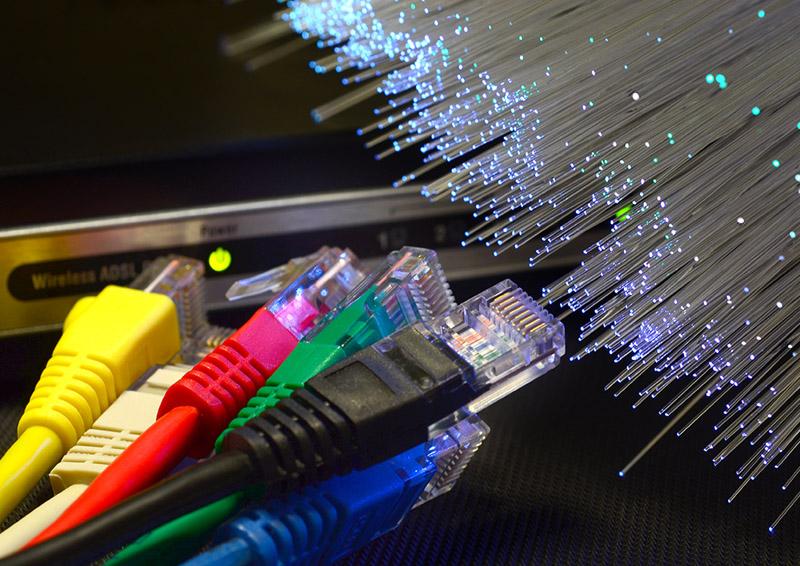
The gold standard of modern connectivity is full fibre broadband, which runs fibre-optic cables all the way to the home or business rather than relying on ageing copper wires for the final stretch. Full fibre is capable of gigabit speeds, around 30 times faster than older superfast connections, and is far more reliable.
It allows households to stream, work and study across multiple devices at once without the frustration of buffering or dropouts. As daily life moves ever further online, this kind of connection is becoming a necessity rather than a luxury.
A National Programme.
Bringing gigabit-capable broadband to the whole country is the goal of a major government programme, backed by billions of pounds of investment. The aim is to reach near-universal coverage by the early 2030s, focusing public money on the homes and businesses that commercial providers consider too remote or too expensive to reach on their own.
Most of the rollout is being delivered commercially, with public funding targeted at filling the gaps. National gigabit-capable coverage has now passed the point where most premises can access it, but significant gaps remain, particularly in rural areas.
The Rural Gap.
It is in those rural gaps that the challenge is greatest, and where the North East has much at stake. Remote villages, hamlets and isolated premises across rural Northumberland, County Durham and the wider region have often been left with slow and unreliable connections, on the wrong side of a digital divide between town and country.
The government's programme has specifically targeted hard-to-reach areas of the North East, with contracts awarded to extend full fibre to tens of thousands of premises in rural parts of the region that would otherwise have missed out. Closing this town-and-country gap is central to the effort.
Why It Matters for the Region.
Good connectivity matters enormously for rural communities and for the regional economy. Reliable, fast broadband allows people in remote areas to work from home, run businesses, access education and healthcare online, and stay connected to family and services.
For rural businesses, from farms to tourism operators, it can be the difference between thriving and struggling. Extending full fibre to the region's hard-to-reach corners is therefore not just about convenience but about economic opportunity and fairness for rural communities.
Progress and Patience.
The rollout is making steady progress, with the amount of gigabit-capable coverage delivered to hard-to-reach premises growing significantly year on year, and engineers increasingly bringing full fibre upgrades to rural towns and villages. New tools have been introduced to help people check whether and when their home is due for an upgrade.
But the task is enormous and the most difficult premises, by definition, are the hardest and most expensive to reach, which means the final stretch will take time and patience. For some remote communities, the wait for a proper connection is not yet over.
Coverage Is Not Enough.
An important point often overlooked is that making fast broadband available is not the same as everyone using it. Even where full fibre is available, take-up can lag, whether because of cost, a lack of awareness, or simply the absence of the skills and confidence to make use of it.
Affordability remains a real barrier for some households, and social tariffs designed to help have low take-up. Connectivity and digital inclusion go hand in hand, and bridging the divide requires not only laying the cables but ensuring people can afford and use the connections they bring.
The Bigger Picture.
The rollout of full fibre also connects to the region's wider technological ambitions. A region seeking to build a thriving digital and data economy needs world-class connectivity as its foundation, and the modernisation of the region's broadband infrastructure underpins everything from remote working to the growth of its technology sector.
Good connectivity is the bedrock on which a modern, digital economy is built, and extending it across the whole region, towns and countryside alike, is essential to ensuring that the benefits of the digital age are shared widely.
Connecting Everyone.
The race to bring full fibre to the North East's hard-to-reach corners is a vital effort to ensure that no community is left behind in an increasingly connected world. Real progress is being made in extending fast, reliable broadband to the rural areas that have long gone without, opening up opportunities for communities and businesses across the region.
Completing the job, and ensuring that everyone can afford and use the connections it brings, will be key to building a region where the benefits of the digital age reach every home, in the remotest village as much as the busiest city street.
More Than a Convenience.
It is easy to think of fast broadband as simply a convenience, a way to stream films more smoothly or browse the internet more quickly, but in truth it has become something far more fundamental, a basic requirement for full participation in modern life. So much of what people need to do now depends on a reliable internet connection: working from home, running a business, applying for jobs, accessing education and training, managing money and benefits, booking and attending healthcare appointments, and staying in touch with family and friends.
For those without a good connection, all of these things become harder, and in some cases impossible, which is why poor connectivity is not a minor inconvenience but a genuine barrier to opportunity and a driver of inequality. This is especially true for rural communities, which have often been left with the slowest and least reliable connections precisely when so much of life has moved online, compounding the disadvantages of distance and isolation.
Extending fast, reliable broadband to these communities is therefore about far more than convenience; it is about fairness, opportunity and ensuring that people are not held back simply because of where they happen to live. It can allow a rural business to compete with urban rivals, a young person in a remote village to access the same educational resources as their city counterparts, and an isolated household to stay connected to services and loved ones.
As the digital divide between the connected and the unconnected widens the gap between the advantaged and the disadvantaged, closing it becomes a matter of social justice as much as economic development. The rollout of full fibre to the region's hard-to-reach corners is, in this sense, an investment in fairness and opportunity, ensuring that the benefits of the digital age are available to everyone, wherever they live.
That is a goal worth pursuing, and worth completing, so that no community is left on the wrong side of the digital divide.
Have your say.
How good is the broadband where you live?
Tech News
The Race for Full Fibre: Connecting the North East's Hard-to-Reach Corners
A major rollout is bringing full fibre broadband to the North East's hard-to-reach rural corners. We look at the race to connect every home and business.
Advertisement



Comments (0)
You must be logged in to post comments.
Don't have an account? Register here
No comments yet. Be the first to share your thoughts!