
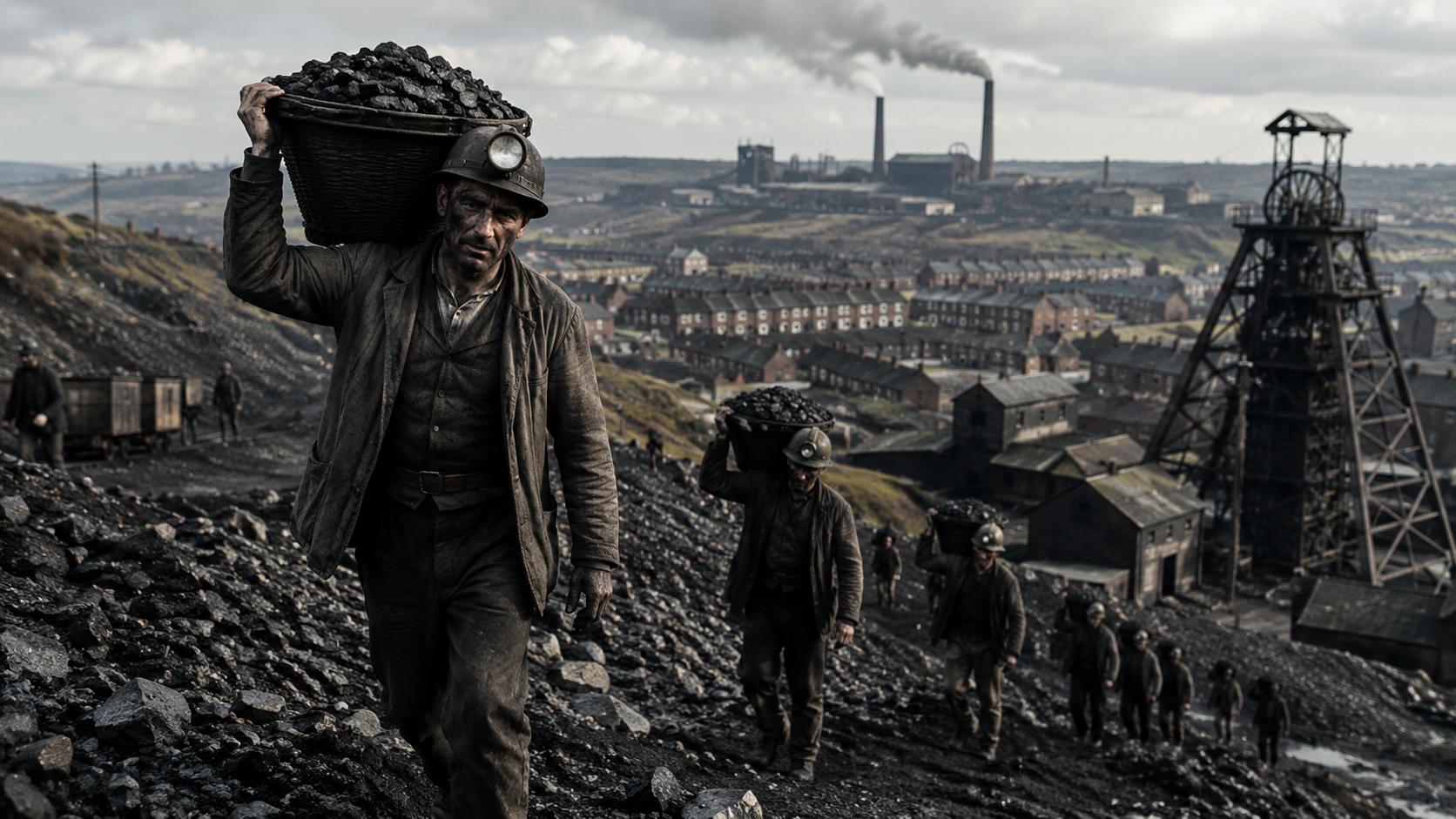
For centuries, the wealth and identity of the North East were built upon coal. The Great Northern Coalfield, stretching across Northumberland and Durham, was one of the most important coalfields in the world, and the trade in its black gold made the region prosperous, powerful and famous. The story of coal is woven through the entire history of the North East, shaping its landscape, its communities, its politics and its very sense of itself in ways that endure long after the last deep mines closed.
Coal from the Tyne.
The North East has produced and shipped coal since medieval times, and the trade grew steadily over the centuries into a vast enterprise. So closely was the region associated with the fuel that the phrase about carrying coals to Newcastle became proverbial throughout the English-speaking world, a way of describing any pointless or unnecessary task. Coal from the Tyne and the Wear was shipped down the coast in great quantities, above all to London, where it powered homes and industries. The coal trade made Newcastle rich and gave the region a central place in the economic life of the nation.
The Engine of Industry.
Coal was the fuel that powered the industrial age, and the abundance of it in the North East helped to make the region a centre of industry. The collieries fed the furnaces, the engines and the factories, and the need to move coal efficiently drove some of the great innovations of the era. The early wooden wagonways built to carry coal from the pits to the river were the direct ancestors of the railways, and the demand for an efficient means of transporting coal helped to inspire the development of the steam locomotive. In this way, coal lay at the root of the region's wider industrial achievements.
A Landscape of Pits and Staiths.
The coalfield transformed the landscape of the North East. Pit villages grew up around the collieries, their lives organised entirely around the rhythm of the mine, and the winding wheels of the pit heads became a familiar feature of the countryside. Along the rivers, great wooden structures called staiths were built to load coal onto waiting ships, and the waterways were crowded with vessels carrying the fuel away. The whole region bore the imprint of the industry, from the spoil heaps to the railways to the close-knit communities that depended on the mines for their livelihoods.
The Mining Communities.
At the heart of the coalfield were the mining communities, among the most distinctive and tightly bound in the country. Whole families and villages lived by the pit, and the work created a powerful sense of solidarity and shared identity. The miners faced hard and dangerous labour underground, and the industry was marked by terrible disasters that brought grief to entire communities. Yet from this hardship grew a remarkable culture of mutual support, self-improvement and collective organisation, expressed in institutions, brass bands, welfare halls and a fierce pride in the dignity of the miner's work.
The Big Meeting.
The culture of the coalfield found its grandest expression in the Durham Miners' Gala, affectionately known as the Big Meeting. Each year the mining communities gathered in their thousands, marching behind their colourful lodge banners and brass bands to celebrate their solidarity and heritage. The Gala became one of the largest gatherings of its kind in the country and a powerful symbol of the identity and values of the mining communities. Remarkably, the tradition has continued long after the closure of the pits, a testament to the enduring strength of the culture that coal created in the North East.
Decline and Closure.
Like the other great heavy industries of the region, coal mining declined through the twentieth century in the face of changing economics and energy needs. The industry contracted steadily, and a difficult period of dispute and closure followed, ending an era that had lasted for centuries. The closure of the pits brought profound change to the communities that had depended on them, and the loss was deeply felt across the region. The disappearance of an industry so central to the identity of the North East left a lasting mark on the towns and villages that coal had created.
A Heritage That Endures.
Although the deep mines have gone, the heritage of the Great Northern Coalfield endures in countless ways. It survives in the landscape, in the museums that tell the story of the industry, in the continuation of the Miners' Gala and above all in the culture and character of the people of the region. The values of solidarity, hard work and community that the coalfield forged remain a defining feature of the North East. To understand the region is to understand coal, the black gold that built it, shaped it and gave it a heritage that continues to inspire pride to this day.
The Pitmen Poets and Painters.
The culture of the coalfield was rich and creative as well as hard-working. From the mining communities came not only labour and solidarity but art, music and learning. The brass bands that accompanied the lodge banners on gala day were the pride of their villages, and many achieved a high standard of musical excellence.
The miners' institutes and welfare halls provided libraries, classes and opportunities for self-improvement that nurtured a hunger for education and culture. The coalfield produced poets, writers and painters who drew on the experience of pit life to create work of real power and authenticity, including artists who depicted the world of the mine and the community with unflinching honesty and deep feeling.
This flourishing of culture in the midst of demanding industrial labour speaks to the dignity and aspiration of the mining communities, who refused to be defined solely by hardship. The creative legacy of the coalfield endures in galleries, archives and the continuing traditions of the region, a reminder that the story of coal is not only one of industry and economics but of a people who, in difficult circumstances, created a rich and distinctive culture that continues to inspire admiration and pride.
Have your say.
Coal built the North East and forged a culture of community that endures to this day.
How do you think the heritage of the coalfield still shapes the North East today?
Newcastle History
Black Gold: The Great Northern Coalfield That Built a Region
How the Great Northern Coalfield of Northumberland and Durham built the wealth and identity of the North East, from the coal trade to the Miners' Gala.
Advertisement

Comments (0)
You must be logged in to post comments.
Don't have an account? Register here
No comments yet. Be the first to share your thoughts!