
While most social media platforms focus on global trends, influencers and viral entertainment, Nextdoor built its identity around something far more local - neighbourhood communities.
Since launching in 2011, Nextdoor has grown into one of the world's most recognised local social networking platforms, connecting people with nearby residents, businesses and community organisations. Unlike Facebook, Instagram or TikTok, Nextdoor was designed specifically to help neighbours communicate with each other about everyday local life.
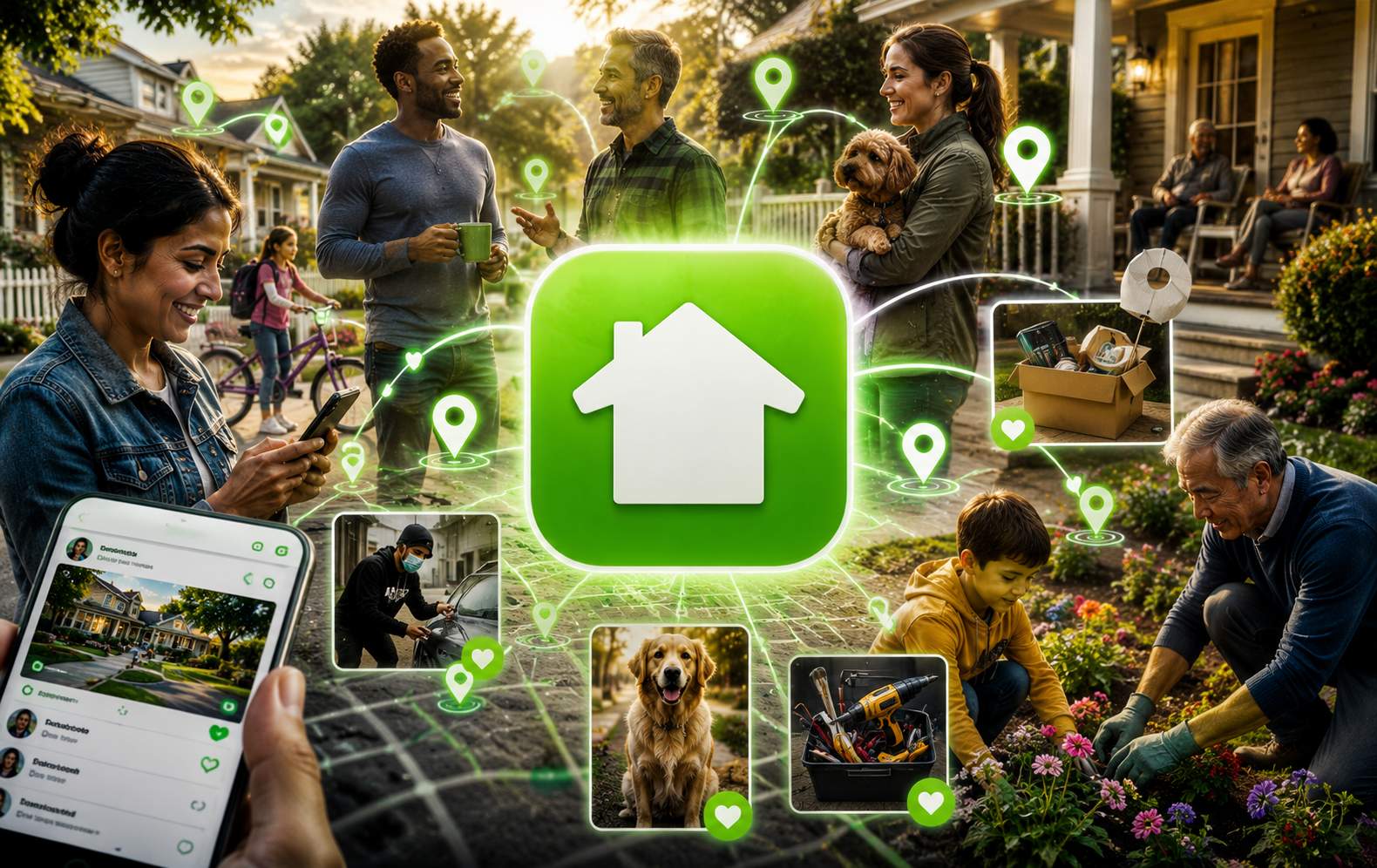
From lost pets and local crime alerts to business recommendations and community events, the platform focuses heavily on practical information and neighbourhood interaction. In an internet increasingly dominated by entertainment-driven algorithms, Nextdoor carved out a unique space by concentrating on local communities and real-world connections.
Although it operates very differently from mainstream social media apps, Nextdoor continues attracting millions of users who want more local and useful online interactions.
How Nextdoor First Started.
Nextdoor was officially launched in 2011 by entrepreneur Nirav Tolia along with several co-founders including Sarah Leary, Prakash Janakiraman and David Wiesen.
The idea behind the platform was relatively simple - creating a private online space where neighbours could safely communicate with each other. The founders believed that despite the growth of global social media, many people still lacked strong digital connections within their own local communities.
Unlike other social networks, Nextdoor required users to verify their address before joining neighbourhood groups. This helped create a stronger sense of trust and authenticity compared to platforms where anonymous accounts are common.
The platform initially expanded neighbourhood by neighbourhood across the United States before gradually growing internationally into countries including the UK, Canada, Australia and parts of Europe.
Its focus on real-world local interaction immediately helped distinguish it from larger social media competitors.
Nextdoor Focused on Community Over Entertainment.
One of the biggest differences between Nextdoor and traditional social media platforms is its emphasis on usefulness rather than entertainment.
While TikTok and Instagram focus heavily on viral content and influencer culture, Nextdoor centres around practical neighbourhood communication. Users often visit the app looking for recommendations, updates or information directly connected to their local area.
Posts about missing pets, suspicious activity, road closures, local services and community events dominate the platform. Neighbours regularly ask for advice, recommend businesses or organise local activities through the app.
This practical focus gives Nextdoor a very different atmosphere compared to fast-paced entertainment platforms driven by trends and algorithms.
For many users, Nextdoor feels more like a digital community noticeboard than a traditional social media app.
Who Mainly Uses Nextdoor Today.
Nextdoor's audience differs significantly from platforms such as TikTok or Instagram.
Homeowners, parents, older adults and local business owners make up large portions of the platform's user base. People often join Nextdoor because they want stronger awareness of what is happening in their immediate area.
The app is especially popular among users interested in community safety, local recommendations and neighbourhood discussions. Many people also use Nextdoor to discover local tradespeople, restaurants, babysitters or upcoming events.
Businesses increasingly rely on the platform for hyper-local marketing, particularly small independent companies targeting nearby customers.
Unlike entertainment-focused social apps, Nextdoor attracts users primarily seeking practical information rather than viral content or influencer updates.
What Makes Nextdoor Different From Other Social Platforms.
The biggest feature separating Nextdoor from other social media platforms is its geographic structure.
Most social networks connect people through shared interests, friendships or content preferences. Nextdoor instead organises users based almost entirely around physical location and neighbourhood boundaries.
This local-first approach changes how people interact on the platform. Conversations are usually more community-focused because users know they are communicating with nearby residents rather than strangers across the world.
Address verification also adds a stronger sense of accountability. Since users are connected to real neighbourhoods, discussions often feel more grounded than on anonymous social media platforms.
Nextdoor also avoids placing major emphasis on influencers, celebrities or viral entertainment. Instead, the platform prioritises local relevance and everyday community interaction.
Local Recommendations Became a Major Strength.
One of Nextdoor's most popular features is its recommendation system.
Users regularly ask neighbours for trusted recommendations regarding plumbers, electricians, restaurants, hairdressers, dog walkers and countless other local services. Because responses come from nearby residents rather than anonymous online reviews, many users see the advice as more trustworthy.
This recommendation-based structure helped Nextdoor become especially valuable for small businesses seeking local customers. Companies can build strong reputations through word-of-mouth style engagement directly within nearby communities.
The platform also supports local buying and selling through marketplace-style listings, helping neighbours exchange furniture, electronics and household items within their area.
Nextdoor Expanded During the Pandemic.
Nextdoor experienced major growth during the Covid-19 pandemic as communities relied more heavily on local communication and support networks.
Neighbours used the platform to organise volunteer groups, help vulnerable residents and share important updates about local restrictions or services. Community interaction became increasingly important during lockdowns and Nextdoor benefited significantly from that shift.
The platform also became useful for small businesses struggling during the pandemic because it allowed them to communicate directly with local customers.
This period reinforced Nextdoor's reputation as a practical community-focused platform rather than purely a social networking app.
Challenges and Criticism Facing Nextdoor.
Despite its growth, Nextdoor has faced criticism surrounding moderation, misinformation and neighbourhood disputes.
Some critics argue the platform occasionally amplifies fear or suspicion within communities because discussions about crime and safety can spread rapidly. Others have raised concerns about bias or discrimination appearing in neighbourhood conversations.
Content moderation has remained one of Nextdoor's biggest challenges because highly localised discussions can quickly become personal or emotionally charged.
The platform has also faced competition from Facebook Groups, which offer similar community-focused features within a much larger social media ecosystem.
Even so, Nextdoor continues maintaining a unique position because of its strong local identity and verification systems.
Why Nextdoor Still Matters in 2026.
In a digital world increasingly dominated by global content and algorithm-driven entertainment, Nextdoor continues standing out because of its local focus.
The platform provides something many larger social media apps struggle to replicate - direct connection to nearby communities and practical everyday information. For users seeking neighbourhood recommendations, local discussions or community updates, Nextdoor remains one of the most useful digital tools available.
Its focus on verified users and local interaction also creates a different style of online conversation compared to anonymous or trend-driven platforms.
As local communities continue looking for ways to stay connected digitally, Nextdoor remains strongly positioned within that space.
Nextdoor Continues Building Local Digital Communities.
Although it may not generate the same viral headlines as TikTok or Instagram, Nextdoor has quietly become one of the internet's most important local communication platforms.
The app helped redefine how neighbourhoods interact online, creating digital spaces centred around practical community engagement rather than entertainment alone.
From local recommendations and safety alerts to event planning and neighbourhood support, Nextdoor continues proving that social media does not always need to be global to remain valuable.
As internet culture evolves further, platforms focused on genuine local connection may become increasingly important in helping communities stay informed and connected.
Never miss a local story. You can Follow Newcastle Daily on Nextdoor for the latest breaking news, community updates, exclusive features and everything happening across Newcastle and the North East.
Do you use Nextdoor regularly or do you prefer other community platforms for local updates and recommendations?
Tech News
How Nextdoor Built a Social Network Around Neighbourhoods
Advertisement





Comments (0)
You must be logged in to post comments.
Don't have an account? Register here
No comments yet. Be the first to share your thoughts!