
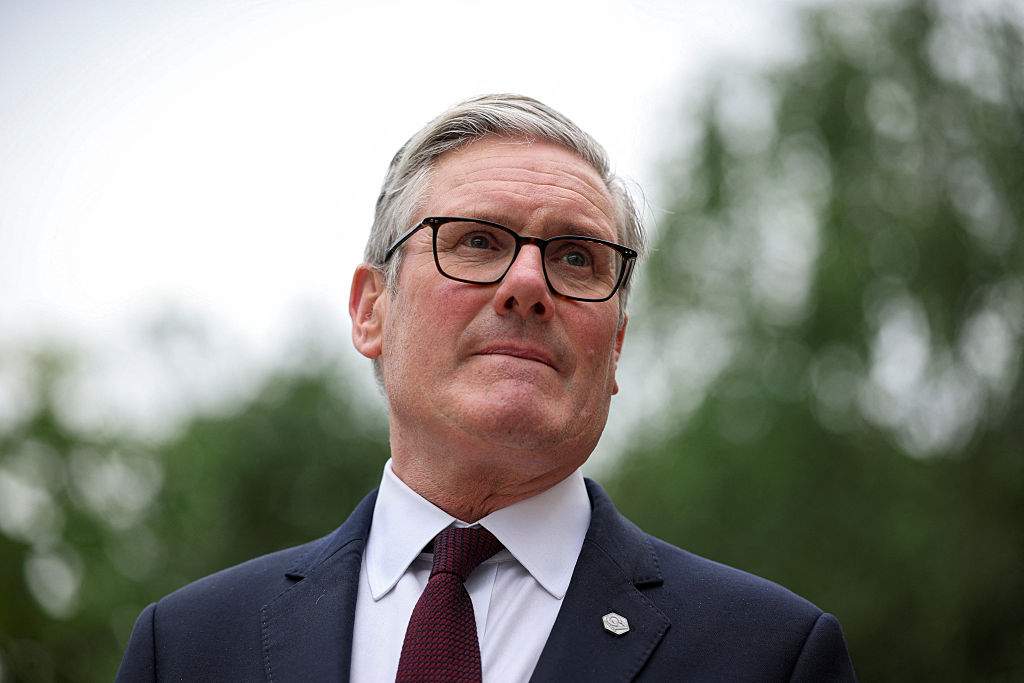
The possibility of Keir Starmer resigning as Prime Minister has become one of the biggest political stories in Britain. Reports over recent days suggest growing pressure within the Labour Party, with speculation that a leadership transition could be approaching. While no official resignation has been confirmed at the time of writing, the prospect raises a critical question for voters across the UK, including in Newcastle and the wider North East.
If Starmer were to step down today, the consequences would stretch far beyond Westminster. Labour holds significant political influence across the North East, a region that played a major role in the party's return to power. Any change at the top would likely have implications for regional investment, transport projects, economic development and Labour's future electoral prospects.
Understanding what happens next requires a look at Labour Party rules, potential successors and the political realities facing the government.
What Happens Immediately If Keir Starmer Resigns?.
Should Starmer resign as Prime Minister and Labour leader, the first stage would be a formal notification to the King. The resignation of a Prime Minister triggers a constitutional process in which a replacement must be identified who can command the confidence of the House of Commons.
Because Labour currently forms the government, there would not automatically be a general election. Instead, Labour would choose a new leader who would then be invited by the King to form a government.
In practical terms, Starmer could remain as a caretaker Prime Minister until a leadership contest concludes. Depending on whether Labour opts for a full leadership election or an uncontested transition, the process could take several weeks or several months.
This is not unusual in British politics. Recent Prime Ministers including Boris Johnson, Liz Truss and Rishi Sunak all experienced leadership changes without an immediate general election.
How Does Labour Choose A New Leader?.
Labour's leadership rules require candidates to secure support from Labour MPs before reaching the ballot.
If multiple candidates qualify, Labour members, affiliated trade union members and registered supporters may be given the opportunity to vote, depending on the exact process agreed by the party.
Reports suggest that any leadership contest would likely attract significant interest due to Labour's position in government and the political challenges facing the country.
Unlike opposition leadership races, this contest would effectively determine who becomes Prime Minister.
Why Newcastle And The North East Matter In Any Leadership Race.
The North East remains one of Labour's most important electoral regions.
At the 2024 General Election, Labour regained significant support across former Red Wall areas, including constituencies throughout Tyne and Wear, County Durham and Northumberland.
Major regional priorities include:
Levelling up investment
Transport infrastructure
Green energy jobs
Offshore wind development
NHS waiting times
Cost of living pressures
Any leadership candidate hoping to secure support from Labour members and MPs will need a credible message for regions outside London.
For Newcastle residents, leadership contenders will likely face questions around Metro investment, city centre regeneration, skills funding and support for major employers across the region.
The North East has also become increasingly important to the UK's renewable energy ambitions, with thousands of jobs linked to offshore wind and clean energy supply chains.
Andy Burnham Emerges As The Favourite.
If bookmakers, political insiders and recent reporting are correct, Andy Burnham would enter any contest as the leading contender. Reports suggest growing support among Labour MPs and party members for the former Greater Manchester Mayor.
Burnham brings several advantages.
He has:
More than two decades of political experience
Former Cabinet experience
Strong recognition among voters
A reputation for regional advocacy
Significant support from Labour's grassroots
Recent polling among Labour members reportedly showed Burnham defeating Starmer comfortably in a hypothetical leadership contest, securing around 61 per cent support compared with 28 per cent.
For North East voters, Burnham's appeal may be particularly relevant. His emphasis on devolved powers and regional investment often resonates with communities outside London. Many of the issues he has championed in Greater Manchester mirror concerns raised in Newcastle and across the wider North East.
Angela Rayner Could Mount A Serious Challenge.
Deputy Prime Minister Angela Rayner would likely be another major contender.
Rayner has developed a strong public profile and remains popular among many Labour activists. She also offers a compelling personal story, having risen from a working-class background to one of the highest offices in British politics.
Recent polling suggested Rayner could defeat Starmer among Labour members in a direct contest.
Her political priorities often focus on:
Workers' rights
Housing
Public services
Regional economic growth
These issues carry significant weight across Newcastle and the North East, where housing affordability, wages and public sector employment remain key concerns.
One challenge for Rayner could be securing enough parliamentary support if MPs believe another candidate offers stronger electoral prospects.
Wes Streeting Remains In The Conversation.
Wes Streeting has frequently been mentioned as a future Labour leader.
The former Health Secretary has built a reputation as one of Labour's strongest media performers and has often been viewed as a modernising figure within the party.
However, polling among Labour members has been less favourable. Surveys suggested Streeting would struggle against both Starmer and Burnham in a leadership contest.
His supporters argue that he appeals to centrist voters and could help Labour compete more effectively against both the Conservatives and Reform UK.
Healthcare reform would likely become a central part of any Streeting campaign, an issue with obvious significance for North East communities where NHS performance remains a major concern.
Other Potential Labour Leadership Candidates.
Several other names could emerge if a contest develops.
These include:
Yvette Cooper
The experienced Home Secretary remains highly respected across Westminster and could attract support from MPs seeking stability.
Ed Miliband
The former Labour leader has retained influence within the party and remains popular among many members. Polling has suggested he could perform strongly in a membership vote.
Rachel Reeves
As Chancellor, Reeves would inevitably be discussed as a possible candidate. However, her prospects would likely depend heavily on the economic situation at the time of any contest.
While these figures possess experience and credibility, current speculation suggests the strongest momentum sits with Burnham, Rayner and Streeting.
Who Is Most Likely To Win?.
Based on available polling, media reporting and parliamentary support, Andy Burnham currently appears to be the frontrunner.
Several factors support that assessment.
First, he has maintained a degree of separation from unpopular government decisions while remaining associated with Labour values.
Second, his record as Mayor of Greater Manchester allows him to point to practical achievements rather than theoretical policy proposals.
Third, his focus on regional growth aligns with concerns in many parts of England, including Newcastle and the North East.
Angela Rayner would likely represent the strongest alternative, particularly if grassroots members seek a candidate closely associated with Labour's traditional support base.
Wes Streeting remains a significant figure but may struggle to overcome member concerns reflected in recent polling.
At present, Burnham would probably begin any contest as the favourite.
Could There Be A General Election?.
A common misconception is that a Prime Minister's resignation automatically triggers a general election.
That is not how the UK system works.
As long as Labour retains the confidence of the House of Commons, the party can select a new leader who becomes Prime Minister without returning to voters.
However, political pressure could build for a fresh mandate, particularly if the incoming leader wanted to establish authority and distance themselves from previous government decisions.
Some critics have already argued that major leadership changes should be followed by a public vote.
Whether that pressure becomes overwhelming would depend on the popularity of the new leader and the political climate.
What Could It Mean For The North East Economy?.
For Newcastle and the wider North East, the biggest concern would be continuity.
Large-scale projects often depend on long-term political support.
These include:
Offshore wind investment
Transport funding
Skills and training programmes
Regional development initiatives
Housing investment
A smooth leadership transition would likely minimise disruption.
However, a prolonged contest or ideological shift within Labour could create uncertainty around funding priorities.
Business leaders across the North East would almost certainly seek reassurance that major economic commitments remain in place regardless of who occupies Number 10.
Why This Story Matters Beyond Westminster.
Leadership contests often become focused on personalities, but the broader implications are far more important.
The next Labour leader would inherit challenges including economic growth, NHS pressures, immigration policy, housing shortages and international uncertainty.
For Newcastle residents, those issues are not abstract political debates. They affect jobs, wages, public services and investment decisions.
That is why any resignation by Keir Starmer would become one of the most significant political developments since Labour returned to government.
The outcome would shape not only Westminster politics but also the future direction of regions such as the North East.
The Bigger Question Facing Labour.
If Keir Starmer resigns, Labour will face a defining choice about its future identity.
Does the party continue with a centrist governing approach, shift towards a more regional and populist model championed by figures like Andy Burnham, or embrace a different vision altogether?
For Newcastle and the wider North East, the answer matters enormously. The region has often felt overlooked by governments of all colours. Any new leader will be judged not only by speeches and promises, but by their willingness to deliver tangible improvements to communities beyond Westminster.
The leadership race may begin as an internal Labour contest, but its consequences could be felt across every corner of Britain.
Tell us your thoughts.
How would a change of Prime Minister affect Newcastle and the North East?
Political News
If Keir Starmer Quits Today, What Happens Next?
Advertisement


Comments (0)
You must be logged in to post comments.
Don't have an account? Register here
No comments yet. Be the first to share your thoughts!