
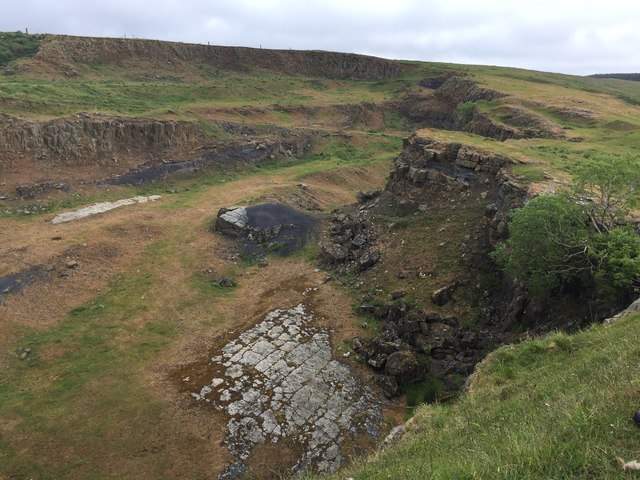
Hidden among Northumberland's rolling hills, forests and dramatic countryside are the remains of dozens of abandoned quarries that once supplied the stone used to build roads, castles, homes and even parts of Hadrian's Wall. While many people pass these former industrial sites without a second glance, they tell the story of an industry that helped shape both Newcastle and the wider North East for centuries.
Today, many of these quarries have become havens for wildlife or popular walking destinations, but their steep rock faces and flooded pits are lasting reminders of the county's industrial past. Nationally, quarrying remains a major industry, yet many of Northumberland's smaller workings quietly disappeared as machinery improved and larger, more efficient sites took over.
Whinstone became one of the region's most valuable resources.
Many of Northumberland's abandoned quarries extracted whinstone, the local name for the hard dolerite found within the famous Whin Sill. This volcanic rock is exceptionally durable, making it ideal for road construction, railway ballast and coastal defences.
The Whin Sill averages between 25 and 30 metres thick, reaching up to 70 metres in some areas, and stretches beneath much of northern Northumberland. Even today, Northumberland is expected to provide around 1.65 million tonnes of crushed rock each year to help meet regional demand for construction materials, highlighting the continuing importance of the county's geology.
Former quarries at locations including Walltown, Cawfields, Thockrington, West Whelpington and Ewesley once played an important role before eventually falling silent as extraction moved elsewhere.
The stone helped build the North East.
Long before concrete became the standard building material, local stone was the backbone of construction across the region. Sandstone and limestone from Northumberland were used in homes, churches and public buildings, while whinstone became the preferred material for roads because it could withstand heavy traffic and harsh weather.
Many historians also believe local quarries supplied stone for Roman engineering projects and later medieval construction. Newcastle's historic streets and many older buildings still owe much of their character to stone extracted from quarries across Northumberland, reducing the need to transport materials over long distances.
Nature reclaimed the abandoned workings.
When quarrying ended, nature gradually transformed many former industrial sites into valuable habitats. Cawfields Quarry, near Hadrian's Wall, is now better known for its tranquil lake and scenic walking routes than the blasting and stone cutting that once echoed across the landscape.
Across Northumberland, abandoned quarries now support wildflowers, nesting birds, bats and rare grassland species that thrive on the exposed rock. The Northumberland National Park Authority notes that former quarry faces provide important nesting sites for kestrels, ravens and peregrine falcons, while specialised plants have colonised the thin soils found on Whin Sill outcrops.
A legacy hidden in plain sight.
Although modern quarrying continues at larger sites such as Barrasford, Keepershield and Divethill, the abandoned quarries scattered across Northumberland remain important reminders of the county's industrial heritage.
For walkers exploring Hadrian's Wall or visitors travelling through the North East, these forgotten locations offer more than dramatic scenery. They reveal how generations of quarry workers helped shape the roads we travel, the buildings we admire and the landscapes that continue to attract millions of visitors every year. Their story is carved into the very rock beneath our feet, making these abandoned quarries some of Northumberland's most overlooked historical landmarks.
Share your thoughts.
Have you visited any of the North Easts abandoned quarries?
Newcastle History
Inside Northumberland's Lost Stone Industry
Advertisement



Comments (0)
You must be logged in to post comments.
Don't have an account? Register here
No comments yet. Be the first to share your thoughts!