
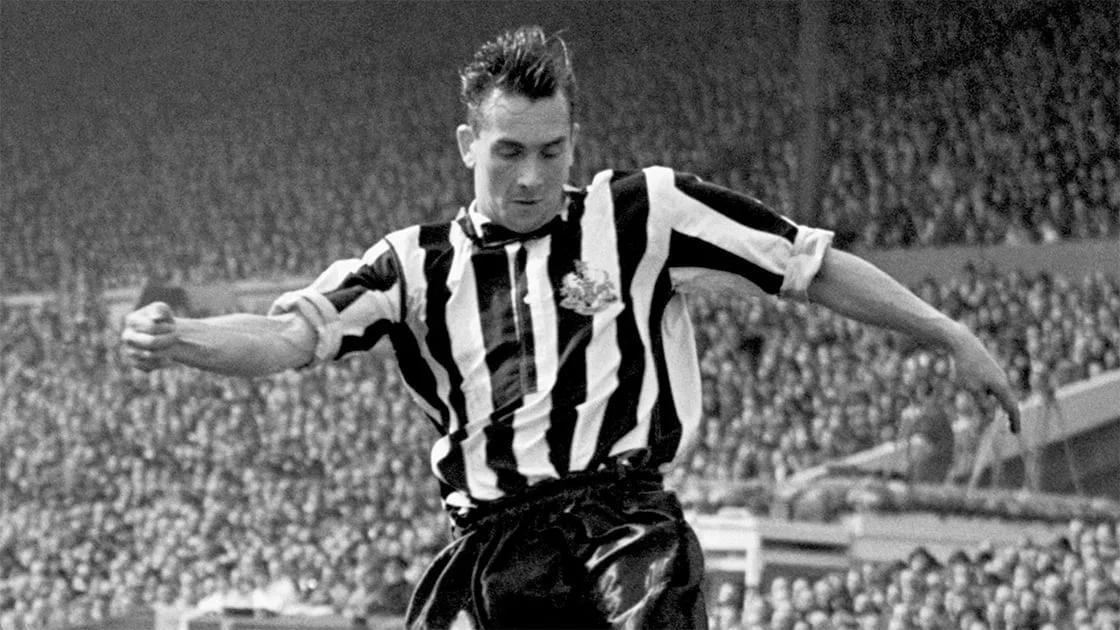
On Tyneside the name needs no introduction. To generations of supporters he was simply Wor Jackie, the Geordie phrase meaning Our Jackie, and the affection in those two words tells you everything about how completely Jackie Milburn belonged to the people of the North East. Born in Ashington, Northumberland, in May 1924, John Edward Thompson Milburn rose from the coalfields to become the most beloved figure in the history of Newcastle United, a player whose deeds on the pitch were matched only by the humility he carried off it.
From the Pit to the Pitch.
Milburn came from a famous footballing family and worked as a fitter at Ashington Colliery before football offered him a way out of the pit. His initials, JET, proved wonderfully fitting, because blistering pace was the foundation of his game. He arrived at St James' Park as a young man in the early 1940s, scoring a remarkable haul of goals in a wartime trial that announced his arrival, and he made his competitive debut as the game emerged from the shadow of the Second World War. Initially deployed on the wing as a supplier of chances, he was later switched to centre-forward, and it was there that he became a phenomenon.
The Goalscoring Record That Stood for Half a Century.
By the time he left the club, Milburn had become Newcastle United's record goalscorer with two hundred competitive goals, a record that would stand for more than fifty years until Alan Shearer finally surpassed it in February 2006. Including wartime fixtures his tally climbed even higher. What made the achievement so special was not merely the quantity of goals but their quality. He was a scorer of great goals as well as a great goalscorer, capable of thunderous long-range strikes and lightning breaks that left defenders trailing. For a club whose identity has always been bound up with its centre-forwards, Milburn set the template that every Newcastle number nine has been measured against ever since.
The Glory of the 1950s.
Milburn was the star of Newcastle's magnificent cup side of the 1950s, a team that won the FA Cup three times in five years. In the 1951 final he scored both goals as Newcastle beat Blackpool two-nil at Wembley, denying the great Stanley Matthews his moment and silencing a stadium that had expected a Blackpool victory. Matthews himself was reported to have described Milburn's second goal, a long-range rocket into the top corner, as the finest he had ever seen. Newcastle retained the trophy in 1952, and in the 1955 final against Manchester City Milburn headed home after just forty-five seconds, then a record for the fastest goal in a Wembley final. Those three triumphs cemented his place in the hearts of supporters who had endured the hardships of the war years and now had a hero to celebrate.
A Modest Man and an England Forward.
Milburn earned thirteen caps for England in an era crowded with outstanding centre-forwards, a modest number for a player of his gifts, and he scored ten goals for his country. He was famously shy, uncomfortable with the adulation that followed him through the streets of Newcastle, and his decency only deepened the bond with the supporters. He was a cousin to the mother of Jack and Bobby Charlton, linking him to another celebrated North East footballing dynasty, and the family name remains woven into the story of English football. After leaving Newcastle he enjoyed a successful spell at Linfield in Belfast before moving into management and then sports journalism.
A Lasting Legacy in Bronze and Memory.
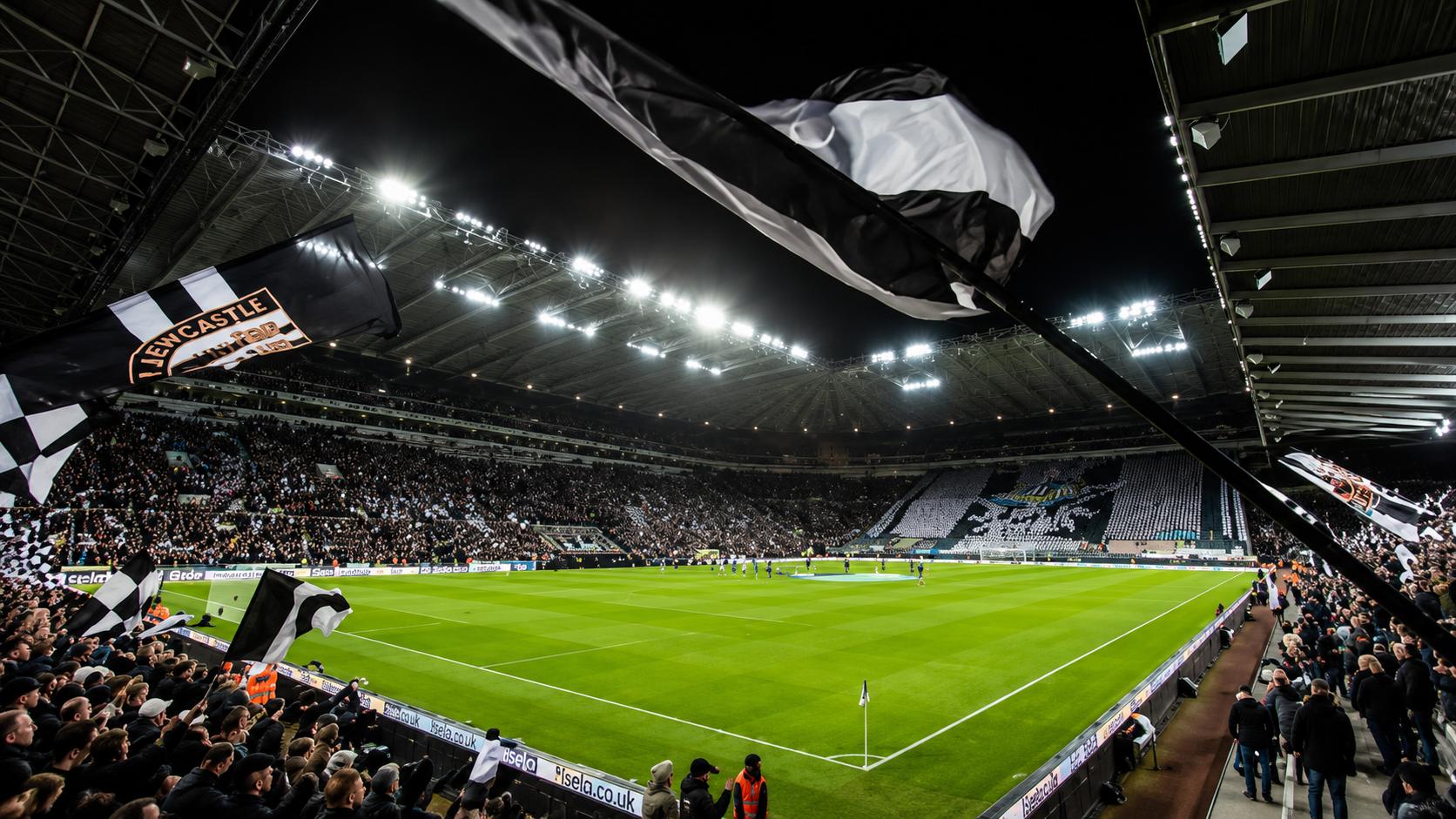
When Jackie Milburn died in 1988 the response on Tyneside was extraordinary, with enormous crowds lining the route of his funeral to pay tribute to a man who had never lost the common touch. A statue of him stands near St James' Park, a permanent reminder of what he meant to the city, and his name is invoked whenever a new young forward shows a flash of the old magic. The story of Wor Jackie is more than a football story. It is the story of a mining community that saw one of its own rise to greatness and never forget where he came from, and that is why he remains a folk hero rather than simply a famous footballer.
The Measure of a Hero.
It is worth remembering that Milburn played in an age before the riches of the modern game, when footballers earned modest wages and travelled to matches alongside the supporters who cheered them. That shared world is part of why his legend endures so powerfully. He was not a distant celebrity but a neighbour, a pitman who happened to be blessed with extraordinary talent, and the people of the North East recognised something of themselves in him. Every time a Newcastle crowd roars a centre-forward towards goal, an echo of Wor Jackie is present, and the standard he set continues to shape what supporters expect of the famous black and white shirt.
The Number Nine Tradition He Defined.
More than any other player, Milburn established the idea of the Newcastle number nine as something close to sacred, a role carrying expectations that go far beyond ordinary football. The supporters who watched him came to believe that the man wearing that shirt should embody pace, courage and a flair for the spectacular, and every centre-forward who followed has been weighed against that ideal. It is a heavy inheritance, and many fine players have struggled under its weight, yet it is also a source of romance that sets Newcastle apart. The tradition gives the club a distinctive identity, a sense that goals at St James' Park should arrive with drama and a touch of the heroic. Milburn earned that status through deeds rather than words, scoring in the grandest moments and carrying himself with a modesty that made the supporters love him all the more. When fans speak of the great number nines, they begin with him, and the line that runs through Gallacher, Macdonald and Shearer is measured against the standard that Wor Jackie set. His influence, in this sense, extends far beyond his own playing days and into the very identity of the club itself.
Share your thoughts.
Who do you think best carried on the spirit of Wor Jackie in the years that followed?
Sports News
Wor Jackie: The Story of Jackie Milburn, Newcastle's First Folk Hero
The life of Jackie Milburn, the Ashington pitman who became Newcastle United's record goalscorer, 1950s FA Cup hero and enduring Tyneside folk legend.
Advertisement




Comments (0)
You must be logged in to post comments.
Don't have an account? Register here
No comments yet. Be the first to share your thoughts!