
Newcastle is unusually well provided with green space for a British city of its size, and most of it dates from a concentrated period of Victorian civic activity.
The parks were not accidents. They were the product of campaigning, philanthropy and a nineteenth-century conviction that access to open air was a matter of public health.
Here is how the city got them.
The public parks movement had a purpose.
By the mid-nineteenth century, industrial cities had grown far faster than any provision for their populations, producing extreme density, poor sanitation and high mortality.
The public parks movement argued that open space, fresh air and exercise were necessary to public health, and that they also served a moral purpose by providing an alternative to the public house.
Parliamentary committees examined the question, and legislation through the century enabled and eventually required local authorities to acquire and maintain public walks and open spaces.
Leazes Park came from a petition.
Newcastle's first public park has an unusually well-documented origin. In 1857, a petition signed by around three thousand working men of the town was presented to the council.
It asked for ready access to some open ground for the purpose of health and recreation, a phrase that captures the movement's argument precisely.
The council responded, though not quickly. Leazes Park was laid out on land at the edge of the Town Moor and opened in 1873, making it the city's first public park.
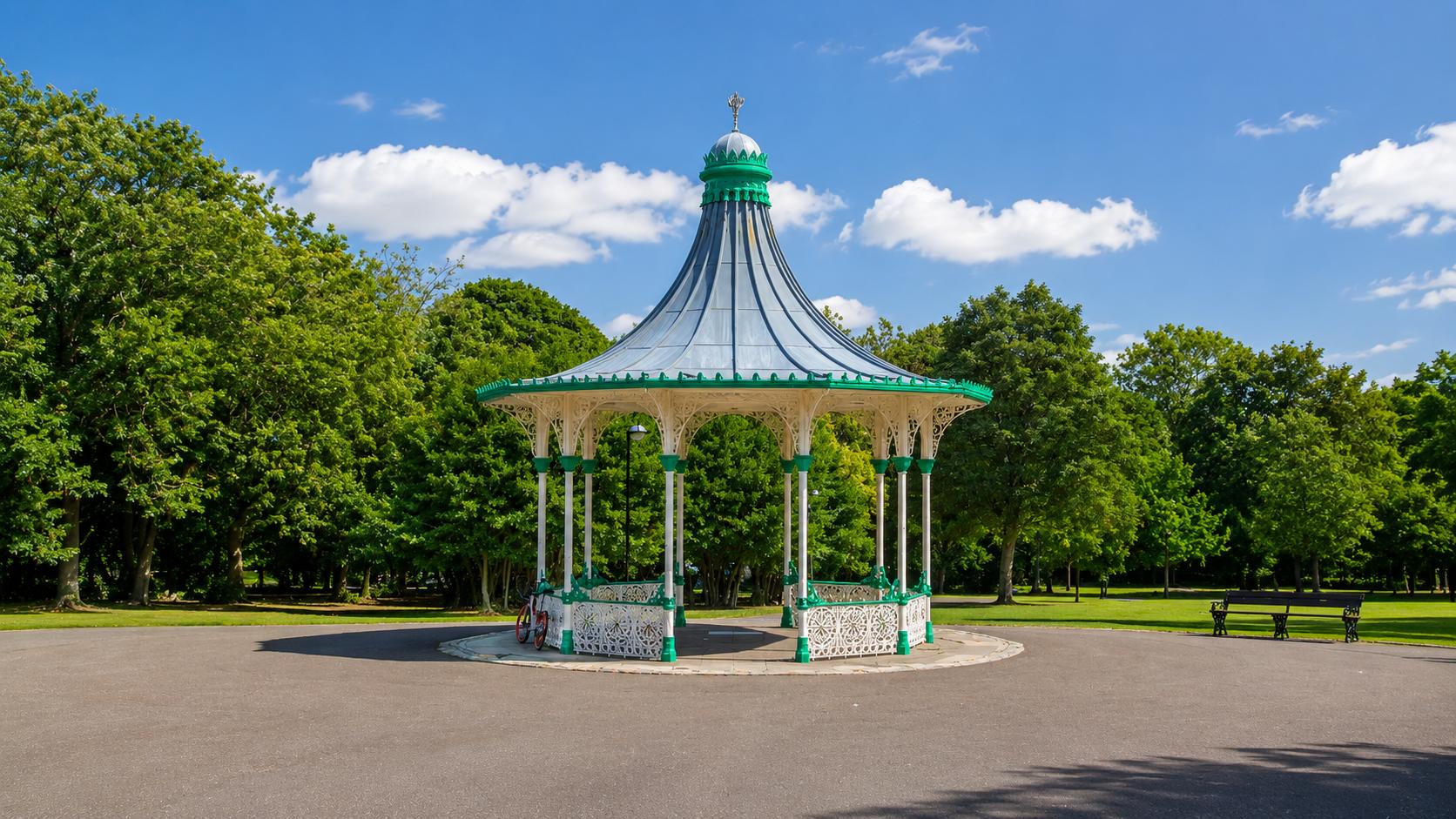
It was designed in the fashion of the period, with a lake, winding paths, ornamental planting, a bandstand and terraces, and it remains substantially in that form.
The Town Moor complicated things.
Newcastle's relationship with its open land is unusual. The Town Moor, an area of common land larger than Hyde Park and Hampstead Heath combined, sits immediately north of the city centre.
Grazing rights over it belong to the Freemen of Newcastle, protected by legislation, and those rights have constrained development on the land for centuries.
That is why the Moor remains open, why cattle still graze within a mile of the city centre, and why the Hoppings fair occupies it each June.
Leazes Park was created from land at the edge of that area, and the negotiation with the Freemen's rights was part of the process.
Armstrong gave Jesmond Dene.
William Armstrong, the Tyneside engineer and industrialist, and his wife Margaret had developed the wooded valley of the Ouseburn at Jesmond as private grounds attached to their house.
They gave Jesmond Dene to the people of Newcastle in the 1880s, along with Armstrong Park and Heaton Park, creating a continuous chain of green space along the Ouseburn valley.
The Dene retains its Victorian character with waterfalls, woodland walks, a ruined mill and the Banqueting Hall built for entertaining. Armstrong's own house at Jesmond has gone, but the parks remain.
Philanthropic gifts of this kind were characteristic of the period, and the motives combined genuine public spirit with civic status and, sometimes, a degree of reputational management.
Exhibition Park had another life.
The park north of the Haymarket, long known locally as Bull Park, has hosted two major exhibitions.
The Royal Jubilee Exhibition of 1887 drew very large numbers of visitors, and the North East Coast Exhibition of 1929 was a substantial event intended to promote regional industry during a period of severe economic difficulty.
The Palace of Arts, the surviving building from the 1929 exhibition, still stands in the park and has been used for various purposes since.
Gateshead built one of the finest.
Across the river, Saltwell Park opened in 1876 after Gateshead Corporation purchased the estate and mansion of William Wailes, the stained glass manufacturer.
Saltwell Towers, the mansion, sits at the centre of the park, and the grounds were laid out with lakes, gardens and extensive planting.
It underwent a major heritage-funded restoration in the 2000s and is regularly described as among the finest Victorian parks in the country.
Smaller parks served neighbourhoods.
Beyond the major sites, Newcastle acquired a network of smaller parks and recreation grounds through the later nineteenth and early twentieth centuries, serving individual neighbourhoods.
Elswick Park, Heaton Park, Nuns Moor and others provided local provision within walking distance of dense terraced housing.
Many included bowling greens, tennis courts, bandstands and shelters, reflecting a period when organised outdoor recreation was actively promoted.
Maintenance is the modern challenge.
Parks are a discretionary service for local authorities rather than a statutory duty, which has made them vulnerable during periods of budget reduction.
Newcastle transferred management of much of its parks estate to a charitable trust, Urban Green Newcastle, an approach also taken in other cities as authorities have sought sustainable models.
Friends groups operate at many parks across the city, undertaking practical work, running events and applying for funding, and they have become central to how parks are maintained and improved.
The Victorian argument still applies. Access to green space remains associated with physical and mental health, and the parks laid out for that reason 150 years ago are still doing the job.
Share your thoughts.
Which Newcastle park did you grow up using?
Newcastle History
Leazes Park and Newcastle's Victorian Parks
Newcastle's first public park was created after three thousand working men petitioned the council for somewhere to breathe.
Advertisement

Comments (0)
You must be logged in to post comments.
Don't have an account? Register here
No comments yet. Be the first to share your thoughts!