
AI IMAGE PROMPT (16:9) - remove this line once the header image is added: Rich but muted illustrative style of an illuminated manuscript page filled with intricate insular knotwork and a carpet-page design in gold and jewel tones on aged vellum, a quill and pigments at the edge, no people, evocative of early-medieval manuscript art.
Among the treasures produced in the golden age of Northumbria, none is more magnificent than the great illuminated manuscript known as the Lindisfarne Gospels. Created more than thirteen hundred years ago on the holy island of Lindisfarne, this masterpiece of art and devotion is one of the supreme achievements of the early medieval world. Its beauty and its artistry have inspired wonder for centuries, and it stands as a glory of the region's heritage.
A Holy Island.
The Lindisfarne Gospels were created on the holy island of Lindisfarne, off the Northumberland coast, one of the great centres of Christianity and learning in the golden age of Northumbria. The island was home to a famous monastery, founded by missionaries who brought the Christian faith to the kingdom, and it became a place of great holiness and a centre of religious culture. It was in this monastery, in an atmosphere of devotion and learning, that the great manuscript was created, a work that reflected the holiness and the artistic achievement of the island community. The holy island of Lindisfarne was the perfect setting for the creation of such a masterpiece of faith and art.
A Work of Devotion.
The Lindisfarne Gospels were created as an act of devotion, a magnificent manuscript of the gospels produced to honour God and to celebrate the faith. The making of such a manuscript was an enormous undertaking, requiring immense skill, labour and dedication, and it was carried out as a work of religious devotion. The manuscript was created by a single gifted artist and scribe, who devoted himself to the great task of writing and decorating the sacred text. This work of devotion, the labour of years, produced a manuscript of extraordinary beauty, a fitting offering to God and a celebration of the faith that inspired it. The Gospels were, above all, a work of devotion and love.
A Masterpiece of Art.
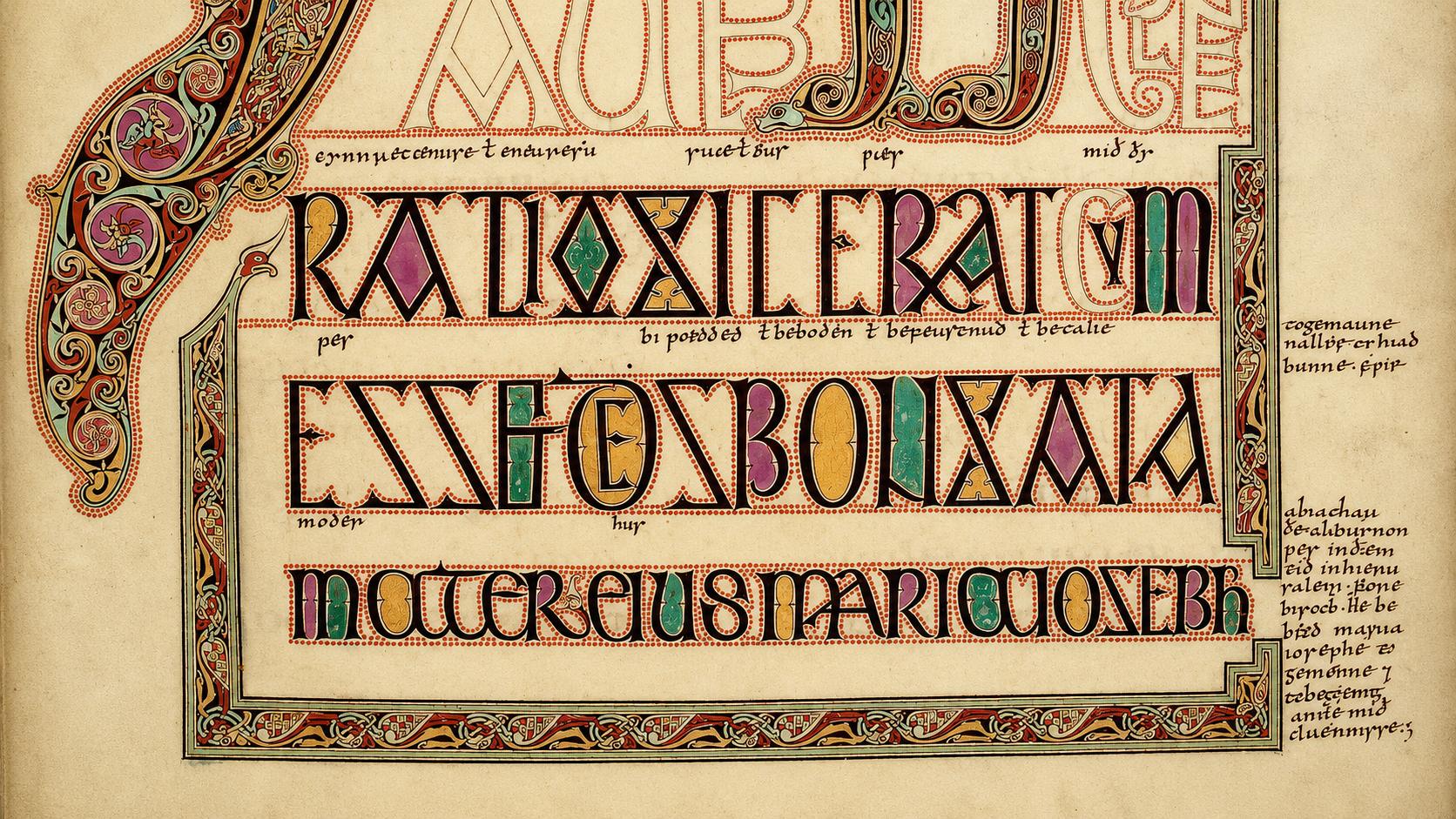
The Lindisfarne Gospels are a masterpiece of art, decorated with illuminations of extraordinary beauty and sophistication. The pages of the manuscript are adorned with intricate designs, combining elaborate patterns, interlacing knotwork and stylised figures in a style of remarkable complexity and beauty. The artistry of the manuscript drew on diverse traditions and influences, blending them into a style of unique brilliance. The great decorated pages, with their dazzling intricacy and their jewel-like colours, are among the supreme achievements of early medieval art, demonstrating a level of skill and imagination that has never been surpassed. The beauty of the Lindisfarne Gospels is a wonder to behold, a triumph of art and craftsmanship.
The Art of the Manuscript.
The creation of an illuminated manuscript such as the Lindisfarne Gospels involved an extraordinary range of skills and materials. The pages were made of vellum, prepared from animal skins, and the text was written in a fine and careful hand. The illuminations were created using pigments drawn from a variety of sources, some of them rare and precious, producing the rich and varied colours that adorn the pages. The making of the manuscript required mastery of writing, drawing, painting and design, as well as the patience and dedication to carry out such an enormous task. The art of the manuscript was a complex and demanding craft, and the Lindisfarne Gospels represent its supreme achievement, a work of consummate skill and artistry.
A Treasure Preserved.
The Lindisfarne Gospels have survived for more than thirteen hundred years, a precious treasure preserved through the centuries. The manuscript passed through many hands and many dangers over its long history, yet it survived, and it has been kept and treasured as one of the great masterpieces of early medieval art. Today the manuscript is preserved as a national treasure, carefully kept and occasionally displayed for the public to admire. The survival of the Lindisfarne Gospels through so many centuries is itself remarkable, and the manuscript is cherished as one of the supreme treasures of the early medieval world. Its preservation allows us to marvel at the achievement of the golden age of Northumbria.
A Symbol of the Region.
The Lindisfarne Gospels have become a symbol of the region and its golden age, a treasure that connects the people of the region to their extraordinary heritage. The manuscript, created on the holy island more than thirteen hundred years ago, embodies the achievement of the golden age of Northumbria and the brilliance of its art and devotion. It is a source of immense pride for the region, a masterpiece created in these lands that stands among the greatest treasures of the early medieval world. The desire to see the Gospels displayed in the region reflects the deep connection that the people feel to this great treasure and to the heritage it represents. The Gospels are a symbol of the region's golden age.
A Glory of the Past.
The Lindisfarne Gospels are one of the supreme glories of the region's heritage, a masterpiece of art and devotion created in the golden age of Northumbria. From the holy island where they were made to their survival as a treasured masterpiece, the Gospels embody the brilliance, the devotion and the artistic genius of the golden age. They stand among the greatest achievements of the early medieval world, a work of extraordinary beauty that has inspired wonder for centuries. The Lindisfarne Gospels connect us to the golden age of Northumbria and to the artistic glory of these lands, a treasure of incalculable value and a glory of the region's past.
The Patience of a Devoted Hand.
The creation of the Lindisfarne Gospels was the work of years, a labour of extraordinary patience and devotion carried out by a single gifted hand, and to contemplate the manuscript is to marvel at the dedication that its making required.
The decoration of the manuscript, with its intricate and elaborate designs, demanded an almost unimaginable degree of patience and skill, for every line and every detail had to be drawn and painted by hand, with the most careful attention. The creation of the great decorated pages, with their dazzling complexity, would have required countless hours of painstaking work, carried out over a long period in an act of sustained devotion. This patience and dedication were themselves expressions of the religious devotion that inspired the manuscript, for the labour of its making was offered as an act of worship and devotion to God.
The willingness to devote years of patient labour to the creation of so beautiful an object reflects the depth of the devotion that animated the age and the value that was placed on the creation of works of beauty in the service of faith. To appreciate the Lindisfarne Gospels is to appreciate not only the beauty of the manuscript but the patience and devotion that its creation required, the years of careful labour offered in the service of God.
The manuscript stands as a testament to the dedication of the gifted hand that created it and to the devotion that inspired such an extraordinary labour. The patience and devotion embodied in the Lindisfarne Gospels are part of what makes the manuscript so remarkable, for it is not only a masterpiece of art but a monument to the dedication and faith of its creator.#
To contemplate the manuscript is to be moved by the patience of the devoted hand that created it, and to marvel at the extraordinary labour of love that produced one of the supreme treasures of the medieval world.
Have your say.
The Lindisfarne Gospels, created on the holy island over thirteen hundred years ago, are a masterpiece of early medieval art.
Would you like to see the Lindisfarne Gospels displayed here in the region where they were made?
Newcastle History
A Masterpiece in Vellum: The Lindisfarne Gospels
The Lindisfarne Gospels, the magnificent illuminated manuscript created on Holy Island over thirteen hundred years ago, a glory of the region's heritage.
Advertisement

Comments (0)
You must be logged in to post comments.
Don't have an account? Register here
No comments yet. Be the first to share your thoughts!