
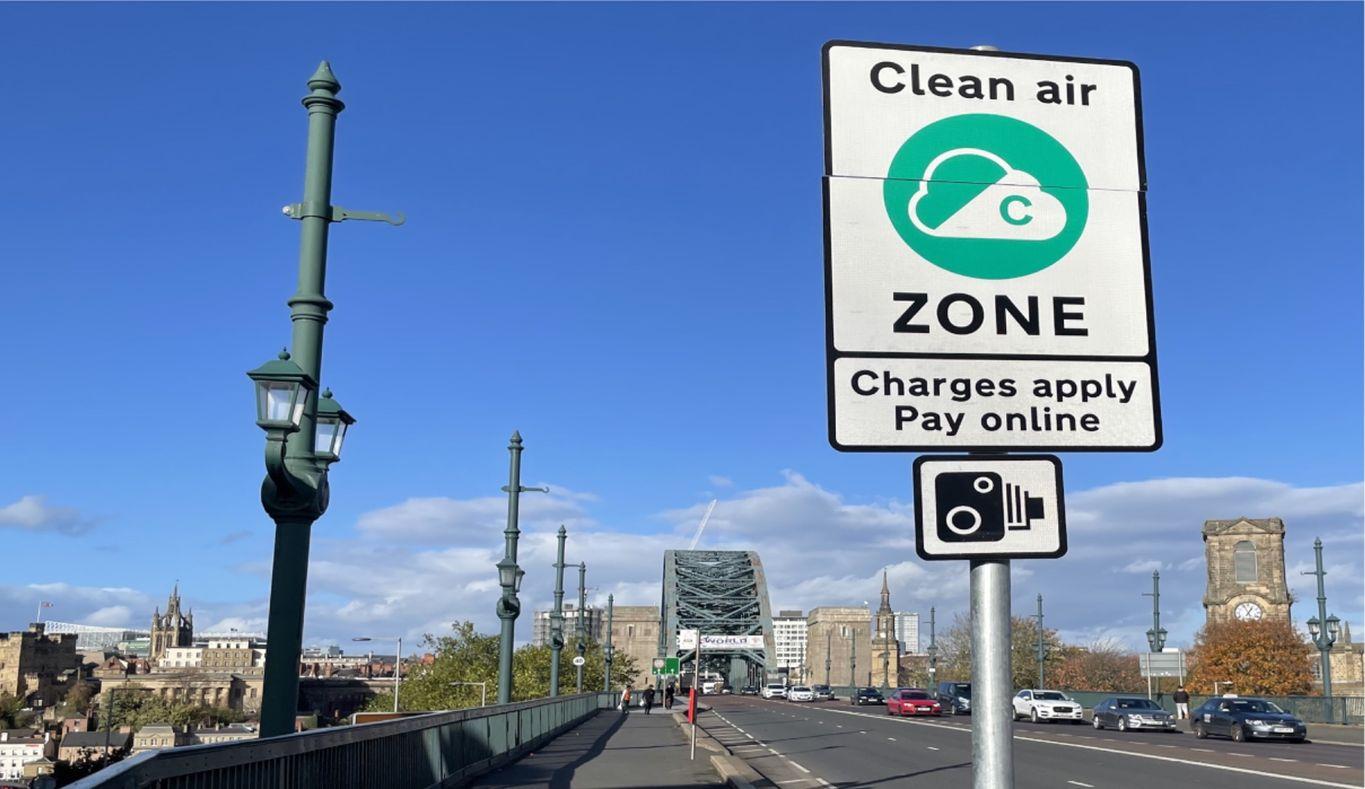
It is now a familiar sight on the approaches to Newcastle city centre and the bridges across the Tyne: the green signs marking the boundary of the Clean Air Zone. Introduced to tackle illegal levels of pollution, the scheme has divided opinion, but the early signs suggest it is beginning to do its job of clearing the air over Tyneside.
Why the Zone Was Introduced.
The Clean Air Zone was not a choice freely made but a response to a serious problem. Parts of Tyneside, including some of the busiest routes across the Tyne, had air pollution at levels that breached legal limits, and the councils were placed under a government order to bring nitrogen dioxide down to safe levels.
The stakes are high, with poor air quality linked to hundreds of premature deaths across Tyneside each year. Cleaning up the air is, in this sense, a matter of public health as much as of the environment.
How It Works.
The Tyneside Clean Air Zone covers much of Newcastle city centre along with the main routes over the Tyne, including the Tyne, Swing, High Level and Redheugh bridges. Importantly, it is what is known as a Class C zone, which means that private cars and motorcycles are not charged at all.
Instead, the charges apply only to older, higher-polluting commercial vehicles, such as vans, taxis, buses, coaches and lorries that do not meet emissions standards, at daily rates ranging from around twelve to fifty pounds. The zone operates around the clock and is enforced automatically by number-plate recognition cameras.
Early Signs of Success.
The early evidence suggests the scheme is working. The councils report that pollution data shows air quality improving since the zone was introduced, as drivers switch to cleaner vehicles and the number of non-compliant vehicles on the roads gradually falls.
Notably, only a small fraction of vehicles entering the city centre have actually had to pay a charge, which is precisely the intended outcome: the aim is not to raise money but to encourage cleaner vehicles and cleaner air. On that measure, the signs are encouraging.
The Money Question.
In its first year, the scheme generated several million pounds in charges and penalties, money that is used primarily to cover the costs of running the zone rather than to generate a profit. This is an important point, given suspicions that such schemes are revenue-raising exercises in disguise.
The relatively modest sums involved, and the fact that so few vehicles are charged, support the argument that the zone is about changing behaviour rather than filling council coffers. As more vehicles become compliant, the income is expected to fall further.
Helping People Adapt.
To help affected drivers and businesses switch to cleaner vehicles, substantial grant funding was made available. However, the uptake of these grants was slow, with a large portion of the money remaining unspent for a considerable time, prompting criticism over the eligibility rules and how the scheme was run.
The criteria were later widened and more of the funding distributed, helping over a thousand local businesses, tradespeople and taxi drivers to upgrade their vehicles, though the grant scheme is now drawing to a close. Supporting people through the transition has been an important, if imperfect, part of the picture.
A Divisive Measure.
The Clean Air Zone has not been without controversy. Some have worried that charging commercial vehicles places an unfair burden on businesses and tradespeople, particularly smaller operators, and concerns were raised early on about the impact on those least able to afford to upgrade.
Supporters counter that the health benefits of cleaner air, including fewer premature deaths and better health for everyone, far outweigh the costs, and that the exemption for private cars keeps the burden off ordinary motorists. Balancing these concerns has been central to how the scheme has been designed and run.
The Wider Picture.
The Clean Air Zone is part of a broader effort to improve air quality and reduce emissions across the region, alongside investment in public transport, cycling and cleaner vehicles. Cleaning up the air is increasingly recognised as essential not only for the environment but for public health and quality of life.
For a region with a proud industrial heritage, building a cleaner, healthier future is an important goal. The zone is one piece of a larger transition towards cleaner air and lower emissions.
Breathing Easier.
The Clean Air Zone, introduced to tackle illegal levels of pollution on Tyneside, appears to be achieving its central aim of improving air quality, with cleaner vehicles on the roads and pollution falling, all while keeping the charges off ordinary motorists. Though not without controversy and imperfections in how it has been delivered, it represents a serious effort to address a serious public health problem.
As Tyneside breathes a little easier, the zone offers a reminder that cleaner air brings real benefits to everyone's health and wellbeing. For a region working towards a cleaner future, it is a meaningful step in the right direction.
The Invisible Threat.
Air pollution is, in many ways, an invisible threat, lacking the obvious drama of other environmental problems yet causing serious and lasting harm to health. The pollutants emitted by traffic and other sources, including nitrogen dioxide and fine particles, are largely unseen, but their effects on the body are well established, contributing to heart and lung disease, worsening conditions such as asthma, and being linked to many premature deaths each year across Tyneside and far more across the country.
Because the harm is gradual and invisible, it can be easy to underestimate, which is part of why action to tackle air pollution has often been slow and contested. Yet the toll is real, falling particularly heavily on the young, the old and those with existing health conditions, and on communities living close to the busiest and most polluted roads, who are often among the most disadvantaged.
This is why measures such as the Clean Air Zone matter, not as ends in themselves but as means to reduce a genuine and serious threat to public health, even if the benefits are less immediately visible than the costs. Cleaner air means fewer people falling ill, fewer lives cut short and better health across the population, benefits that accrue quietly but substantially over time.
Recognising air pollution as the serious health issue it is, rather than a minor inconvenience, is essential to building support for the action needed to tackle it. The Clean Air Zone, by reducing the pollution that harms health, addresses a threat that may be invisible but is no less real for it, and in doing so contributes to a healthier future for everyone who lives, works and breathes in the region.
Over to you.
Tyneside's Clean Air Zone charges only older commercial vehicles, and the councils say air quality is improving since it began.
Do you think the Clean Air Zone has been good for Tyneside?
Local News
Clearing the Air: How the Clean Air Zone Is Changing Tyneside's Streets
Tyneside's Clean Air Zone charges only older commercial vehicles, and the councils say air quality is improving. We look at how it is changing the streets.
Advertisement


Comments (0)
You must be logged in to post comments.
Don't have an account? Register here
No comments yet. Be the first to share your thoughts!