
Businesses across the UK are increasingly choosing temporary workers over permanent employees as economic uncertainty and rising operating costs continue to weigh on hiring decisions. New recruitment data suggests employers are becoming more cautious about expanding their workforce, with many opting for short-term staffing solutions while waiting for greater economic stability.
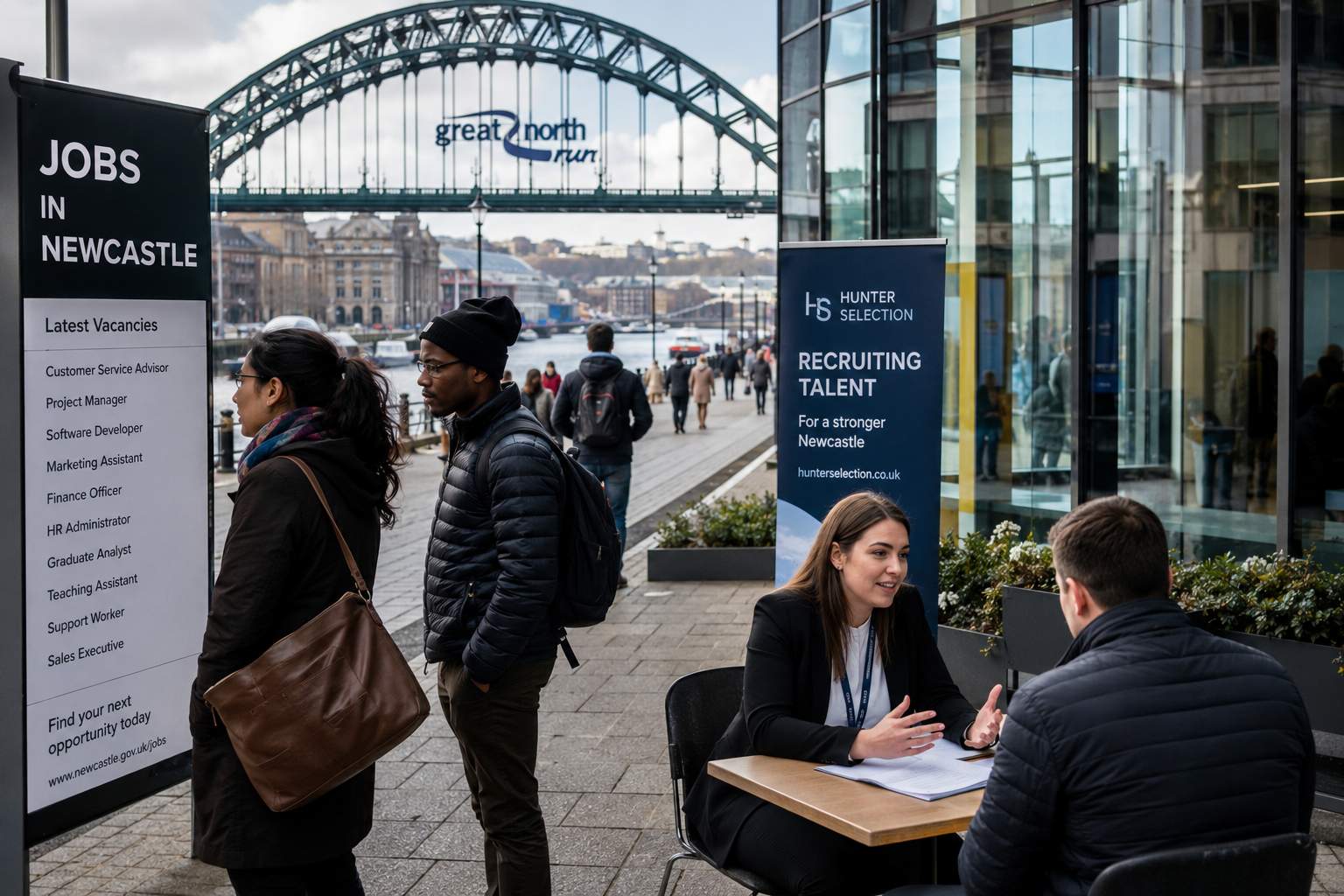
The trend is being felt across the country, including in Newcastle and the wider North East, where employers are facing similar challenges amid changing market conditions. Recruitment experts say the shift highlights growing concerns among businesses about future trading conditions, staffing costs and global economic developments.
Recent figures published by recruitment specialists KPMG and the Recruitment and Employment Confederation (REC) reveal that temporary job placements rose strongly during May. At the same time, permanent hiring recorded its steepest decline in almost a year, indicating that many employers are delaying long-term recruitment plans.
Businesses Prioritise Flexibility During Uncertain Times.
Companies are facing pressure from several directions. Higher employment costs, concerns over economic growth, international instability and changing workplace regulations have all contributed to a more cautious approach to recruitment.
Rather than committing to permanent contracts, many employers are choosing temporary staff to maintain flexibility. This allows businesses to respond more quickly if economic conditions change while still meeting operational demands.
For Newcastle employers, particularly those in retail, hospitality, logistics and professional services, temporary recruitment offers a practical solution during periods of uncertainty. Industry experts say firms want to avoid overcommitting while consumer spending and business confidence remain unpredictable.
Neil Carberry, chief executive of the Recruitment and Employment Confederation, said temporary employment is increasingly filling gaps left by slower permanent recruitment activity. The trend reflects a broader effort by businesses to control costs while maintaining productivity.
Newcastle Job Seekers Facing a Changing Employment Landscape.
The changing recruitment environment is creating a mixed picture for job seekers across Newcastle and the North East.
While temporary opportunities are becoming more widely available, candidates searching for permanent positions may find competition increasing. Recruiters report a growing number of people applying for available roles as redundancies, job security concerns and reduced hiring activity encourage more workers to enter the employment market.
Newcastle has traditionally benefited from a diverse employment base that includes healthcare, education, digital technology, manufacturing and public sector roles. However, employers across several sectors are now taking a more cautious approach when it comes to expanding their permanent workforce.
This means job seekers may need to consider temporary contracts as a route back into employment or as a stepping stone towards long-term opportunities.
Employment advisers say temporary roles can provide valuable experience, help workers develop new skills and often lead to permanent positions when business conditions improve.
Healthcare Remains a Bright Spot for Recruitment.
Despite broader weakness in the labour market, healthcare continues to show resilience.
The latest recruitment data found that nursing, medical and care services were the only major sectors to report increased demand for permanent staff. This reflects ongoing workforce shortages and rising demand for healthcare services across the UK.
The trend is particularly relevant in Newcastle, where major employers such as Newcastle Hospitals NHS Foundation Trust continue to play a significant role in the regional jobs market.
Healthcare remains one of the largest employment sectors in the North East, supporting thousands of jobs and providing stable career opportunities even during periods of economic uncertainty.
Meanwhile, retail experienced the sharpest decline in permanent vacancies nationwide, reflecting changing consumer habits and continuing pressures on high street businesses.
Rising Unemployment Adds to Concerns.
Official figures have added further evidence that the UK labour market is cooling.
According to the Office for National Statistics, the UK unemployment rate recently rose to 5%, marking an increase compared with previous months. Wage growth has also slowed, suggesting businesses are becoming more cautious about salary increases and workforce expansion.
Perhaps even more concerning is the growing number of young people who are not currently working, studying or undertaking training. A recent government-backed report found that more than one million young people now fall into this category, the highest level recorded in over a decade.
For Newcastle, where universities produce thousands of graduates each year, the situation presents a significant challenge. Many young people entering the workforce are encountering a more competitive job market than graduates experienced just a few years ago.
Graduates Face Tougher Competition.
The slowdown in permanent hiring is creating additional difficulties for graduates and entry-level job seekers.
Business leaders have warned that a reduction in junior roles could have long-term consequences for youth employment. Entry-level positions often provide the first step into professional careers, helping young workers gain experience and build skills.
Without sufficient opportunities, graduates may face longer periods of unemployment or find themselves accepting temporary work while searching for permanent roles.
Newcastle's strong student population means the issue is particularly significant locally. With institutions such as Newcastle University and Northumbria University producing highly qualified graduates each year, competition for available positions is expected to remain intense throughout 2026.
What the Numbers Reveal About the UK Labour Market.
Several key statistics help illustrate the current state of employment across the UK:
UK unemployment has risen to approximately 5%.
More than one million young people are now not in employment, education or training.
Permanent staff recruitment has fallen at its fastest rate in 10 months.
Temporary job placements increased during May as employers sought greater flexibility.
Retail recorded the sharpest drop in permanent vacancies among major sectors.
Healthcare was the only sector to report stronger demand for permanent staff.
These figures highlight a labour market that remains active but is increasingly cautious.
What Happens Next for Newcastle and the UK Jobs Market?
Economists believe much will depend on business confidence during the second half of 2026. If inflation remains under control and economic growth improves, employers may begin restarting delayed recruitment plans.
However, ongoing geopolitical tensions and continued cost pressures could encourage businesses to maintain their current cautious approach.
For Newcastle, the outlook remains mixed. The city continues to benefit from strong education, healthcare and technology sectors, but local employers are likely to mirror wider national hiring trends until economic confidence improves.
In the short term, temporary positions may continue to dominate recruitment activity, providing opportunities for workers while businesses navigate an uncertain economic environment.
As employers seek flexibility and workers search for stability, the Newcastle jobs market appears set to remain one of the most closely watched indicators of the UK's wider economic health.
Share your experience in the comments and tell us how the changing jobs market is affecting you.
Do you think permanent hiring will recover in Newcastle during 2026?
Business News
Newcastle Job Market Under Pressure as Permanent Hiring Falls
Advertisement





Comments (0)
You must be logged in to post comments.
Don't have an account? Register here
No comments yet. Be the first to share your thoughts!