
There is a familiar routine at swimming pools across Newcastle. Get changed, lock everything away, put on your goggles and head straight for the water.
The shower can wait until afterwards, right?
Not necessarily.
Skipping the shower before entering a swimming pool means sweat, natural skin oils, deodorant, cosmetics and other substances can follow you into the water. The habit is sometimes jokingly referred to as "dry stroking", and there is a genuine hygiene argument for avoiding it.
With Newcastle investing millions in new swimming facilities and millions of people swimming nationally, perhaps it is time to settle one of the less glamorous questions of pool etiquette: should everyone shower before taking the plunge?
Why swimmers should shower first.
A person does not need to look or feel dirty to introduce unwanted substances into pool water.
Throughout an ordinary day, our bodies accumulate sweat and natural oils, while many people also use deodorant, moisturiser, make-up and other personal care products.
Some of that can enter the water when swimmers skip the showers and head directly into the pool.
Chlorine is used to help disinfect swimming pool water, but it can react with contaminants introduced by swimmers. These reactions can contribute to the formation of chloramines.
That familiar strong swimming pool smell is therefore not necessarily evidence of an exceptionally clean pool packed with fresh chlorine. The chemistry of pool water is more complicated than that.
The pre-swim shower is consequently not just about making yourself feel clean. It is about reducing what every individual adds to water being shared by potentially hundreds of other people.
Swimming remains hugely popular.
It might sound like a minor piece of etiquette until the number of people using swimming pools is considered.
Sport England's latest Active Lives figures show around 4.4 million adults participate in swimming in England, although participation remains below its pre-pandemic peak.
Overall physical activity has reached record levels, with 64.6 per cent of adults, equivalent to 30.9 million people, achieving at least 150 minutes of moderate intensity activity each week.
Swimming therefore remains an important part of Britain's exercise habits.
When large numbers of swimmers use the same facilities, small individual habits can quickly add up.
Newcastle is investing millions in swimming.
The subject is particularly relevant in Newcastle as the city prepares for a major expansion of its leisure facilities.
Construction officially began in March 2026 on Newcastle's new £28.9 million Outer West Leisure Centre at West Denton.
The development will include an eight-lane 25-metre swimming pool alongside a 17-metre training pool, gym, sports hall, sauna, steam rooms, café, children's play area and library.
Newcastle City Council says it will be the first council-owned leisure centre and pool built in the city for 26 years, with completion expected in late 2027.
Elswick Community Pool and Gym also reopened in July 2025 following a £3 million decarbonisation and modernisation programme.
With significant public money being invested in Newcastle swimming pools, keeping facilities pleasant for everyone is not solely the responsibility of filtration systems and pool operators.
Swimmers have a part to play too.
The shower afterwards still matters.
Showering before swimming does not mean abandoning the traditional post-swim wash.
The two showers serve different purposes.
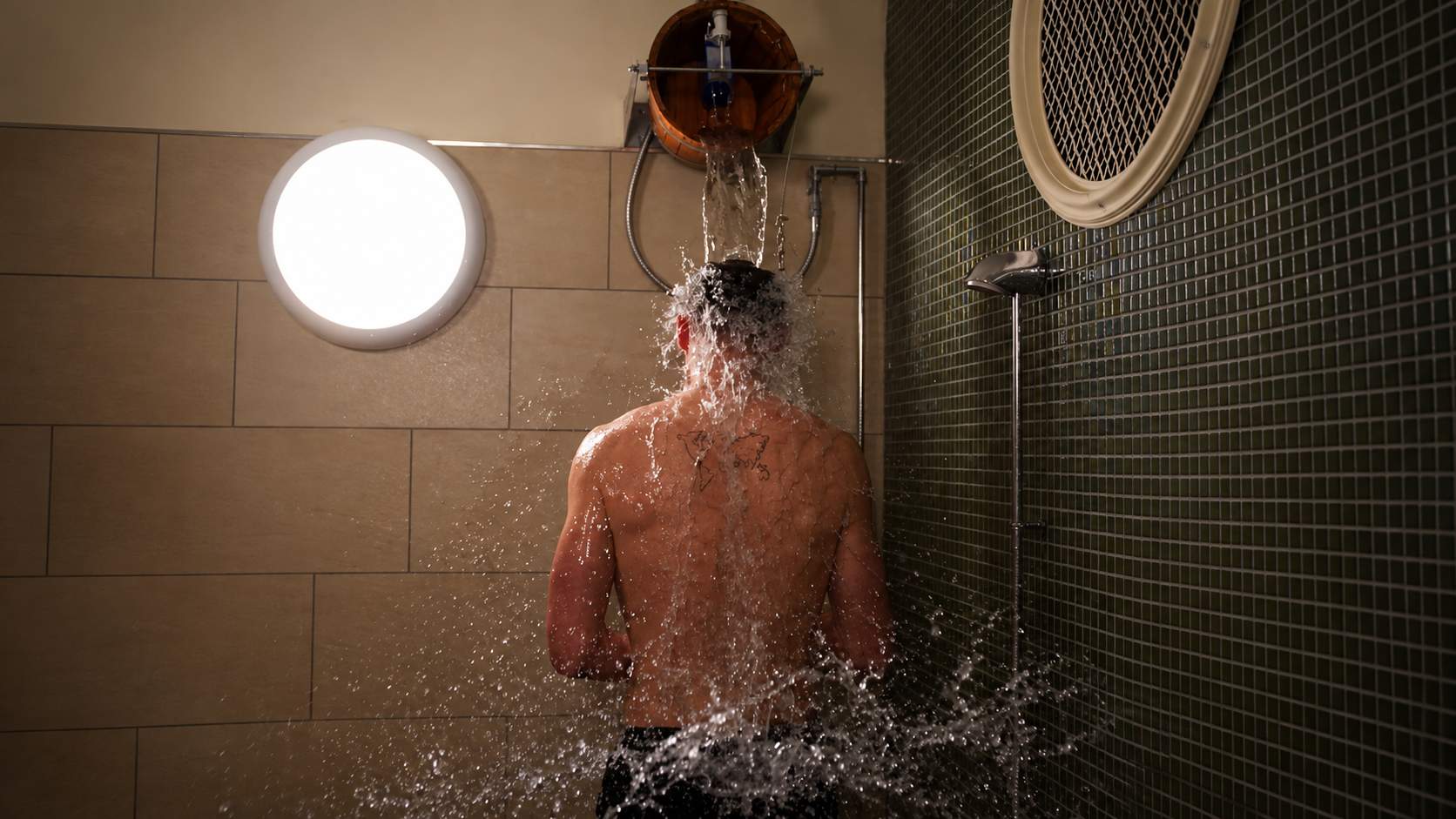
A pre-swim shower helps remove sweat, oils and personal care products before they enter communal water. Afterwards, showering helps rinse pool water from your skin and hair.
For regular swimmers, the simplest routine is therefore to shower twice: once before entering and again when leaving.
It does not require an elaborate bathroom routine before every swimming session. The important point is to avoid walking directly from everyday life into communal pool water without rinsing first.
Is it time to call out Newcastle's dry strokers?
Pool etiquette has always contained unwritten rules.
Faster swimmers should choose appropriate lanes, people should avoid blocking the end of the pool and everyone is expected to give fellow swimmers a reasonable amount of space.
Perhaps the pre-swim shower belongs on that list.
Nobody wants a relaxing swim turned into an argument over changing-room etiquette, and modern pools are specifically designed to treat and filter their water.
But there is also an obvious communal principle involved.
If everyone expects clean pool water, everyone can contribute towards keeping it that way.
So the next time you visit a Newcastle swimming pool and find yourself walking directly from the changing room towards the water, that shower might deserve a quick detour.
Otherwise, you could be one of Newcastle's "dry strokers" without even realising it.
Share your thoughts.
Is "dry stroking" bad pool etiquette or are swimmers making too much of it?
Lifestyle News
Newcastle's Dry Strokers - Are You One of Them?
Advertisement





Comments (0)
You must be logged in to post comments.
Don't have an account? Register here
No comments yet. Be the first to share your thoughts!