
For years, few words have generated as much debate in Britain as "chav". Depending on who you ask, it describes a fashion trend, a youth culture, a social stereotype, or an insult rooted in class prejudice.
In the North East, however, the conversation has always been slightly different. Long before the word "chav" entered mainstream national vocabulary, many people across Newcastle, Gateshead, Sunderland and surrounding communities were familiar with another term: "charva" or "charver".
The label became associated with tracksuits, sportswear, specific slang, certain music tastes and a distinct working-class identity. Yet beneath the stereotypes lies a far more complicated story about economic change, social class, regional pride and the way young people create identities in challenging circumstances.
Today, as Newcastle continues to evolve and attract new investment, the debate around North East chav culture remains surprisingly relevant.
The Origins Of The North East Charva.
Many linguists believe the term "chav" may have connections to the North East word "charver" or "charva", which has existed in Tyneside dialect for decades. The modern use of "chav" exploded nationally during the early 2000s, but its roots can be traced to older working-class youth identities.
In Newcastle and surrounding areas, being labelled a charva often referred to much more than clothing. It could describe the neighbourhood someone came from, the way they spoke, the music they listened to, or the social group they belonged to.
Unlike many national stereotypes, the North East version carried a unique local identity. Some wore the label proudly. Others saw it as an insult.
Either way, it became embedded in the region's cultural vocabulary.
Why The Stereotype Took Hold.
The rise of chav culture coincided with major economic and social changes across Britain.
The North East experienced significant industrial decline during the late twentieth century. Shipbuilding, mining and heavy engineering industries that had once supported entire communities disappeared or dramatically reduced in scale.
Many former industrial communities faced unemployment, lower wages and reduced opportunities compared with previous generations.
Recent deprivation data continues to show concentrations of deprivation across parts of the North East, with the region consistently featuring among England's most disadvantaged areas.
Against this backdrop, youth culture became a way for many young people to create their own identity.
Sportswear brands, designer labels, football culture and local music scenes became symbols of belonging.
For some, chav culture was never about anti-social behaviour. It was simply about fitting in with friends and expressing local identity.
Tracksuits Became A Cultural Symbol.
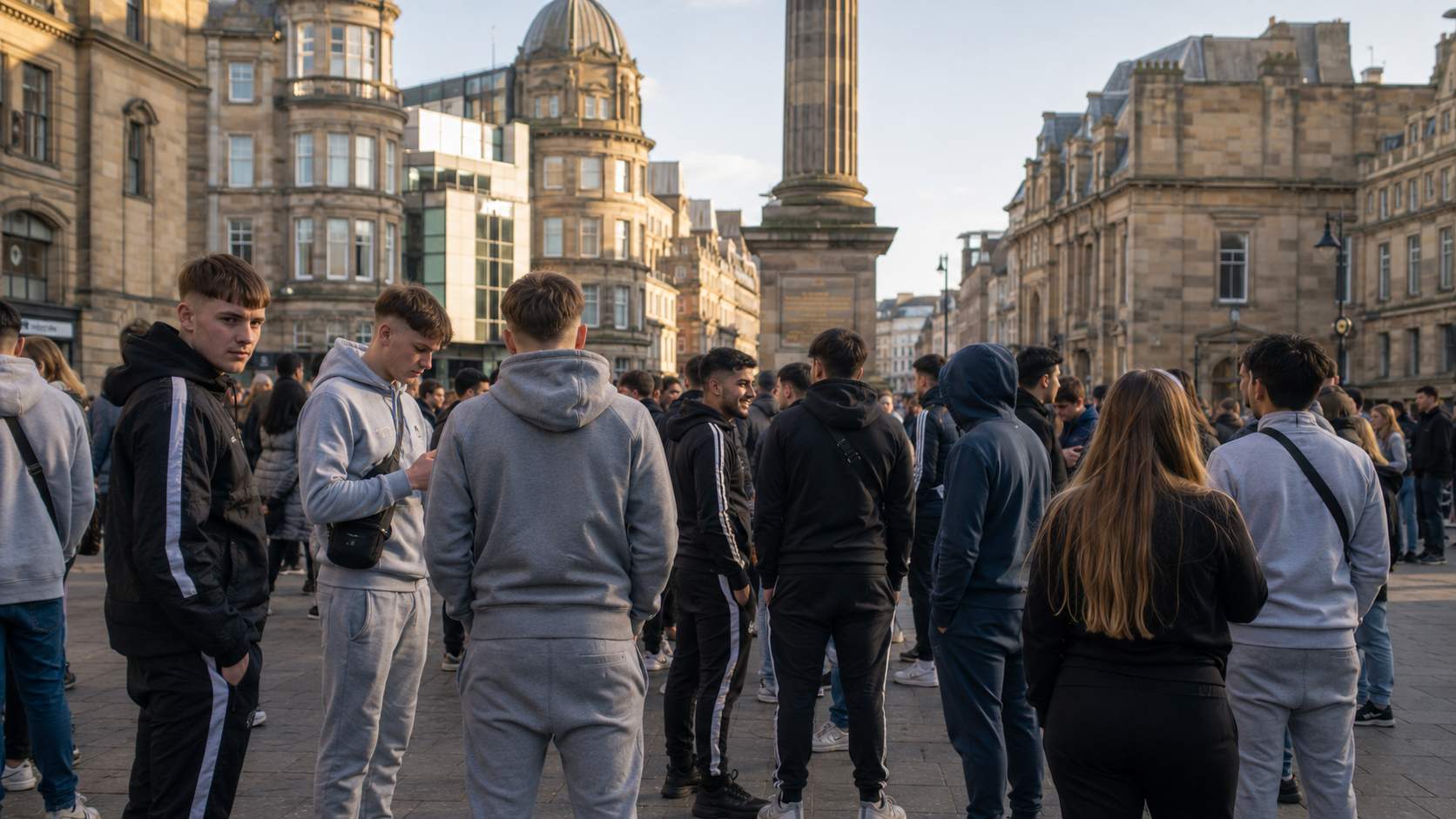
Few items became more associated with chav culture than the tracksuit.
Across Newcastle, Gateshead and Sunderland during the 1990s and 2000s, sportswear became a dominant fashion choice among young people.
Football culture played a major role. Newcastle United's popularity across the region helped reinforce the connection between sportswear and everyday fashion.
While national media often mocked tracksuits as evidence of poor taste, many local residents viewed them as practical, affordable and comfortable.
The stereotype grew because television programmes, newspapers and online forums frequently used images of young people in sportswear when discussing crime, anti-social behaviour or social problems.
Over time, the clothing itself became shorthand for assumptions about class and background.
Newcastle's Youth Culture Was More Complex Than Headlines Suggested.
One of the biggest misconceptions about North East chav culture is that it represented a single group.
In reality, Newcastle's youth culture has always been diverse.
Different generations embraced different trends. Some identified with football casual culture. Others were influenced by dance music, indie music, hip-hop or emerging online communities.
Research examining youth identities in Newcastle and other UK cities found that class continued to play a significant role in how young people were perceived and categorised.
The label "chav" often said as much about the person using it as the person being described.
For many young people growing up in working-class communities, the stereotype became something they had to navigate rather than embrace.
The Media's Role In Creating The Image.
Throughout the 2000s, chav culture became a fixture of British popular culture.
Television shows, comedy sketches and tabloid headlines frequently portrayed chavs as loud, irresponsible or anti-social.
Critics argued that these portrayals reinforced negative stereotypes about working-class communities. Researchers and commentators have repeatedly suggested that the term became a vehicle for class-based prejudice disguised as humour.
Even today, many people from working-class backgrounds believe the label remains unfairly applied.
The controversy surrounding the word explains why it still sparks debate whenever it appears in public discussion.
The North East's Economic Reality Matters.
Understanding chav culture requires understanding the economic realities facing many communities.
The North East continues to face significant challenges compared with some other regions of England.
Recent educational data showed that only 22.9 per cent of A-level entries in the North East achieved A or A* grades, compared with significantly higher figures in London. University participation rates among North East young people also lag behind the capital.
Meanwhile, broader deprivation studies consistently identify concentrations of disadvantage across parts of the region.
These statistics do not define communities, but they help explain why discussions about class, opportunity and identity remain important.
For many people, chav culture became intertwined with wider debates about inequality and social mobility.
How Social Media Changed Everything.
The rise of social media transformed youth culture across the North East.
Young people no longer relied solely on local influences to shape their identities. Global trends became accessible instantly through smartphones and social platforms.
As a result, the traditional image of the North East charva began to fade.
Fashion trends became more diverse. Music tastes broadened. Online communities replaced some of the local social structures that once shaped youth identity.
Yet elements of the culture survived.
Local slang remains common. Sportswear continues to dominate street fashion. Strong community identities still exist in many neighbourhoods.
The difference is that today's young people are less likely to accept labels imposed upon them.
Why Some People Reclaimed The Label.
Interestingly, not everyone rejects the term.
Some people have attempted to reclaim aspects of chav culture as a celebration of working-class identity.
Supporters argue that many of the characteristics mocked by outsiders were actually expressions of resilience, loyalty and community pride.
In Newcastle especially, local identity remains one of the region's defining strengths.
Many residents view the area's humour, friendliness and sense of belonging as qualities worth celebrating rather than stereotypes to be dismissed.
That perspective has led some younger generations to revisit the conversation around chav culture from a more positive angle.
The Legacy Of Chav Culture In The North East.
More than two decades after the term entered mainstream use, its legacy remains visible.
The stereotype continues to appear in political debates, media discussions and online conversations.
Yet the North East has changed significantly during that period.
New developments have transformed parts of Newcastle. Universities have expanded. New industries have emerged. Creative sectors continue to grow.
At the same time, many communities continue to face economic challenges and concerns about opportunity.
That tension helps explain why discussions about class and identity remain so powerful.
The story of North East chav culture is ultimately not just about fashion or slang. It is about how communities are viewed, how people define themselves and how regional identity survives through periods of change.
Whether people see the label as offensive, nostalgic or simply outdated, its impact on Newcastle and the wider North East remains impossible to ignore.
What The Debate Says About The North East Today.
Perhaps the most interesting aspect of chav culture is what it reveals about modern Britain.
The debate is rarely just about tracksuits or stereotypes. Instead, it touches on deeper questions surrounding class, opportunity and respect.
In the North East, those conversations often feel particularly relevant because of the region's strong sense of identity and history.
As Newcastle continues to modernise while maintaining its working-class roots, the legacy of chav culture serves as a reminder that labels rarely tell the full story.
Behind every stereotype are real communities, real people and experiences that deserve to be understood rather than simply judged.
That may be the most important lesson the North East's relationship with chav culture has left behind.
Share your views.
Do you think the term "chav" has become outdated, or does it still reflect real parts of North East culture today?
Lifestyle News
Newcastle's Most Misunderstood Subculture
Advertisement




Comments (0)
You must be logged in to post comments.
Don't have an account? Register here
No comments yet. Be the first to share your thoughts!