
A football club is rarely just a football club, and nowhere is that truer than on Tyneside. Newcastle United sits at the centre of the city's identity and, increasingly, its economy, drawing tens of thousands of people into the city on matchdays and acting as a magnet for investment that reaches far beyond the pitch.
A Club Transformed.
Since the 2021 takeover by a consortium led by Saudi Arabia's Public Investment Fund, the club has been transformed both on and off the pitch. Qualification for the Champions League and a first domestic trophy in decades have raised its profile to a level not seen in a generation, and that success has translated into rising revenues.
The club's turnover has climbed to around 320 to 335 million pounds in the most recent figures, with matchday income alone worth in the region of 50 million pounds a year and projected to rise sharply, towards 65 million pounds, in a season featuring European football. Each of those figures represents money flowing through the local economy as much as the club's accounts.
The Matchday Economy.
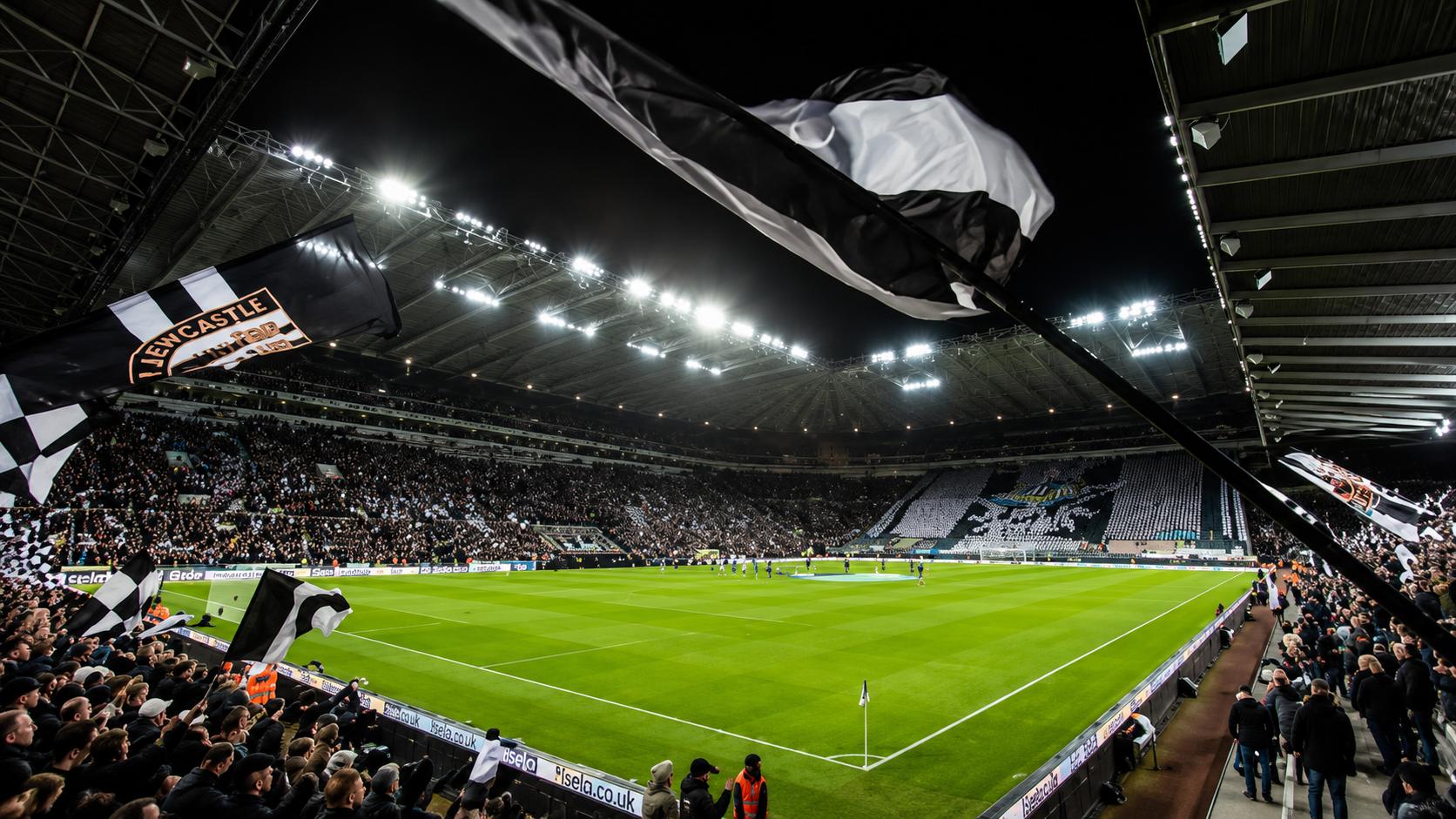
The clearest economic impact is felt on matchdays themselves. A home fixture brings a crowd of more than 50,000 into the heart of the city, and those supporters do not simply arrive, watch and leave.
They fill the pubs, bars and restaurants of the city centre and the quayside, they stay in hotels, they use taxis, buses and the Metro, and they spend in shops, both before and after the game. For the hospitality and retail businesses clustered around the ground and across the centre, the matchday crowd is a reliable and substantial source of trade, and a successful season that keeps fans engaged and brings extra cup and European fixtures multiplies that benefit across the year.
A Catalyst for Investment.
Beyond the direct spending of supporters, the club has become a focal point for a wider wave of city-centre regeneration. The area around the ground has seen significant development, including a major office quarter that integrates a historic facade and is set to become a large regional base for thousands of public-sector staff, alongside a new luxury hotel and a leisure and music venue carved out of a listed building.
While not all of this is the club's own doing, its prominence and the confidence its success has generated form part of the backdrop to this investment, creating a destination district that feeds directly into matchday footfall and the year-round life of the city centre. A thriving, high-profile football club is widely seen as an asset in attracting the kind of investment and visitors that benefit the whole region.
Jobs and Employment.
The club is also a significant employer in its own right. Beyond the players and coaching staff, it employs a substantial permanent workforce across administration, commercial, community and operational roles, and it relies on a large number of casual matchday staff, from stewards and hospitality workers to caterers and cleaners.
The supply chain that serves the club, from food and drink to security and professional services, supports further employment across the region. For many people, the club is not just the team they support but a source of work, and its growth under new ownership has expanded the range of careers it offers.
A Source of Identity.
The economic impact cannot be wholly separated from something less tangible but no less real: the club's role in the identity and morale of the city. Newcastle United is woven into the sense of who the people of Tyneside are, and its fortunes affect the mood of the city in ways that ripple into everything from spending confidence to civic pride.
A winning team lifts the whole region, drawing positive national and international attention to Newcastle and reinforcing its image as a vibrant, ambitious place. That reputational benefit, while hard to put a precise figure on, matters for a region keen to attract visitors, students, businesses and investment.
The Bigger Picture.
It is worth keeping a sense of proportion. The club's own financial position is not a simple story of profit, with heavy investment in players and infrastructure meaning its underlying earnings can be modest or negative in any given year, and the wider economic benefits it generates are spread across many businesses rather than captured in a single headline number.
The point is not that the club is a money-making machine in isolation, but that it acts as an engine of activity, spending and attention that benefits the broader regional economy. Estimating the full value of that role is difficult, and any single figure should be treated with caution, but the direction of the effect is not in doubt.
An Anchor for the Region.
Newcastle United's significance to the North East goes well beyond results on a Saturday afternoon. As a generator of matchday spending, a catalyst for investment, a major employer and a powerful symbol of the region's identity and ambition, the club anchors a substantial slice of the city's economic and civic life.
Its resurgence under new ownership has amplified that role, and the coming years, with continued investment and the prospect of a bigger stadium, are likely to deepen the ties between the club's fortunes and those of the region it represents. For Tyneside, the health of its football club and the health of its economy have rarely felt so closely linked.
The Question of Dependence.
A note of caution is worth sounding amid the optimism about the club's economic role, because a region or city that leans heavily on a single institution, however successful, takes on a certain vulnerability. Football is an inherently uncertain business, where fortunes can change with results, ownership decisions, injuries or regulatory shifts, and a local economy that becomes too closely tied to the fortunes of one club exposes itself to those swings.
The matchday trade that businesses enjoy depends on the team continuing to attract large crowds, which in turn depends on success that can never be guaranteed, and the wider investment drawn to the area in the club's slipstream could prove sensitive to any change in the club's trajectory. None of this diminishes the genuine benefits the club brings, but it underlines the importance of a broad and diverse regional economy rather than an over-reliance on football alone.
The healthiest outcome is one in which the club's success acts as a complement to, and a catalyst for, a wider base of industries, employers and attractions, rather than becoming the single pillar on which too much rests. Tyneside's economy has many strengths beyond its football club, from education and digital industries to culture and tourism, and the ideal is for the club's resurgence to lift and reinforce those strengths rather than overshadow them.
Celebrating the economic pull of Newcastle United, in other words, is entirely justified, but it sits most comfortably alongside a clear-eyed commitment to building an economy resilient enough not to live or die by results on the pitch.
Share your thoughts.
How much does the club's success affect the mood and economy in your area?
Sports News
More Than a Game: Newcastle United's Pull on the Regional Economy
Newcastle United draws over 50,000 fans into the city on matchdays and acts as a magnet for investment. We look at the club's economic pull on the region.
Advertisement



Comments (0)
You must be logged in to post comments.
Don't have an account? Register here
No comments yet. Be the first to share your thoughts!