
Youth crime in Newcastle is often discussed through headlines about antisocial behaviour, shoplifting, robbery or violence in the city centre, but the true picture is more complicated. Most young people in Newcastle are not involved in crime, and national youth justice figures show the number of children entering the formal justice system remains far lower than it was a decade ago.
Even so, youth offending remains a major concern for families, schools, businesses and residents across the city. Newcastle City Council's Youth Justice Service works with children and young people aged 10 to 17 who have offended or are at risk of further trouble, while Northumbria Police and local partners continue targeting areas where youth-related crime and antisocial behaviour are most visible.
The national youth crime picture.
The latest Youth Justice Board figures for England and Wales show there were just over 8,100 child first-time entrants to the youth justice system in the year ending March 2025, the lowest number on record. Proven offences by children remained broadly unchanged at around 35,600, while the average time from offence to case completion reached 230 days.
The same report found children accounted for around one in five stop and searches where age was known, with nearly three quarters resulting in no further action. The proven reoffending rate for children fell slightly to 31.8 percent, although the number of children in the reoffending cohort increased.
Those national figures matter because Newcastle follows many of the same trends. Fewer children are entering the formal system than in previous generations, but those who do often have complex needs involving education, family instability, mental health, exploitation, substance misuse or trauma.
What types of youth crime are most common.
Local youth crime is not limited to one type of offence. In Newcastle, the offences most often linked with younger suspects tend to include antisocial behaviour, shop theft, criminal damage, public order offences, possession of weapons, robbery, drug-related incidents and violence.
City centre businesses are particularly likely to report shoplifting, disorder and intimidation. Residential neighbourhoods may experience problems linked to nuisance groups, damage to property, off-road bikes, fireworks, vaping, alcohol or low-level violence.
Across Newcastle as a whole, recent crime data shows violence and sexual offences were the most reported category, with more than 11,000 offences recorded over a 12-month period. Antisocial behaviour stood at around 23.9 offences per 1,000 residents, shoplifting at 13.0 per 1,000 and criminal damage and arson at 9.5 per 1,000.
These figures cover all ages, not only young people, but they help show the crime types most visible in the city.
Which age groups are most affected.
The youth justice system covers children aged 10 to 17, but offending is not evenly spread across that range. Nationally, older teenagers are more likely to appear in youth justice data than younger children, particularly those aged 15 to 17.
Younger children are more likely to be dealt with through prevention, family support, school intervention or out-of-court work rather than formal prosecution. By the mid-teenage years, police and youth justice services are more likely to see repeated incidents, peer influence, school exclusion, exploitation risks or involvement in more serious offences.
Newcastle's Youth Justice Service also operates early intervention programmes, including Turnaround and Focused Deterrence. Focused Deterrence specifically aims to stop crime by supporting young people in the city centre before behaviour escalates into more serious offending.
Where are the highest crime areas in Newcastle.
The highest overall crime rates in Newcastle are usually found in places with heavy footfall, nightlife, shopping areas and transport links. Recent district data shows Monument ward had by far the highest recorded crime rate, at around 577 offences per 1,000 residents. This reflects its city centre role rather than simply the behaviour of local residents.
Byker followed at around 221.6 offences per 1,000 residents, while Elswick, Walker, Blakelaw and Kingston Park South and Newbiggin Hall also ranked above the city average.
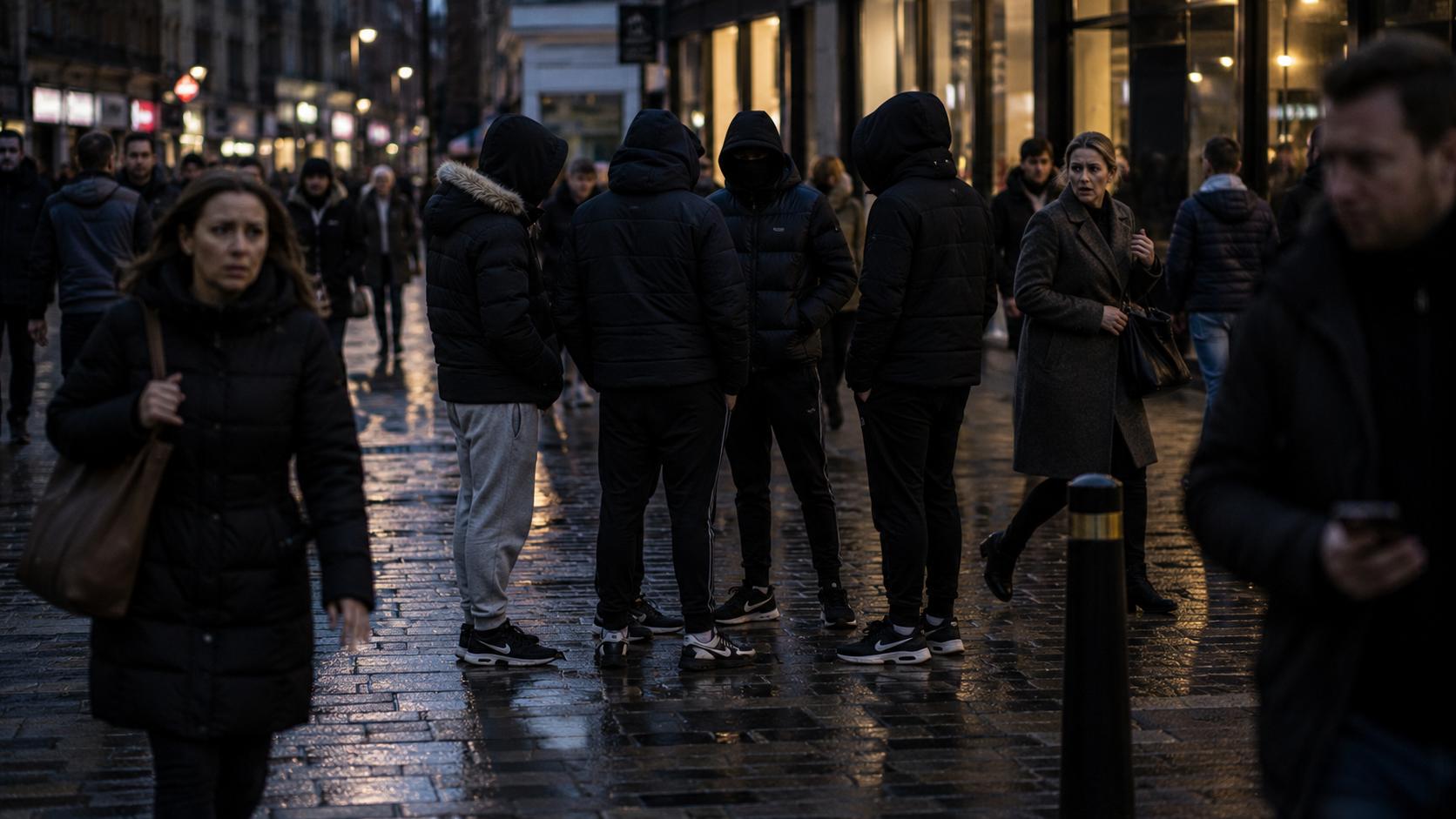
For youth crime, hotspots often overlap with places where young people gather, travel or socialise. That includes shopping streets, transport interchanges, parks, retail areas and neighbourhood centres. However, police figures rarely publish detailed suspect-age breakdowns by ward, so it would be misleading to claim every high-crime ward is automatically a youth crime hotspot.
What issues are driving concern.
One of the biggest concerns is that some young offenders are not simply choosing crime in isolation. Police, councils and youth workers increasingly talk about exploitation, peer pressure, online influence and organised adult offenders using children to carry drugs, steal goods or intimidate others.
Schools and parents have also raised concerns about social media disputes spilling into real-world violence. Online arguments can escalate quickly, while videos of disorder may encourage copycat behaviour or make incidents appear more widespread than official figures suggest.
Newcastle's Children and Young People's Strategic Partnership has also highlighted issues young people themselves raise, including transport safety, vaping, mental health, parks and open spaces, and gender-based violence.
How Newcastle is responding.
Newcastle's Youth Justice Service works with children, families, victims, schools, police, health services and community organisations. Support can include victim liaison, reparation, education help, music therapy, boys and girls groups, and one-to-one intervention.
A 2025 inspection of Newcastle Youth Justice Service found signs of innovation and strong partnership work, but also said improvements were needed in assessment, planning and work to manage risk of harm. That means Newcastle has promising programmes in place, but also clear areas where services need to become more consistent.
For residents, the key point is that youth crime is not solved by enforcement alone. Police action matters when offences are serious, repeated or dangerous, but long-term reductions usually depend on prevention, education, family support, safe public spaces and early help before children become regular offenders.
What the figures really tell us.
Newcastle youth crime remains a serious issue in certain locations and offence types, especially where antisocial behaviour, shoplifting, violence or public disorder affect daily life. However, the data also shows the picture is not as simple as saying young people are responsible for most crime.
The city centre naturally records higher crime because more people pass through it, while some neighbourhoods face deeper social challenges that can increase the risk of youth offending.
The most useful way to understand Newcastle's youth crime statistics is to look at patterns rather than panic. Older teenagers are more likely to appear in the justice system, city centre areas see the highest visible demand, and the most common concerns involve antisocial behaviour, violence, shop theft, criminal damage and public order.
For Newcastle and the wider North East, the challenge is clear. The city needs firm action against serious offending, but also sustained support that gives young people better choices before they reach court.
Share your thoughts.
Have you noticed changes in youth crime or antisocial behaviour in Newcastle or your local area?
Crime News
Newcastle Youth Crime Figures Raise Concerns
Advertisement





Comments (0)
You must be logged in to post comments.
Don't have an account? Register here
No comments yet. Be the first to share your thoughts!