
In the countryside of the North East, away from the towns and cities, there was once a form of crime that pitted the rural poor against the landed gentry. Poaching, the illicit taking of game from the land of others, was widespread in earlier times, and the harsh game laws that sought to prevent it were a source of bitter conflict. The story of poaching and the game laws is a fascinating window into the social tensions of the rural past.
The Game Laws.
At the heart of the matter were the game laws, the strict laws that reserved the right to take game, such as deer, hares, rabbits, fish and game birds, to the landed classes. These laws made it a serious offence for ordinary people to take game, even on common land or in pursuit of food, reserving the privilege for landowners and those they permitted. The game laws were a source of great resentment, for they denied the rural poor access to a source of food that was often abundant in the countryside around them, while protecting the sporting privileges of the wealthy. The laws embodied the social divisions of the age, and they were widely seen as harsh and unjust by those they restricted.
The Poacher's Trade.
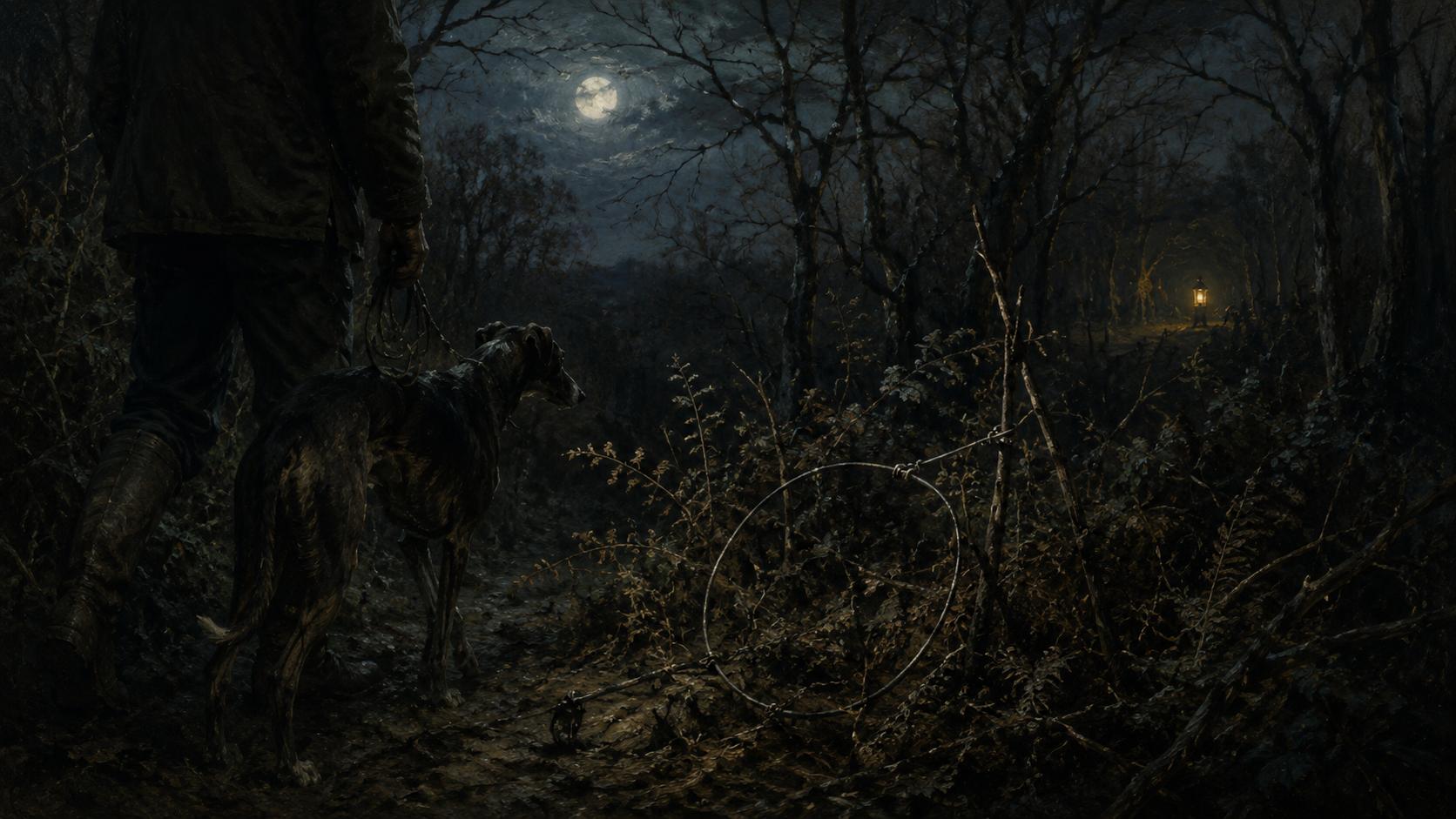
Despite the severity of the game laws, many country people took to poaching, illicitly taking game from the land of others in defiance of the law. Poaching was carried out by stealth, often under cover of darkness, using a variety of methods and devices to take game without being caught. For some, poaching was a matter of necessity, a way of putting food on the table in hard times, while for others it was a source of income or simply a part of country life. The poacher needed skill, cunning and nerve, for the penalties for being caught were severe, and the trade was carried on in a constant contest with those who sought to prevent it.
The Gamekeeper.
Ranged against the poacher was the gamekeeper, the servant of the landowner whose task it was to protect the game and to catch those who took it illegally. The gamekeeper patrolled the estate, watched for signs of poaching and sought to apprehend the poachers, and the contest between keeper and poacher was a constant feature of country life. Encounters between gamekeepers and poachers could be tense and sometimes violent, as the poachers sought to evade capture and the keepers strove to catch them. The gamekeeper was a figure of authority in the countryside, the guardian of the landowner's privileges, and the poacher's natural adversary.
A Bitter Conflict.
The conflict between poachers and the game laws was bitter, reflecting the deep social divisions of the rural past. The poaching of game was, in many cases, an act of defiance against laws that were seen as unjust, a protest against the privileges of the wealthy and the denial of access to the bounty of the countryside. The harshness of the penalties imposed on poachers, and the lengths to which the authorities went to protect the game, added to the bitterness of the conflict. Poaching became bound up with wider tensions between the rural poor and the landed classes, and it was as much a matter of social conflict as of simple crime.
Harsh Penalties.
The penalties for poaching could be severe, reflecting the determination of the authorities to protect the privileges of the landed classes. Those caught poaching could face harsh punishments, and the law dealt sternly with offenders, particularly as the game laws were tightened over time. The severity of the penalties reflected the importance that the landowning classes attached to their sporting privileges and their determination to suppress poaching. For the poacher, the risks were considerable, and the harshness of the punishments was a source of further resentment among the rural communities who saw the game laws as unjust and oppressive.
A Folk Tradition.
Despite, or perhaps because of, the conflict surrounding it, poaching acquired something of a romantic and rebellious image in popular culture. The poacher, defying unjust laws to take the game that the wealthy sought to deny him, became a figure of folk admiration, celebrated in song and story as a kind of rural rebel. This romantic image reflected the popular sympathy for the poacher and the resentment of the game laws, and it transformed the poacher into a folk hero of sorts. The tradition of poaching, with its defiance of authority and its association with the rural poor, became woven into the folklore of the countryside, where it is remembered with a certain fondness.
A Rural Heritage.
Poaching and the game laws are a fascinating part of the social heritage of the rural North East, illuminating the tensions and divisions of country life in earlier times. The harsh laws that reserved game to the wealthy, the poachers who defied them, the gamekeepers who sought to catch them and the bitter conflict between them all form part of the rich history of the countryside. The story of poaching reveals much about the social order of the rural past and the resentments it generated, and it has left a lasting mark on the folklore of the region. It is a colourful and revealing chapter in the history of rural crime and rural life.
A Mirror of Rural Society.
The conflict over poaching and the game laws serves as a revealing mirror of the social order of the rural past, reflecting the divisions and tensions that characterised country life in earlier times. The game laws, which reserved the right to take game to the landed classes, were an expression of the social hierarchy of the countryside, in which the landowners held privileges denied to the rural poor.
The resentment of these laws, and the widespread practice of poaching in defiance of them, reflected the tensions that this hierarchy generated, as ordinary people chafed against restrictions that they regarded as unjust.
The conflict between poachers and gamekeepers was, in this sense, a manifestation of the wider conflict between the landed classes and the rural poor, a struggle over the resources of the countryside and the privileges of the powerful. To study poaching and the game laws is therefore to gain insight into the social structure of rural society and the tensions that ran through it, for the conflict over game reflected the deeper divisions of the countryside.
The sympathy that poachers enjoyed, the romantic image that attached to them, and the resentment of the game laws all reveal the popular attitudes towards the social order and its injustices.
The history of poaching is thus more than a history of rural crime; it is a window into the social relations of the countryside and the tensions between rich and poor that shaped rural life. The conflict over game and the laws that governed it illuminates the realities of the rural past, revealing the divisions, the resentments and the struggles that lay beneath the surface of country life. In this way, the story of poaching and the game laws offers a revealing glimpse into the social world of the rural North East in earlier times.
Over to you.
Poaching set the rural poor against the harsh game laws that reserved game to the landed classes.
Do any tales of the old poachers survive in your part of the countryside?
Crime News
Against the Game Laws: Poaching in Old Northumberland
A look at poaching and the harsh game laws in the rural North East, the bitter conflict between poachers and gamekeepers, and the folk tradition it left behind.
Advertisement





Comments (0)
You must be logged in to post comments.
Don't have an account? Register here
No comments yet. Be the first to share your thoughts!