
In the early decades of the nineteenth century, a grim and macabre trade cast a shadow of fear over the towns and cities of the country, including those of the North East. The resurrectionists, or body-snatchers, plundered fresh graves to supply the anatomy schools with corpses for dissection, striking terror into communities and prompting desperate measures to protect the dead. The story of the resurrection men is a dark but fascinating chapter in the social history of the region.
A Grim Demand.
The trade of the body-snatchers arose from the growing demand for corpses to supply the schools of anatomy. As the study of medicine advanced, the teaching of anatomy required bodies for dissection, but the law permitted only a very limited supply, and the demand far outstripped what could legally be obtained. This shortage created a grim market, and into it stepped the resurrectionists, who were prepared to rob graves to supply the anatomists with the bodies they needed. The high prices paid for fresh corpses made grave-robbing a profitable, if appalling, trade, and the body-snatchers set to their dark work.
The Work of the Night.
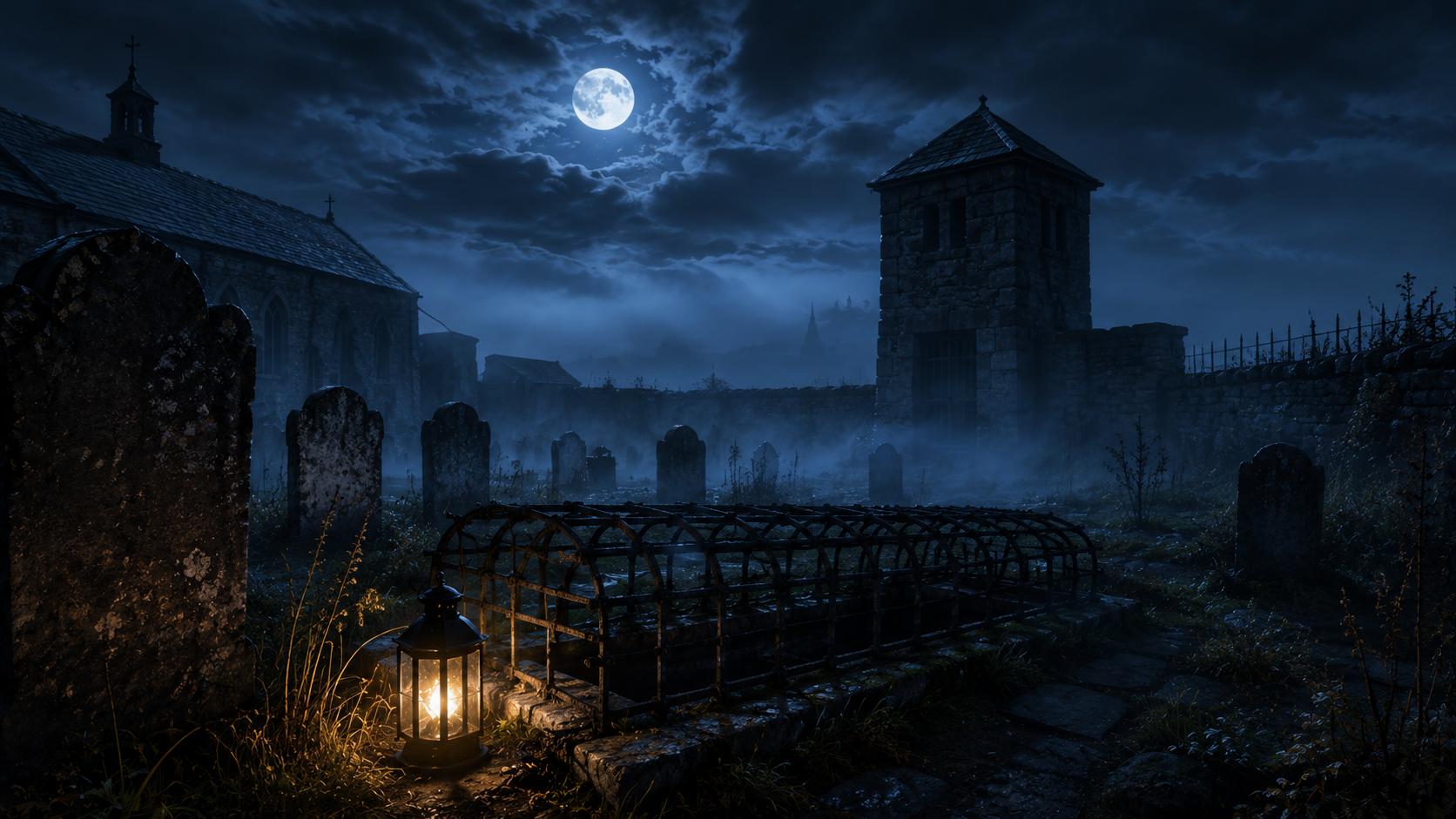
The resurrectionists carried out their grim trade under cover of darkness, in the quiet of the churchyard. Working quickly and stealthily, they would dig down to a freshly buried coffin, break it open and remove the corpse, before refilling the grave to disguise their work. Speed and skill were essential, both to avoid detection and to remove the body before it had decayed beyond use. The body-snatchers developed their dark craft to a fine art, and they could empty a grave with disturbing efficiency. Their work struck at something deeply held, the respect owed to the dead, and it provoked horror and outrage wherever it occurred.
A Climate of Fear.
The activities of the resurrectionists spread fear through communities, for the thought that a loved one's grave might be violated was a source of profound distress and dread. The bereaved lived in fear that the bodies of those they had buried would be stolen away in the night, and the trade of the body-snatchers became a subject of widespread anxiety and revulsion. This climate of fear was all the greater because the resurrectionists struck without warning, and any fresh grave might be a target. The horror provoked by grave-robbing reflected the deep importance attached to the proper treatment of the dead, and the violation of that principle was felt as a terrible wrong.
Guarding the Dead.
Faced with the threat of the resurrectionists, communities went to considerable lengths to protect the graves of their loved ones. Various ingenious measures were devised to foil the body-snatchers, including heavy iron frameworks placed over graves, secure vaults, and watch-houses from which guards could keep vigil over the churchyard. Families and communities organised watches over fresh graves, taking turns to guard the dead until the bodies were no longer of use to the anatomists. These measures reflected the determination of communities to protect their dead, and the lengths to which the fear of grave-robbing drove people. Some of these protective devices survive in churchyards to this day.
The Anatomists' Need.
Behind the grim trade of the resurrectionists lay the genuine needs of medical science and education. The study of anatomy was essential to the advancement of medicine and the training of surgeons, and it depended on the availability of bodies for dissection. The anatomists who purchased the corpses supplied by the body-snatchers were, in many cases, respectable men of science pursuing legitimate and important work, caught in the moral difficulty created by the shortage of legal supply. This uncomfortable relationship between the advancement of medicine and the grim trade of grave-robbing was at the heart of the resurrectionist phenomenon, and it posed difficult questions about the means by which scientific progress was achieved.
The End of the Trade.
The dark trade of the resurrectionists was eventually brought to an end by changes in the law. Recognising the problems created by the shortage of bodies for anatomy and the horrors of grave-robbing, the authorities reformed the law to provide a legal supply of corpses for dissection, removing the incentive for the body-snatchers. With a legal supply available, the grim trade of grave-robbing lost its purpose and gradually died out, bringing relief to communities that had lived in fear of the resurrectionists. The reform addressed the root of the problem, and it allowed the study of anatomy to proceed without recourse to the appalling trade that had caused so much distress.
A Dark Chapter.
The age of the resurrectionists is a dark and disturbing chapter in the social history of the North East and the country as a whole. The grim trade of grave-robbing, driven by the demand of the anatomy schools, struck fear into communities and provoked desperate measures to protect the dead. Yet it is also a chapter that illuminates the history of medicine, the importance attached to the treatment of the dead, and the difficult relationship between scientific progress and moral principle. Though the trade has long passed into history, the iron grave-guards and watch-houses that survive in our churchyards remain as eerie reminders of a fearful time.
A Question of Means and Ends.
The phenomenon of the resurrectionists raised difficult moral questions that go to the heart of the relationship between scientific progress and ethical principle. The anatomists who purchased the bodies supplied by the body-snatchers were pursuing a genuine and important end, for the study of anatomy was essential to the advancement of medicine and the training of the surgeons on whom the health of the community depended.
Yet the means by which they obtained the bodies they needed, the robbing of graves and the violation of the dead, were deeply repugnant and caused great distress to communities. This tension between a worthy end and an abhorrent means lay at the heart of the resurrectionist phenomenon, posing a genuine moral dilemma. Could the advancement of medicine justify the violation of the dead, or did the wrong done to communities and the bereaved outweigh the benefits to science.
The difficulty was eventually resolved not by choosing one principle over the other but by reforming the law to provide a legal supply of bodies, removing the need for grave-robbing while allowing the study of anatomy to continue. This resolution recognised both the importance of medical education and the wrong of grave-robbing, finding a way to serve the one without resorting to the other.
The episode stands as an instructive example of the moral complexities that can arise in the pursuit of scientific progress, and of the importance of finding means that are consistent with ethical principle. It reminds us that the ends, however worthy, cannot always justify the means, and that progress must be pursued in ways that respect the values of the community.
Have your say.
Have you seen the old grave-guards or watch-houses that survive in the region's churchyards?
Newcastle History
The Resurrection Men: Body-Snatching and the Anatomists
A look at the resurrectionists, the body-snatchers who robbed graves to supply the anatomy schools, and the measures taken to guard the dead.
Advertisement



Comments (0)
You must be logged in to post comments.
Don't have an account? Register here
No comments yet. Be the first to share your thoughts!