
The River Tyne is one of Newcastle's most recognisable landmarks, attracting thousands of people every week to its bustling Quayside, riverside walks and waterfront restaurants. Whether people are commuting, sightseeing or simply enjoying the scenery, the river remains at the heart of city life.
Yet beneath its calm appearance lies a fast-moving tidal waterway that can quickly become dangerous. Every year, emergency services respond to incidents involving people entering the river, prompting renewed calls for greater awareness of the lifesaving equipment installed along its banks.
Many people walk past this equipment every day without giving it a second thought. Knowing what it is, where it can be found and how to use it could make a vital difference while waiting for emergency crews to arrive.
Throw lines are the first line of defence.
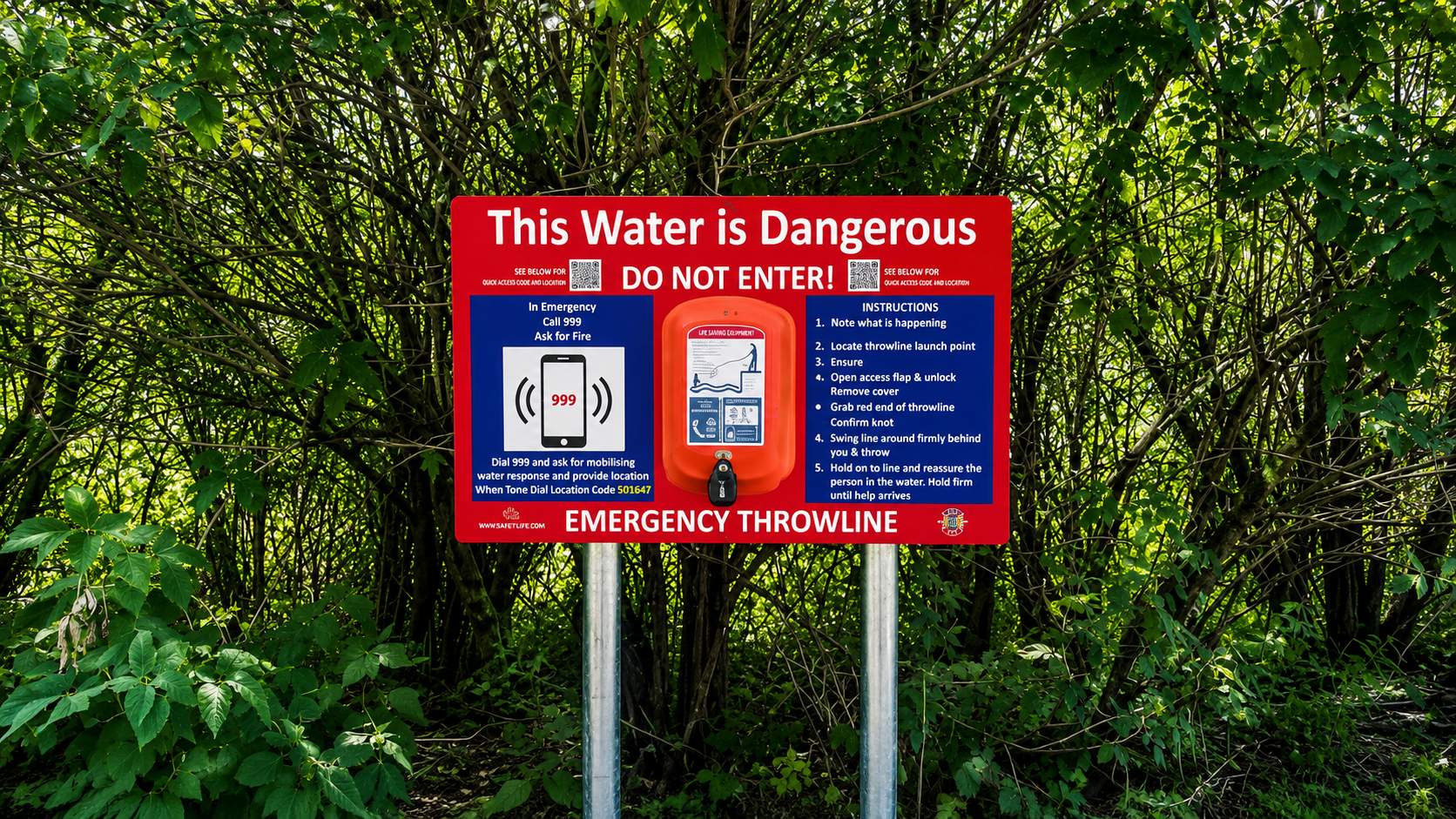
One of the most common pieces of safety equipment found along Newcastle Quayside is the throw line.
Stored inside bright yellow or orange cabinets attached to railings, a throw line contains a floating rope packed neatly inside a bag. If someone falls into the River Tyne, the rescuer throws the bag beyond the casualty before pulling the rope tight so the person can hold on while being guided towards safety.
Unlike jumping into the river, using a throw line allows members of the public to help without putting themselves at risk.
Newcastle City Council and Tyne and Wear Fire and Rescue Service have continued expanding the network of throw lines across the city. In late 2025, nine additional throw lines were installed between Ouseburn and St Peter's Basin, increasing the total number along Newcastle Quayside to 23 following a council investment of almost £15,000.
Lifebuoys provide vital flotation.
Circular lifebuoys are another familiar sight beside the River Tyne.
Designed to float, these rings can be thrown towards someone struggling in the water, giving them something to hold while emergency services make their way to the scene.
Unlike throw lines, lifebuoys are intended to provide buoyancy rather than pull someone directly to safety. They are especially effective when combined with a rope or when the casualty is close enough to reach safely from the riverbank.
Experts stress that people should never enter the river to attempt a rescue unless they are specially trained. Many would-be rescuers have themselves become casualties after entering cold, fast-moving water.
Emergency rescue boats respond across the Tyne.
When someone enters the River Tyne, specialist crews from Tyne and Wear Fire and Rescue Service can deploy dedicated rescue boats designed for inland water incidents.
These vessels allow firefighters wearing specialist protective equipment to reach casualties quickly, even in difficult conditions. They regularly work alongside Northumbria Police and the North East Ambulance Service during multi-agency rescues.
If you witness someone in difficulty, Tyne and Wear Fire and Rescue Service advises calling 999 immediately, giving your precise location and using nearby lifesaving equipment if it is safe to do so. Members of the public are also encouraged to shout clear instructions such as asking the casualty to float on their back while waiting for help.
Why this equipment matters.
Water safety organisations say the biggest mistake people make is assuming rivers are safe because they appear calm.
The River Tyne is tidal, meaning currents constantly change direction and strength throughout the day. Hidden obstacles beneath the surface, steep embankments and cold water all increase the risks.
According to the National Water Safety Forum, there were 202 confirmed accidental water-related deaths across the UK during 2025. Inland waterways such as rivers, lakes and canals accounted for 57 percent of those fatalities. The data also showed 85 percent of accidental victims were male, while 32 percent were carrying out everyday activities such as walking or running rather than intentionally entering the water.
Those figures demonstrate why equipment positioned beside rivers is designed not only for swimmers but also for people who accidentally fall into the water.
Knowing what to do can save a life.
The advice from emergency services is simple. Remember the phrase "Call - Tell - Throw."
Call 999 immediately and ask for the fire service if the incident is on an inland waterway. Tell the operator your exact location using nearby landmarks or a What3Words reference if possible. Throw a throw line, lifebuoy or any floating object if it can safely reach the casualty.
The Royal National Lifeboat Institution also advises anyone who unexpectedly enters cold water to float on their back, control their breathing and avoid exhausting themselves by fighting the water. This simple technique, known as "Float to Live", has become one of the UK's best-known water safety campaigns.
Newcastle continues investing in river safety.
As Newcastle's riverside continues to attract more visitors throughout the year, investment in public rescue equipment has become an increasingly important part of keeping people safe.
Most people will thankfully never need to use a throw line or lifebuoy, but understanding what they are for before an emergency happens could make all the difference. Alongside public awareness campaigns and the dedication of emergency services, these simple pieces of equipment remain among the most effective tools available for preventing tragedies on the River Tyne.
Join the conversation.
Have you noticed the throw lines and lifebuoys along Newcastle Quayside?
Community News
River Tyne Safety Equipment That Could Save Your Life
Advertisement



Comments (0)
You must be logged in to post comments.
Don't have an account? Register here
No comments yet. Be the first to share your thoughts!