
Since the pandemic, a quiet crisis has been unfolding in England's classrooms, with record numbers of children regularly missing school. And nowhere is the problem more acute than in the North East, which now has the highest rates of school absence of any region in the country, a worrying distinction with serious consequences for the region's children.
A Region Worst Affected.
The figures make uncomfortable reading for the North East. The region records the highest overall absence rate and the highest rate of persistent absence of any region in England, meaning more children here are regularly missing school than anywhere else.
Persistent absence, defined as missing at least one in ten school sessions, affects close to one in five pupils in the region, a strikingly high figure. That the North East leads the country on this measure is a stark reflection of the challenges facing many of its children and families.
A National Crisis.
The problem is not confined to the region but is a national one that has worsened sharply since the pandemic. Across England, persistent absence affects around one in six pupils, far above pre-pandemic levels, with well over a million children regularly missing school.
Most alarming of all has been the rise in severe absence, where children miss more than half of their schooling, which has reached record levels and risen dramatically since before the pandemic. At the current rate of improvement, it could take years for absence to return to where it was before Covid.
The Disadvantage Gap.
Behind the headline figures lies a stark pattern of disadvantage. Children from poorer backgrounds are far more likely to be persistently and severely absent, with those eligible for free school meals several times more likely to miss large amounts of school than their peers.
Children with additional needs are also disproportionately affected. This means that absence falls hardest on precisely those children who often have the most to gain from being in school, deepening the inequalities that already exist.
Why Children Are Missing School.
The reasons behind the rise in absence are complex and much debated. The pandemic disrupted the habit and routine of school for many children and families, and there are concerns that attitudes towards attendance have shifted, with some families no longer regarding regular attendance as essential.
Anxiety and mental health difficulties, family circumstances, poverty and unmet needs all play their part, and many families who want to get an absent child back into school feel they are struggling alone. The crisis is not a simple matter of truancy but a tangle of social, economic and emotional factors.
The Cost to Children.
The consequences of missing school are profound and lasting. Children who are persistently absent are far less likely to achieve good grades, with the gap in attainment between regular attenders and the persistently absent being stark, and they are much more likely to end up not in education, employment or training.
The effects ripple outwards into health, wellbeing and future prospects, with research warning that the absence crisis risks leaving large numbers of young people facing long-term worklessness, at an enormous cost to them and to society. Time out of the classroom is, quite simply, time that children cannot get back.
A Challenge for the Region.
For the North East, leading the country on school absence is a challenge that demands attention, given how closely it is tied to the region's wider issues of disadvantage and the consequences it carries for children's futures. Tackling it matters not only for the children directly affected but for the region's long-term prospects.
Getting children back into school, and keeping them there, is fundamental to giving them the chance to fulfil their potential. For a region working to improve opportunity for its young people, addressing absence is essential.
What Needs to Happen.
There is growing recognition that tackling the crisis requires more than simply urging attendance, calling instead for earlier identification of children at risk and support that addresses the underlying reasons they are missing school. Making schools welcoming places where children feel they belong, and working with families rather than against them, are widely seen as central.
Addressing the deeper causes, from poverty and family pressures to mental health and unmet needs, is essential, since absence is often a symptom of wider difficulties. Bringing children back into the classroom means understanding and tackling why they are away.
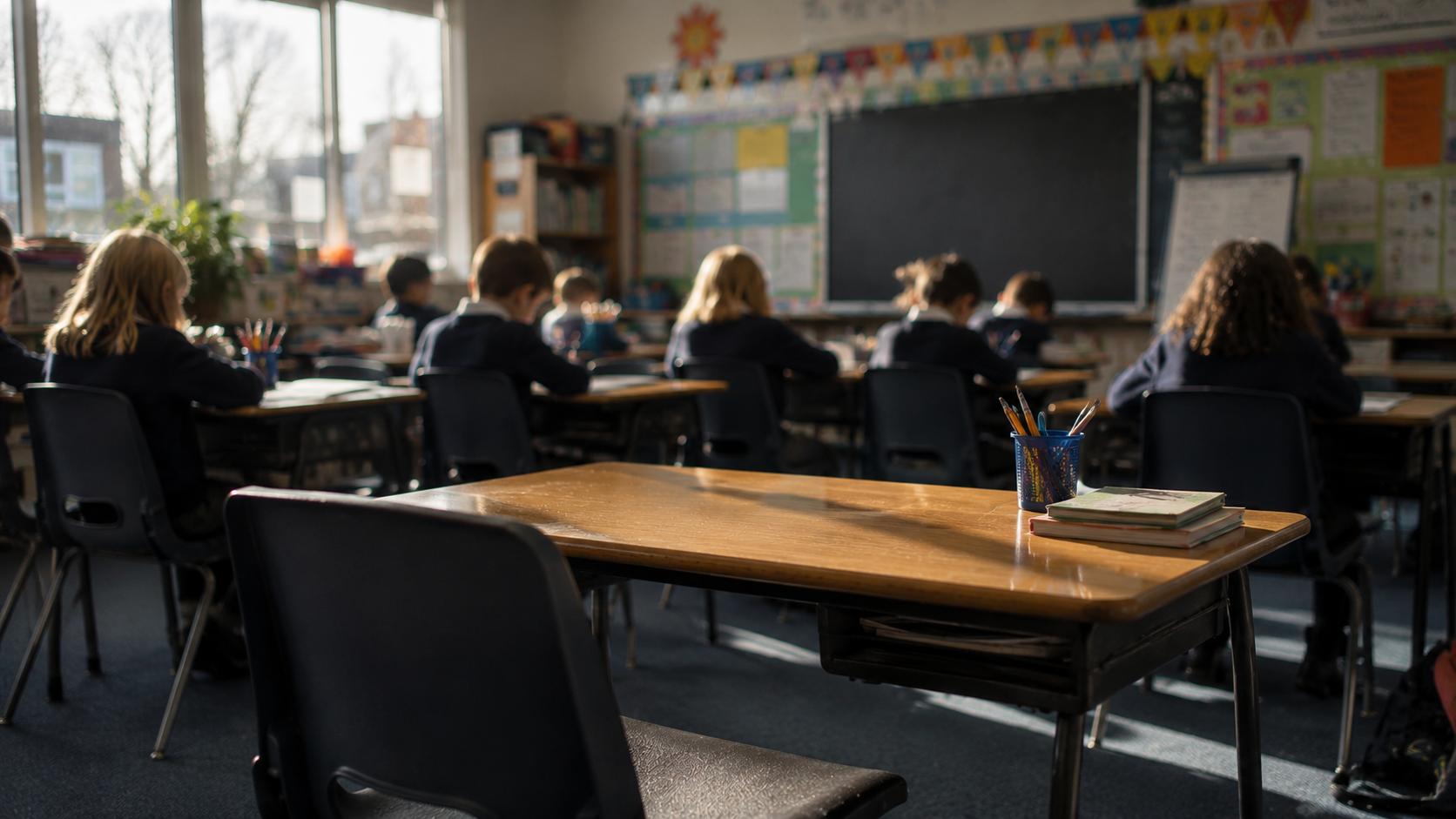
Filling the Empty Desks.
The school absence crisis, in which the North East leads the country, is one of the most serious challenges facing the region's children, with consequences that reach into their attainment, their wellbeing and their futures. Its roots lie in the disruption of the pandemic, in disadvantage and in a tangle of social and emotional factors that demand a thoughtful response.
Filling those empty desks, by understanding why children are away and supporting them and their families to return, is vital to the prospects of a generation. For the children of the North East, being in school is the foundation of opportunity, and ensuring they are there is among the most important tasks the region faces.
Belonging in the Classroom.
Increasingly, those who study the absence crisis are concluding that the answer lies not in punishment or pressure alone but in something harder to measure: a sense of belonging. Children who feel that they belong in school, that they are known, valued and supported there, are far more likely to attend, while those who feel anxious, excluded or unsupported are more likely to stay away.
This points to the importance of making schools welcoming and inclusive places, where every child feels they have a stake and a reason to be there, and where difficulties are met with understanding and support rather than simply sanctions. It also points to the importance of early intervention, identifying children who are beginning to miss school and understanding and addressing the reasons before occasional absence hardens into a persistent pattern that is far harder to reverse.
For many absent children, the barriers to attendance are real and significant, whether anxiety, family circumstances, poverty, bullying or unmet needs, and overcoming them requires support tailored to the individual child rather than a one-size-fits-all approach. Working in partnership with families, who often feel they are struggling alone, is central to this, as is recognising that absence is frequently a symptom of wider difficulties in a child's life.
Building schools where children feel they belong, and supporting them and their families to overcome the barriers that keep them away, offers a more hopeful and more effective path than blame or compulsion alone. For a region working to improve the prospects of its young people, fostering that sense of belonging in the classroom may prove one of the most important things it can do, turning empty desks back into the foundation of opportunity that school should be.
Join the conversation.
The North East has the highest school absence rates of any English region, with close to one in five pupils persistently absent.
What do you think would help get more children back into the classroom?
Local News
The Empty Desks: Why the North East Leads England's School Absence Crisis
The North East has the highest school absence rates of any English region. We look at the crisis of empty desks and the toll it takes on the region's children.
Advertisement





Comments (0)
You must be logged in to post comments.
Don't have an account? Register here
No comments yet. Be the first to share your thoughts!