
A pet going missing produces panic, and panic produces wasted time. Having a sequence to follow makes the first hours considerably more productive.
Most missing animals are found, and the majority are found close to home. What matters is searching properly and making sure that anyone who finds the animal can identify it.
Here is what to do.
Check the microchip details first.
This is the step most owners have never completed, and it is the single most important one.
A microchip only works if the contact details registered against it are current. Chips are frequently registered to a previous address, an old phone number or the breeder or rescue centre rather than the owner.
Log in to the relevant database and confirm your details now, before anything happens. If you do not know which database holds the chip, a vet can scan the animal and a lookup service can identify the database from the chip number.
Microchipping is a legal requirement for dogs, and since June 2024 it has also been compulsory for cats in England, with cats required to be chipped and registered by 20 weeks of age.
Search close to home first.
Most cats that go missing are found within a very short radius of home, frequently within a few gardens, and most are hiding rather than travelling.
Frightened cats go to ground in confined spaces and stay silent, so calling may produce no response. Search sheds, garages, greenhouses, under decking, in bushes, under cars and inside any structure that has been opened recently.
Ask neighbours to check their sheds and garages specifically. A cat shut in a shed when the door closed is an extremely common scenario.
Search at night when it is quiet, using a torch, since eyes reflect and cats are more likely to move when there is less activity.
Dogs generally travel further and faster, so widen the search area sooner, and check the routes you normally walk, since dogs often head for familiar ground.
Report it in the right places.
Contact your microchip database immediately and mark the animal as missing.
Report a missing dog to the local authority. Councils have a statutory duty in relation to stray dogs, and Newcastle City Council and neighbouring authorities operate dog warden services that hold found animals.
Contact local veterinary practices, since found animals are frequently taken to the nearest vet to be scanned. Contact rescue centres and shelters, including the Newcastle Dog and Cat Shelter and other regional organisations, and ask to be told if an animal matching the description arrives.
Register the loss on national lost pet services, several of which coordinate sightings and alert local members.
Use social media properly.
Local community groups, neighbourhood pages and lost pet groups for Newcastle and surrounding areas are genuinely effective, and posts are shared quickly.
Include a clear, recent photograph showing distinguishing features, the location and time last seen, and a contact number. Say whether the animal is nervous and whether it should be approached or reported rather than chased.
Do not include the microchip number publicly, since it can be used fraudulently to claim an animal.
Be alert to scams. A recurring pattern involves someone claiming to have found the animal and demanding payment for its return, sometimes claiming to be travelling. Do not send money, and do not share bank details.
Posters still work.
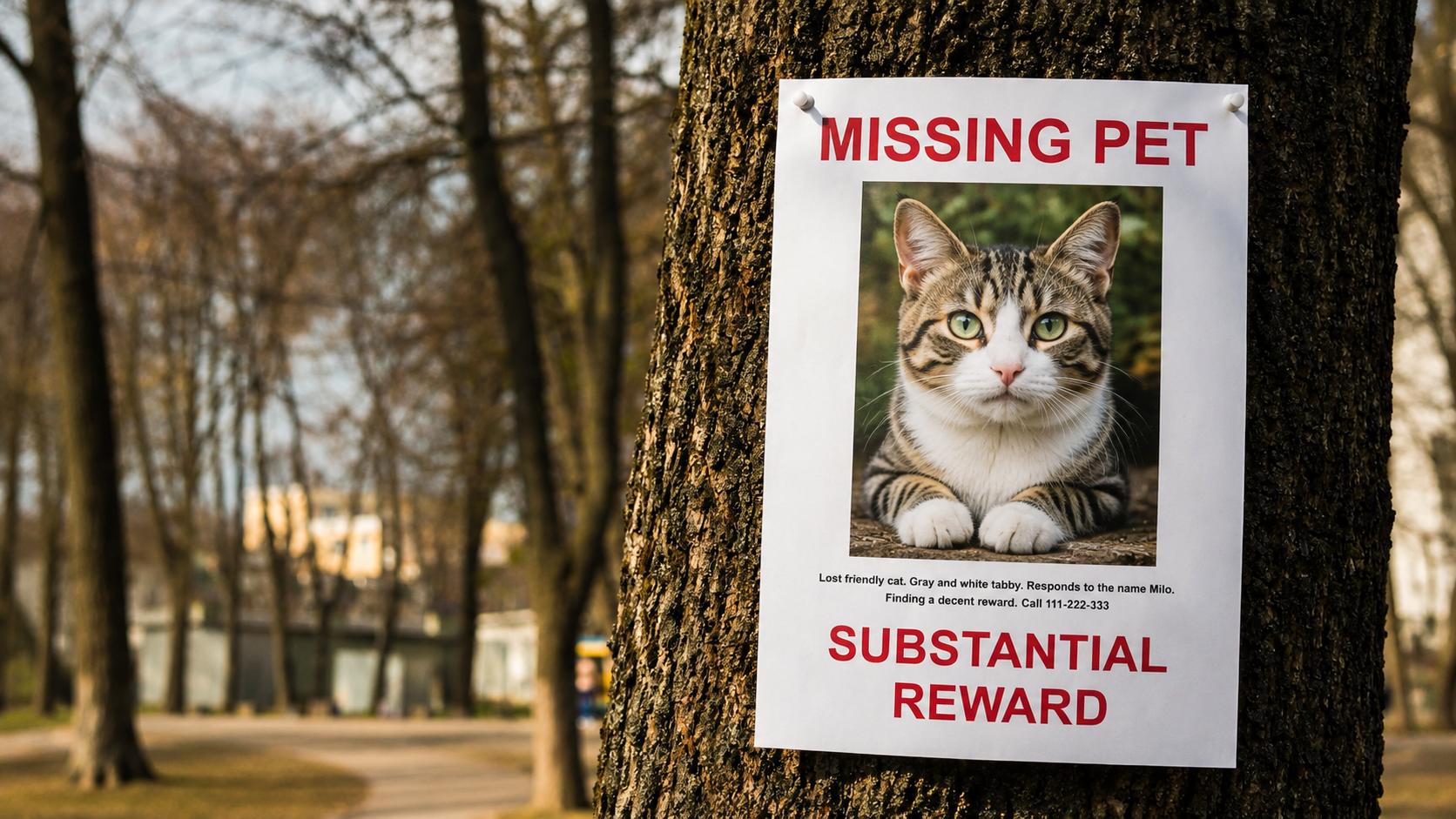
Print posters with a large photograph, the word LOST, the area and a phone number. Put them at eye level at junctions, shops, vets, parks, schools and community noticeboards.
Ask permission before attaching anything to lampposts, and remove them once the animal is home.
Leaflets through neighbouring doors reach people who do not use social media, including many older residents who are at home during the day and most likely to notice an unfamiliar animal.
Some tactics help cats specifically.
Placing the cat's own litter tray, unwashed bedding or a worn item of your clothing outside can help a cat orientate back home, since scent is how they navigate.
Leave a door, window or shed open where safe to do so, and put food out at the same time each evening. A wildlife camera or doorbell camera pointed at the food can confirm whether the cat is returning at night.
Do not assume silence means absence. Frightened cats frequently remain within metres of home for days without emerging.
Keep looking beyond the first week.
Animals are reunited with owners weeks and occasionally months after going missing, so keep listings active and keep checking shelters in person rather than only by phone.
Descriptions can be recorded inaccurately, so visiting and looking is worthwhile.
Prevention for next time.
Update microchip details whenever you move or change number, and set a reminder to check annually.
Collars with a tag are useful because a member of the public can read them without a scanner, and cats should wear quick-release safety collars only. Tags should carry a phone number rather than the animal's name.
Photograph your pet regularly from several angles, including any distinguishing markings, and keep those photographs somewhere you can find them quickly.
For dogs, reliable recall training is the most effective prevention there is. For cats, a period of confinement after moving house, typically several weeks, substantially reduces the chance of them attempting to return to a previous home.
Share your thoughts.
Are your pet's microchip details definitely up to date?
Lifestyle News
The First 24 Hours If Your Pet Goes Missing
The steps taken in the first day matter more than anything that follows, and one of them is something most owners have never got round to.
Advertisement





Comments (0)
You must be logged in to post comments.
Don't have an account? Register here
No comments yet. Be the first to share your thoughts!