
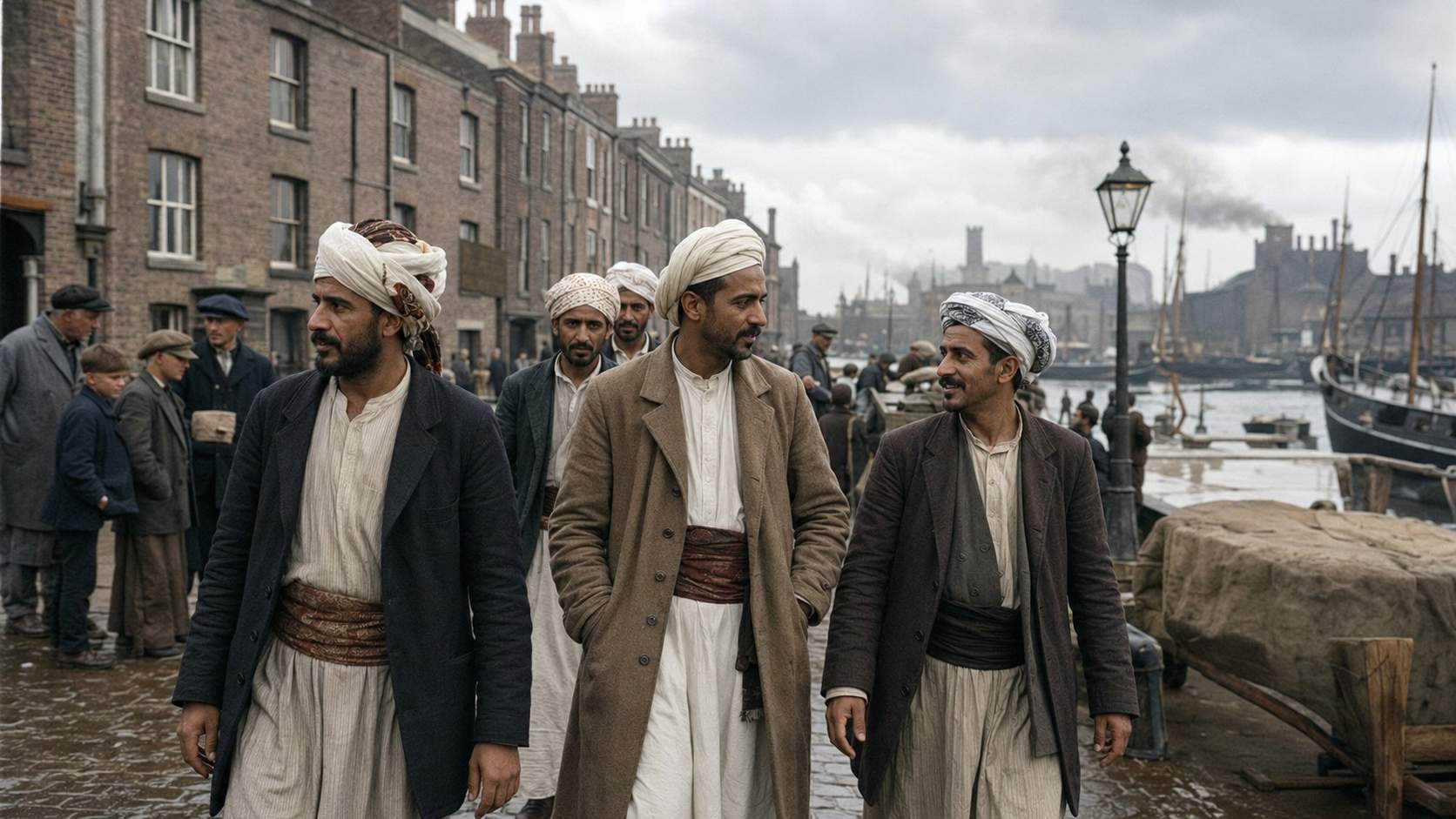
For generations, ships arriving on the River Tyne connected the North East to almost every corner of the world. Coal, industry and shipbuilding dominate much of the history told about Tyneside, but hidden among those familiar stories is the remarkable history of the Arab sailors who made South Shields their home.
Many came from Yemen and worked aboard British merchant ships in jobs that were difficult, dangerous and essential to keeping vessels moving.
By the early 20th century, their growing community around Holborn and Laygate had helped turn South Shields into the home of one of Britain's oldest established Muslim communities.
From Yemen to the River Tyne.
The roots of the South Shields Yemeni community stretch back to at least the 1890s.
British control of Aden placed Yemen on important imperial shipping routes. Yemeni sailors subsequently found employment aboard British merchant vessels, with some eventually settling in ports including Cardiff, Liverpool, Hull and South Shields.
Local historical research records Ali Said settling in South Shields in 1894. By 1909, he was running a licensed boarding house for Arab seamen in Nile Street.
The community was initially small. Records suggest only around 20 to 30 Arabs were living around East Holborn by 1913.
That changed rapidly as more sailors passed through the port.
By 1920, South Shields had at least eight Arab boarding houses, while historians estimate that between 300 and 600 Arab residents could be living in the town at any given time.
The boarding houses became a home from home.
For sailors thousands of miles from their families, South Shields' boarding houses provided considerably more than somewhere to sleep.
Many were operated by former seamen who had settled permanently in the town. Owners helped sailors find their next ship, lent money when work was scarce and provided advice and support.
Cafes and small shops followed, creating a community around the Laygate and Holborn areas that would survive for generations.
One of the last surviving examples is the former Yemeni boarding house at 50-52 Brunswick Street. Its importance was formally recognised when the building was added to South Tyneside's local heritage list in 2023.
Hundreds paid the ultimate price.
The contribution made by Yemeni sailors was not confined to peacetime trade.
Newcastle City Council's historic environment record for the Brunswick Street boarding house states that an estimated 700 Yemeni sailors from South Shields lost their lives during the First World War.
Yemeni seamen also served Britain during the Second World War.
It is an extraordinary contribution from a community whose story remains relatively unknown outside the North East.
Yet their lives in Britain were not always welcomed.
South Shields witnessed racial conflict in 1919.
Following the First World War, returning servicemen faced unemployment and fierce competition for maritime work.
Tensions between white and Arab seamen erupted into violence in South Shields in 1919.
Thirteen Arabs were brought before magistrates accused of rioting. Three were later acquitted, while the others received prison sentences of between one and three months. Historical accounts note that no white participant was criminally charged over the fighting.
The disturbances formed part of a wider period of racial and industrial unrest affecting British port communities after the war.
For South Shields' Arab sailors, it demonstrated the uncomfortable contradiction of the period - men could risk their lives working for Britain while still facing discrimination within the country they helped to serve.
A community that remains part of South Shields.
More than a century after the first Yemeni seamen settled on Tyneside, their descendants remain part of the town.
Local historians estimate South Shields' Yemeni population at around 1,000 people, although defining ancestry across several generations makes an exact figure difficult.
The wider borough is changing too. The 2021 Census found that 2.5% of South Tyneside residents identified as Muslim, up from 1.9% in 2011.
Meanwhile, 94.4% of residents identified within the broad White ethnic category, down from 95.9% a decade earlier.
The numbers only reveal part of the story.
Behind them lies more than 130 years of migration, dangerous maritime work, war service, family life and businesses established thousands of miles from Yemen.
South Shields is famous for its coastline and industrial heritage, but its history also belongs to the sailors who travelled from the Arabian Peninsula to the River Tyne and built a community that became part of the North East.
Join the discussion.
Did you know about the Yemeni sailors who helped shape South Shields history?
Newcastle History
The Hidden Muslim History of South Shields
Advertisement


Comments (0)
You must be logged in to post comments.
Don't have an account? Register here
No comments yet. Be the first to share your thoughts!