
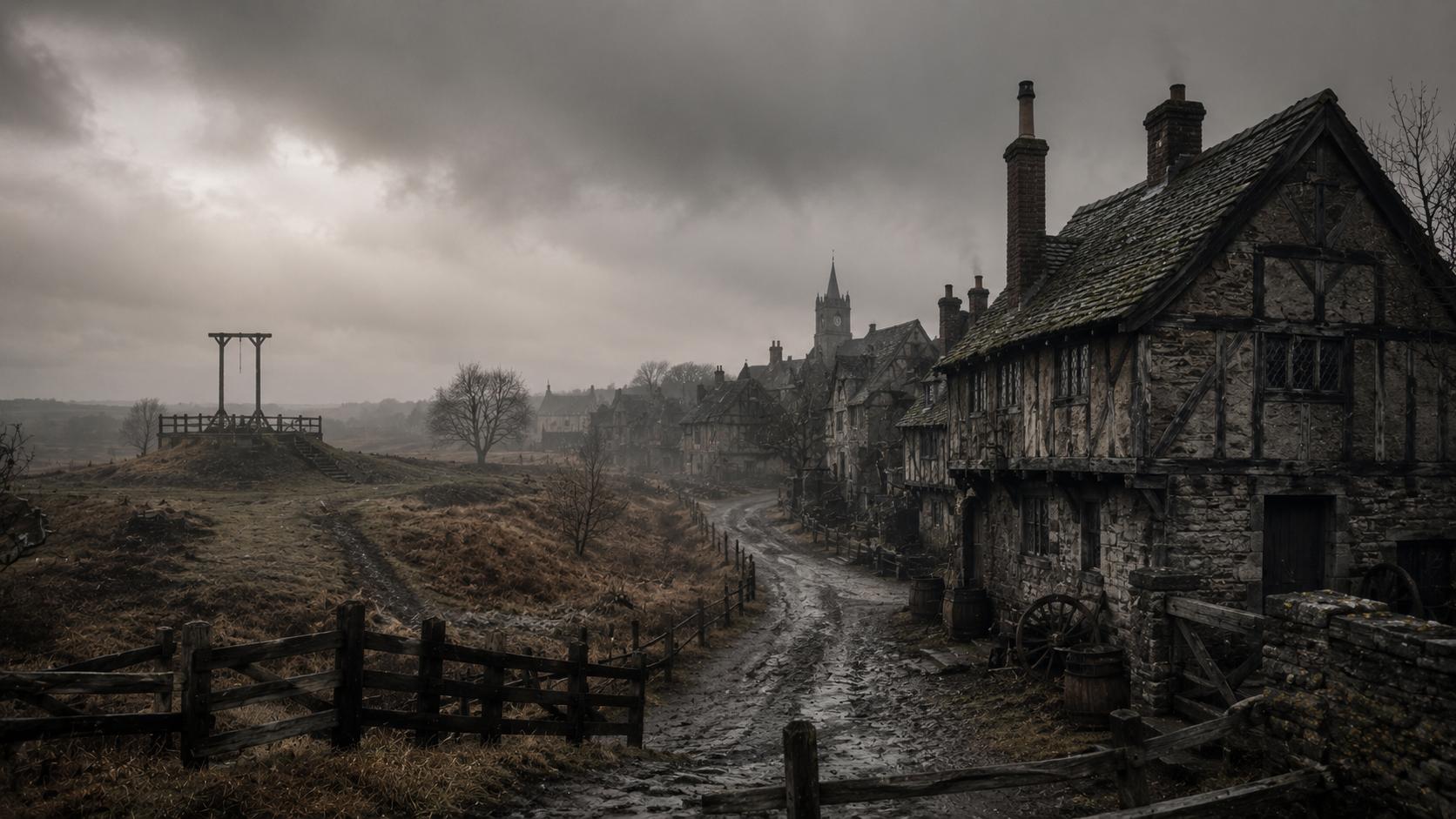
Among the darkest chapters in Newcastle's long history is a tragic episode that unfolded in 1650, when fear, suspicion and superstition led to one of the largest mass executions for witchcraft ever seen in England. On a single day that summer, sixteen people were hanged on the Town Moor after being condemned as witches, victims of a cruel and now thoroughly discredited belief that gripped the town. It is a sobering story, and one that deserves to be remembered with compassion for those who suffered.
A Time of Fear.
To understand how such a thing could happen, you have to picture Newcastle in the middle of the seventeenth century. The town had endured the upheaval of the English Civil War, suffered outbreaks of deadly plague and lived under a strict and anxious religious atmosphere. In times of hardship and uncertainty, people often look for someone to blame, and across Britain and Europe in this period that blame frequently fell upon those accused of witchcraft. The authorities in Newcastle, gripped by the prevailing fears of the age, came to suspect that witchcraft was at work in their community, and they resolved to root it out.
The Witchfinder Comes South.
In their determination to find witches, the magistrates of Newcastle took a fateful decision. They sent to Scotland for a so-called witchfinder, a man who claimed the ability to identify witches and who was paid for his grim services. He worked on commission, reportedly receiving a sum of money for every person he accused, a system that gave him every incentive to find guilt wherever he looked. The townsfolk were encouraged to inform on their neighbours, and anyone could be brought forward for suspicion. With such a perverse arrangement in place, the number of the accused quickly mounted, eventually reaching around thirty people.
The Pricking Test.
The witchfinder relied on a notorious and utterly bogus method to identify his victims, the practice of pricking the skin with a pin in search of a supposed insensitive mark left by the devil. By the standards of any rational examination this was meaningless, and it lent a veneer of false procedure to what was really the persecution of the vulnerable. The accused were overwhelmingly women, and many were poor, elderly or simply unpopular, the very people least able to defend themselves against such charges. Trapped in a process stacked entirely against them, they had little hope of proving their innocence.
Trials at the Guildhall.
The accused were held at Newgate jail and brought to trial at the Guildhall on the Quayside, where the proceedings took place before crowds. Following these trials, sixteen people, fifteen women and one man, were found guilty and sentenced to death. The single man among them was accused of fantastical crimes that show just how far into the realm of dark fantasy these proceedings had travelled. There was no meaningful evidence in any modern sense, only suspicion, fear and the word of a paid accuser, yet the verdicts sealed the fate of all sixteen.
Tragedy on the Town Moor.
On 21 August 1650, the condemned were taken to the Town Moor and hanged, alongside other prisoners executed that same day. The mass execution drew a large crowd, for such grim spectacles were treated by many as a form of entertainment in that harsh era. The victims, who came from across Tyneside, Northumberland and Durham, were buried in unmarked graves, their names and stories largely forgotten for centuries. It stands as one of the largest single witch executions in English history, a terrible monument to how fear can overwhelm reason and justice.
Remembering the Victims.
In a small measure of justice, the witchfinder himself is said to have come to a bad end, eventually being arrested and, by some accounts, facing trial for his actions. In recent years there has been a growing determination across the region to remember the sixteen victims of 1650 with the dignity and sympathy they were so cruelly denied in life. Historians, authors and campaigners have worked to tell their story and to call for a permanent memorial, similar to those that mark such tragedies elsewhere. Remembering the Newcastle witch trials is not about dwelling on horror for its own sake, but about honouring innocent people and reflecting on a dark lesson that still feels relevant today.
Lessons From a Dark Time.
The story of 1650 is not simply a grim curiosity from a distant age; it carries lessons that still resonate today. It shows how fear, economic hardship and a search for scapegoats can combine to terrible effect, turning communities against their most vulnerable members. The victims were overwhelmingly poor, elderly or otherwise marginalised women, the very people least able to protect themselves, and the supposed evidence against them was worthless. That respectable authorities, following what they believed to be proper procedure, could send sixteen people to their deaths on such grounds is a sobering reminder of how easily injustice can be dressed up as order. Historians who have studied the period stress the importance of remembering the accused as real people, with families, neighbours and lives of their own, rather than as mere footnotes. By telling their story honestly and with compassion, the city can ensure that the tragedy is not forgotten and that the names and memories of those who suffered are finally treated with the dignity they were so cruelly denied.
We want to hear from you.
Share your memories and opinions with fellow readers below, and let us know whether you think the victims of 1650 deserve a lasting memorial.
Had you ever heard the story of the sixteen people executed on the Town Moor in 1650?
Newcastle History
The Newcastle Witch Trials of 1650
In 1650 a paid Scottish witchfinder helped condemn sixteen people who were hanged on Newcastle's Town Moor, in one of the largest witch executions in English history. A dark and sobering chapter in the city's past.
Advertisement

Comments (0)
You must be logged in to post comments.
Don't have an account? Register here
No comments yet. Be the first to share your thoughts!