
Painting a white line down the side of a road might not sound expensive, but creating a modern cycle lane can involve considerably more than a tin of road paint.
There is no standard price for building a cycle lane in Britain. A basic marked lane using an existing carriageway can be relatively inexpensive, while a fully segregated route involving kerbs, junction alterations, new crossings, drainage and traffic signals can form part of a multi-million-pound project.
Newcastle provides a useful example of the scale of investment involved. The city council says it secured £16.3 million in government funding, alongside another £3 million through its Streets for People programme, to make changes to cycling and walking infrastructure.
That programme enabled around 16km of new cycle routes to be constructed, with further routes planned. However, the £19.3 million should not simply be divided by 16km to produce a "cost per kilometre", as the funding covered wider walking and cycling improvements rather than cycle lanes alone.
Why can a cycle lane cost millions.
The type of cycle lane makes an enormous difference.
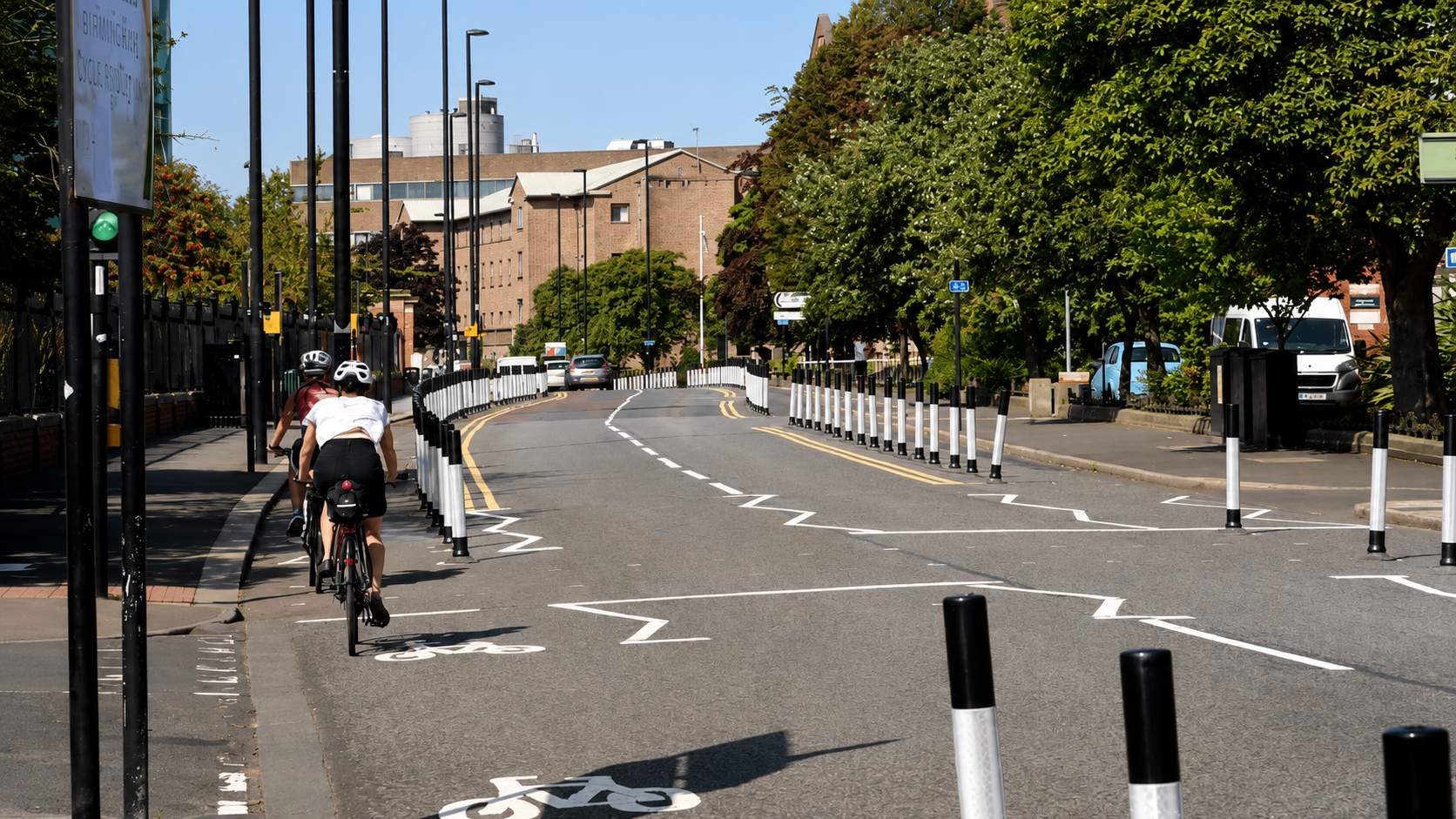
At the simplest end are painted advisory or mandatory lanes using an existing road. More substantial schemes can physically separate cyclists from traffic using kerbs, islands, bollards or raised tracks.
Once a council redesigns an entire street, costs can increase rapidly.
Work may involve moving drainage, replacing pavements, altering bus stops, changing traffic lights, installing new pedestrian crossings and relocating utilities beneath the road. Contractors may also need to resurface large sections of carriageway.
Design work, consultation, traffic management and safety audits add further costs before anybody rides along the finished route.
Newcastle's West End shows how costs add up.
One Newcastle project demonstrates why describing a scheme simply as a "cycle lane" can be misleading.
In 2023, Newcastle City Council announced £3.85 million of Active Travel England investment for improvements around Elswick Road in the West End.
The money was not solely for laying a cycle track. Plans included a new cycle lane, pedestrian crossings, changes to vehicle access on side roads and secure cycle parking at schools and shops.
The route was also intended to connect with Newcastle's existing cycling network.
That means the headline cost reflects a package of street improvements rather than the price of one strip of cycling infrastructure.
Newcastle has already built kilometres of new routes.
Newcastle's cycling network has expanded significantly over recent years.
The council says approximately 16km of new cycle routes were delivered through its Cycle Ambition City investment, with another 2km previously identified for construction and a further 10km awaiting funding.
Routes have included projects around John Dobson Street, St Nicholas Street and Acorn Road.
Queen Victoria Road, beside Newcastle's Royal Victoria Infirmary, provides another example of the more complicated work involved. Proposals there involved creating a permanent segregated two-way cycle lane while also changing parking, providing a new bus stop and improving pedestrian crossing facilities.
Do Newcastle residents actually use bikes.
Infrastructure spending inevitably raises another question - how many people are using it?
Newcastle City Council's older Bike Life figures estimated that almost nine million journeys were made by bicycle during 2017. The council said those journeys potentially removed the equivalent of up to 6,957 cars from the road network.
The same research estimated cycling generated around £24 million of economic benefit and potentially £585,000 in health savings to the NHS. These figures are now several years old, so they should be treated as historical estimates rather than a description of cycling levels in 2026.
The council has also previously reported that around 7% of Newcastle residents usually cycled to and from work, based on the same 2017-era research.
Why there is no simple price per mile.
The biggest mistake when comparing cycle lane costs is assuming every project provides the same thing.
One kilometre painted onto a wide existing road bears little resemblance to one kilometre of segregated track through a busy city centre containing junctions, bus stops, crossings and underground utilities.
Even Newcastle's £3.85 million Elswick Road investment includes much more than cycling infrastructure.
For taxpayers, the more useful question is therefore not simply "how much did the cycle lane cost?" It is what infrastructure was delivered for the money, how many people use it and whether collisions, congestion or car journeys are reduced afterwards.
As Newcastle continues planning its transport network towards 2045, those questions are unlikely to disappear. Almost 80% of respondents to consultation on the city's Movement Strategy supported its proposed overall vision, although individual road schemes can still generate considerable debate.
Share your views below.
Do you think Newcastle needs more protected cycle lanes, or should transport funding be spent elsewhere?
Community News
The Surprising Cost of Building a Cycle Lane In Newcastle
Advertisement



Comments (0)
You must be logged in to post comments.
Don't have an account? Register here
No comments yet. Be the first to share your thoughts!