
When people in Newcastle hear the unmistakable sound of a helicopter overhead, it often means somebody nearby is experiencing one of the worst moments of their life.
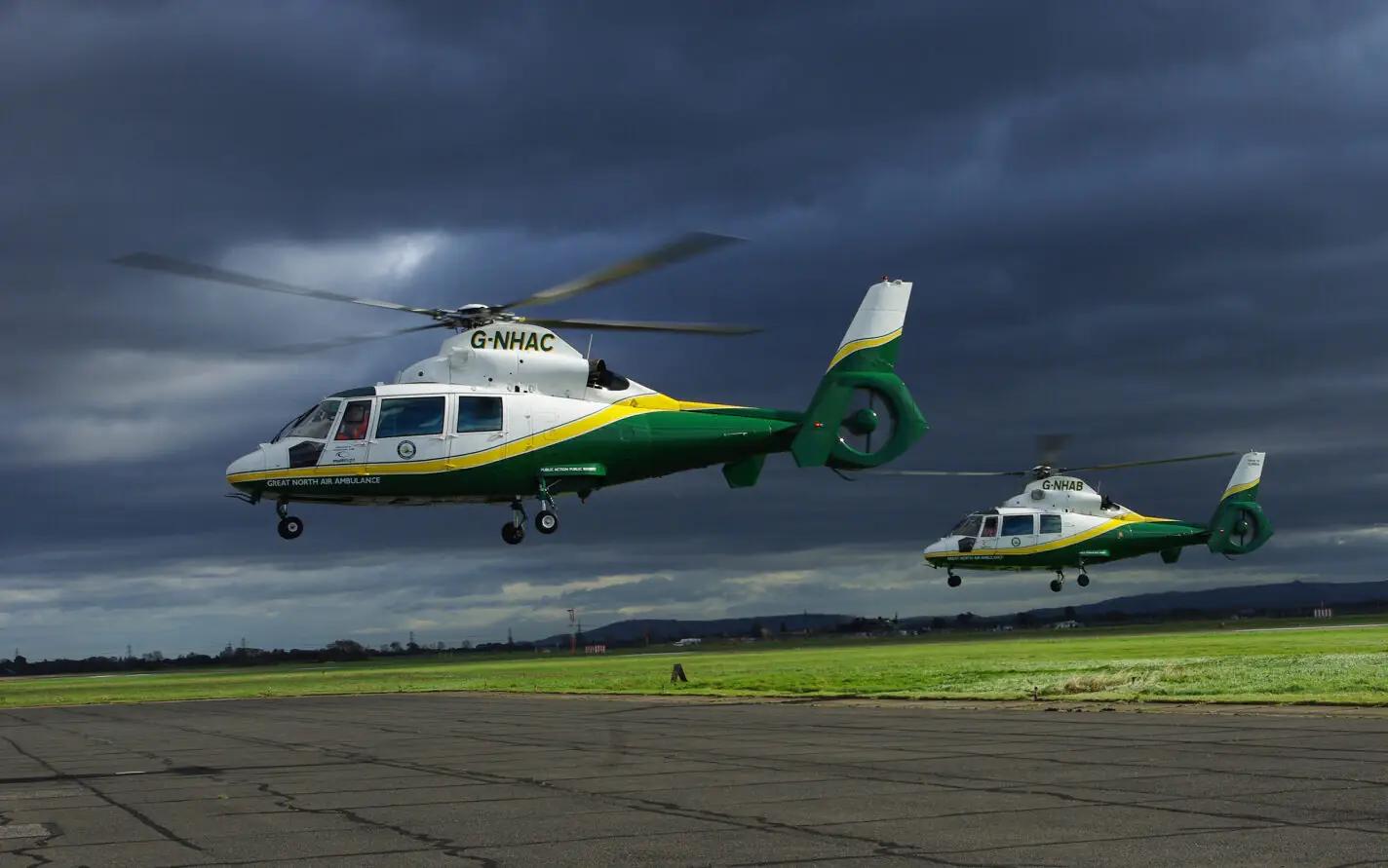
The aircraft serving Newcastle and the wider North East is operated by the Great North Air Ambulance Service (GNAAS), a charity that delivers specialist emergency medical care across the region. Despite many people referring to it as the Newcastle Air Ambulance, its crews cover a vast area stretching across the North East, Cumbria, North Yorkshire, southern Scotland and the Isle of Man.
The figures behind the service reveal just how busy its teams have become. Every year, highly trained doctors, paramedics and pilots respond to thousands of life-threatening emergencies, often reaching patients in places where every minute can mean the difference between life and death.
Nearly 2,000 emergency call-outs every year.
The latest figures show the Great North Air Ambulance attended 1,998 incidents during the 2024-25 financial year, averaging around five to six emergency call-outs every day. During calendar year 2025, crews responded to 1,938 incidents, with 1,218 taking place across the North East, making it by far the busiest part of the charity's operational area.
The charity's teams are dispatched to a wide range of emergencies including serious road traffic collisions, cardiac arrests, falls from height, industrial accidents, assaults and medical emergencies where advanced hospital-level care is needed before a patient reaches an emergency department.
Unlike a standard ambulance crew, GNAAS clinicians can perform complex procedures at the scene, including rapid sequence anaesthesia, blood transfusions and advanced airway management.
The service covers far more than Newcastle.
Although Newcastle is one of the busiest locations served, the helicopters cover more than 8,000 square miles across northern England and neighbouring regions.
Their bases at Eaglescliffe in County Durham and Langwathby near Penrith allow crews to reach remote rural communities, major motorways, coastal areas and busy city centres alike. During daylight hours helicopters respond whenever weather conditions allow, while overnight specialist doctors and paramedics continue operating using rapid response vehicles.
This flexibility allows patients to receive critical care regardless of whether the helicopter can fly.
How much does the Newcastle air ambulance cost to run?
One of the biggest surprises for many people is that the Great North Air Ambulance receives no routine NHS or Government funding for its day-to-day operations.
Instead, the charity relies almost entirely on donations, fundraising events, lotteries, gifts in wills and corporate support.
Current figures show it costs approximately £9.6 million each year, or around £25,969 every single day, simply to keep the service operating. Those costs cover helicopters, specialist medical equipment, highly trained doctors and paramedics, fuel, aircraft maintenance, aviation engineers, pilots, training and clinical research.
According to the Charity Commission, donations and legacies remain the organisation's biggest source of income, highlighting just how dependent the service is on public generosity.
Why demand continues to increase.
Demand for air ambulance services has steadily increased as populations grow, traffic volumes rise and medical technology allows clinicians to deliver increasingly advanced treatment before patients reach hospital.
The most common emergencies attended include cardiac arrests, road traffic collisions, serious falls, assaults and major medical incidents.
Research highlighted by the charity has shown that trauma patients treated by its specialist teams have at least a 37 percent greater chance of surviving after 30 days compared with patients receiving standard emergency care alone.
That statistic demonstrates why rapid access to consultant-level emergency medicine can have such a significant impact on survival rates.
Why the charity is asking for public support.
While the helicopters continue responding daily across Newcastle and the wider North East, the charity says its future depends on continued fundraising.
Its existing aircraft are becoming older, more expensive to maintain and increasingly difficult to source replacement parts for. As a result, GNAAS has launched a major appeal to secure a new fleet of Airbus H145 helicopters, including raising £2.5 million towards the purchase of a third aircraft.
The additional helicopter would improve resilience by ensuring aircraft remain available when others undergo scheduled maintenance, reducing the risk of missed missions during busy periods.
Charity leaders have also warned that fundraising income has become more challenging during the cost of living crisis, making public support more important than ever.
A vital service for the North East.
For Newcastle residents, the Great North Air Ambulance represents much more than a helicopter flying overhead.
Its crews bring hospital-level emergency care directly to patients at roadsides, workplaces, homes, sporting venues and rural locations where every second counts. Many patients are treated on scene before being transferred to specialist trauma centres, giving them the best possible chance of recovery.
Although thousands of people across the region will hopefully never need the service themselves, knowing it is available provides reassurance that expert critical care can arrive quickly when the unexpected happens.
With almost 2,000 missions every year and operating costs approaching £10 million annually, the figures show why the Great North Air Ambulance remains one of the North East's most valued charities and why continued community support will play a major role in keeping its helicopters flying for years to come.
You can help donate to this vital service by visiting the Great North Air Ambulance Service website.
Share your stories below.
Have you ever witnessed the Great North Air Ambulance landing in Newcastle or elsewhere across the North East?
Health News
The Truth About Newcastle Air Ambulance Costs
Advertisement




Comments (0)
You must be logged in to post comments.
Don't have an account? Register here
No comments yet. Be the first to share your thoughts!