
For many people in Newcastle, the city's identity is shaped by its industrial heritage, football culture and strong sense of community. Less widely known, but equally important, is the story of Newcastle's Sikh community, whose contribution to the city and wider North East has steadily grown over several decades.
Today, Sikhs are an established part of life in Newcastle and across the region, contributing to business, healthcare, education, public service and charitable work. Their story reflects both the changing face of the North East and the enduring values that have helped communities thrive together.
A Community Built Through Migration.
The Sikh faith originated in the Punjab region of South Asia during the 15th century. Large-scale Sikh migration to the United Kingdom accelerated after the Second World War, with many families arriving to help fill labour shortages and support Britain's rebuilding efforts.
While larger Sikh populations settled in areas such as the West Midlands and London, smaller communities began establishing themselves in the North East. Newcastle became home to Sikh families seeking employment opportunities, education and a stable future for their children.
Over time, those early settlers laid the foundations for a thriving community. Family businesses were established, professional careers flourished and community organisations helped preserve cultural traditions while embracing life in the North East.
Sikh Population Growth Across the North East.
Recent census data highlights the steady growth of the Sikh population across the region. According to Census 2021 figures, approximately 7,206 Sikhs live in North East England, up from 5,964 in 2011, representing growth of more than 20 percent over the decade.
Across England and Wales, more than 525,000 people identified as Sikh in Census 2021, an increase of over 22 percent compared with 2011. Sikhs now account for around 0.9 percent of the population of England and Wales.
Although Newcastle's Sikh population is relatively small compared with major UK cities, its influence extends far beyond its size. Community members play visible roles in local businesses, healthcare settings, educational institutions and public services throughout Tyneside.
The Importance of the Gurdwara.
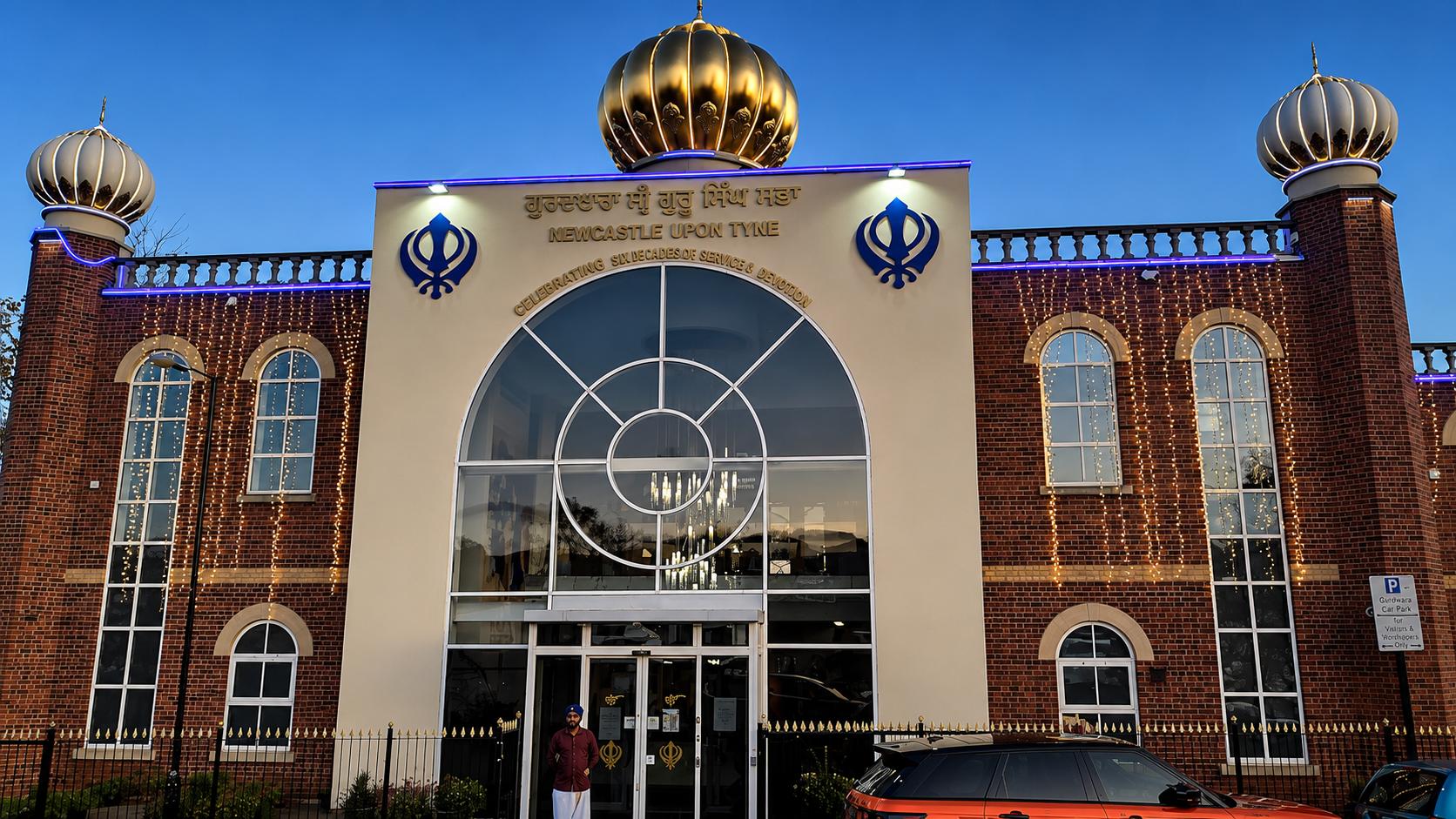
At the heart of Sikh community life is the gurdwara, the Sikh place of worship. More than a religious centre, a gurdwara acts as a community hub where families gather, celebrations take place and support is offered to those in need.
One of the most important Sikh principles is seva, meaning selfless service. This commitment to helping others can often be seen during charity events, food drives and community outreach initiatives.
The tradition of langar, a free community meal served to everyone regardless of faith, background or income, remains one of the most recognised aspects of Sikh culture. Across the UK, gurdwaras regularly provide meals to thousands of people every week, demonstrating values of equality and inclusion that resonate strongly within Newcastle's diverse communities.
Business, Education and Professional Success.
The Sikh community has built a reputation throughout the UK for entrepreneurship and professional achievement. Nationally, Sikhs are highly represented among business owners and self-employed professionals.
Census data also shows strong levels of home ownership within the Sikh population. Around 77.7 percent of people identifying as Sikh owned their home outright or through a mortgage, compared with 62.7 percent of the wider population of England and Wales.
Education continues to play an important role within Sikh families, with many young people pursuing careers in medicine, law, engineering, technology and academia. In Newcastle, Sikh professionals can be found working across major employers including the NHS, universities and private sector organisations.
Preserving Culture for Future Generations.
Like many minority communities across Britain, Newcastle's Sikhs balance maintaining cultural traditions with adapting to modern life.
Festivals such as Vaisakhi remain important annual events. Celebrated worldwide, Vaisakhi marks the formation of the Khalsa in 1699 and is one of the most significant dates in the Sikh calendar. Celebrations often include community gatherings, religious services and cultural activities that help younger generations connect with their heritage.
Language also plays an important role. Punjabi remains widely spoken within Sikh households across Britain. Census analysis found that nearly 64 percent of Punjabi speakers in England and Wales identified as Sikh.
A Growing Part of Newcastle's Future.
Newcastle has become increasingly diverse over recent decades, with communities from around the world helping shape the city's modern identity. The Sikh community forms an important part of that story.
While relatively modest in numbers, its contribution to economic growth, community cohesion and cultural diversity continues to be significant. The values of hard work, service and community involvement have helped Sikhs establish deep roots across Newcastle and the wider North East.
As the region continues to evolve, the Sikh community's story offers an example of how cultural heritage and local identity can grow together. It is a reminder that Newcastle's strength has always come from the people who choose to call it home, regardless of where their journey began.
Let us know your thoughts.
How has Newcastle's growing diversity shaped your local community?
Community News
The Untold Story of Newcastle's Sikh Community
Advertisement





Comments (0)
You must be logged in to post comments.
Don't have an account? Register here
No comments yet. Be the first to share your thoughts!