
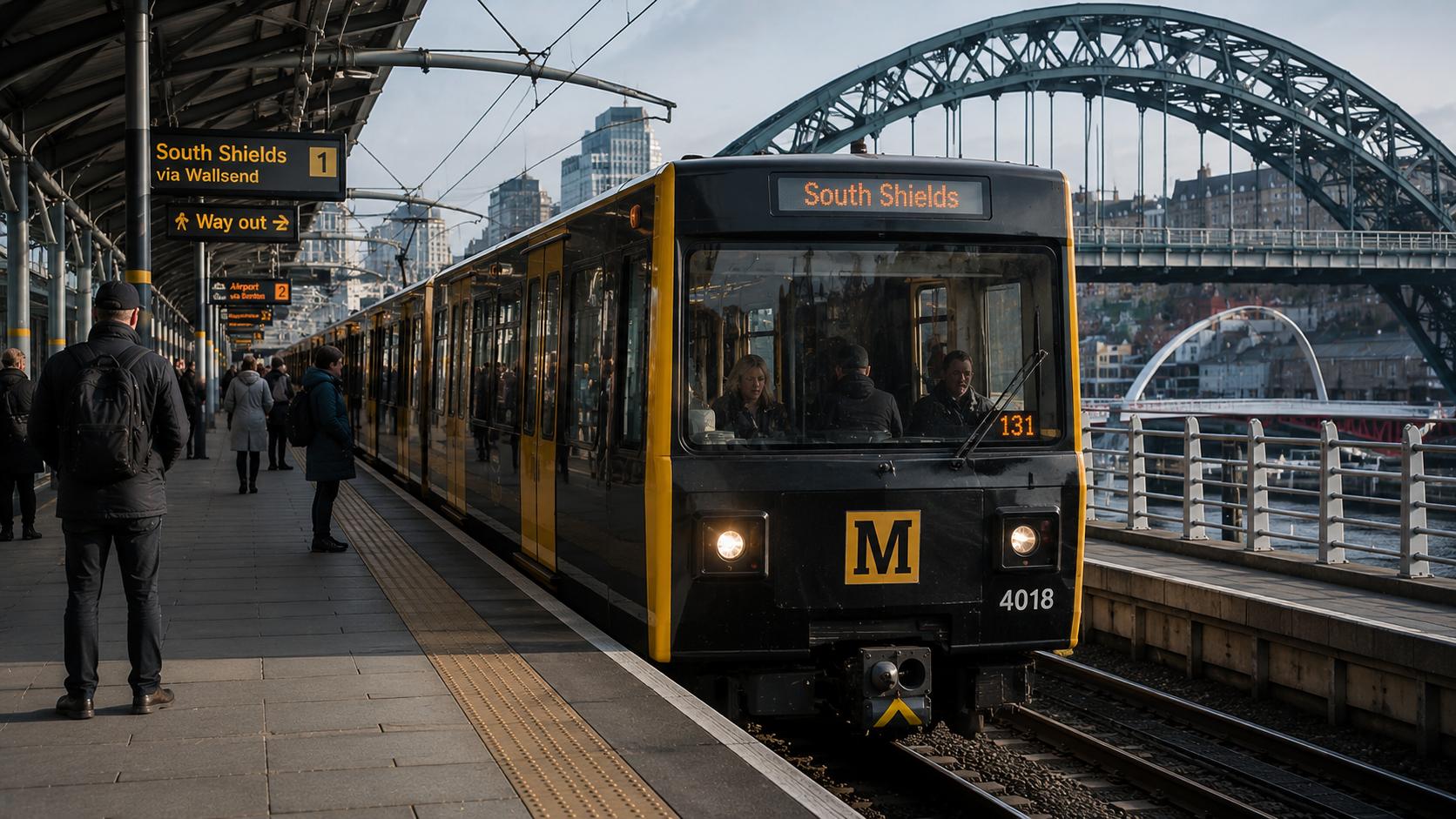
For millions of people across Tyneside and Wearside, the Metro is simply part of everyday life, a swift and familiar way to travel across the region. Yet when it opened in 1980, the Tyne and Wear Metro was a genuine pioneer, the first modern light rapid transit system of its kind in Britain. It set a pattern that other cities would later follow, and it remains one of the most important pieces of infrastructure the North East has ever built.
A Bold Vision for Transport.
By the 1970s, the towns and cities of Tyneside faced the same transport challenges as much of urban Britain, with growing car use, congestion and an ageing network of local railways. The response was a bold and forward-looking plan to create an entirely new kind of urban railway, a modern, electric, rapid-transit system that would link Newcastle, Gateshead and the surrounding towns with the coast and the airport. It was an ambitious vision, drawing on the best ideas from systems around the world and adapting them to the needs of the region.
Building the Network.
Creating the Metro was a major undertaking. The system made clever use of existing railway lines, including former suburban routes, while adding new sections, most dramatically tunnels driven beneath the centres of Newcastle and Gateshead. This combination of old and new allowed the Metro to serve a wide area while penetrating right into the heart of the cities. New stations were built, and the whole system was electrified and equipped with modern trains, creating a network that was fast, frequent and easy to use. It was a transformation of public transport on a grand scale.
A Modern Railway.
When it opened, the Metro represented a new standard for urban transport in Britain. Its bright, modern trains, its clean stations and its frequent, reliable services were a world away from the ageing transport of the past. The system was designed to be integrated, connecting easily with buses and other services to provide a seamless way of getting around the region. The Metro quickly became popular and well used, demonstrating that a well-designed modern railway could attract passengers and serve a community effectively. It was a source of considerable regional pride.
Crossing the Tyne.
Among the most striking features of the Metro is the way it crosses the River Tyne. A dedicated bridge carries the Metro high above the river between Newcastle and Gateshead, adding another distinctive crossing to a river already famous for its bridges. Travelling across the Tyne on the Metro offers passengers a memorable view of the river and its landmarks, and the bridge has become part of the iconic landscape of the area. The crossing is a reminder of the engineering effort that went into weaving the new system into the fabric of the region.
A Pattern for Others.
The significance of the Tyne and Wear Metro extends well beyond the North East. As the first modern light rapid transit system in Britain, it showed that such a network could be built and operated successfully, and it became an influential example for other cities considering similar schemes. In the years that followed, other parts of the country developed their own modern tram and light rail systems, building on the pioneering work done on Tyneside. The Metro had blazed a trail, proving the value of investing in high-quality urban public transport.
Serving the Region.
For more than four decades, the Metro has carried vast numbers of passengers, connecting communities, supporting the economy and shaping the way people live and travel across Tyneside and Wearside. It links homes to workplaces, brings visitors to the coast, carries fans to matches and connects the region to its airport. In doing so it has become an indispensable part of daily life, woven into the routines of generations. Few pieces of infrastructure touch so many lives so directly or so regularly as the Metro does.
Looking to the Future.
The Metro continues to evolve, with ongoing investment in new trains and improvements to keep the system fit for the future. As the region looks ahead to the challenges of sustainable transport and reducing car dependence, the Metro's role becomes ever more important, offering a clean and efficient alternative to the car. The pioneering spirit that created the system in 1980 lives on in the continuing commitment to maintain and improve it. The Tyne and Wear Metro remains a landmark achievement and a vital part of the life of the North East.
Part of the Fabric of Life.
Beyond its practical role in moving people, the Metro has become part of the cultural fabric of the North East, woven into the everyday experiences and memories of those who live in the region. For many people, the Metro is associated with the milestones and routines of life: the journey to a first job, the trip to the coast on a summer day, the ride to a match or a night out, the daily commute shared with familiar faces.
Its distinctive trains and stations are part of the visual identity of the region, instantly recognisable to anyone who has grown up or lived on Tyneside or Wearside. The system has its own character and its own place in local affection, the subject of fond memories and shared experiences across the generations.
In this way the Metro is more than a transport system; it is a part of what it means to belong to the region, a common thread that connects the lives of millions of people. The investment made in creating it back in 1980 has repaid itself many times over, not only in the practical benefits of mobility and connection but in the way the system has become a beloved and defining feature of life in the North East. Few public projects have become so thoroughly embedded in the identity of the place they serve.
Share your thoughts.
The Metro was Britain's first modern light rapid transit system, pioneered here on Tyneside.
What would daily life across Tyneside and Wearside be like without the Metro?
Newcastle History
The Tyne and Wear Metro: Britain's Pioneering Modern Railway
How the Tyne and Wear Metro, opened in 1980, became Britain's first modern light rapid transit system and a vital part of daily life across the North East.
Advertisement


Comments (0)
You must be logged in to post comments.
Don't have an account? Register here
No comments yet. Be the first to share your thoughts!