
Language around sexuality and gender identity has evolved considerably over recent decades, and keeping up with current, respectful terminology can genuinely feel daunting for anyone newer to these conversations. A basic working understanding of common LGBTQ+ terms helps build clearer, more respectful communication, whether chatting with a colleague, supporting a family member, or simply following Pride season coverage in the news.
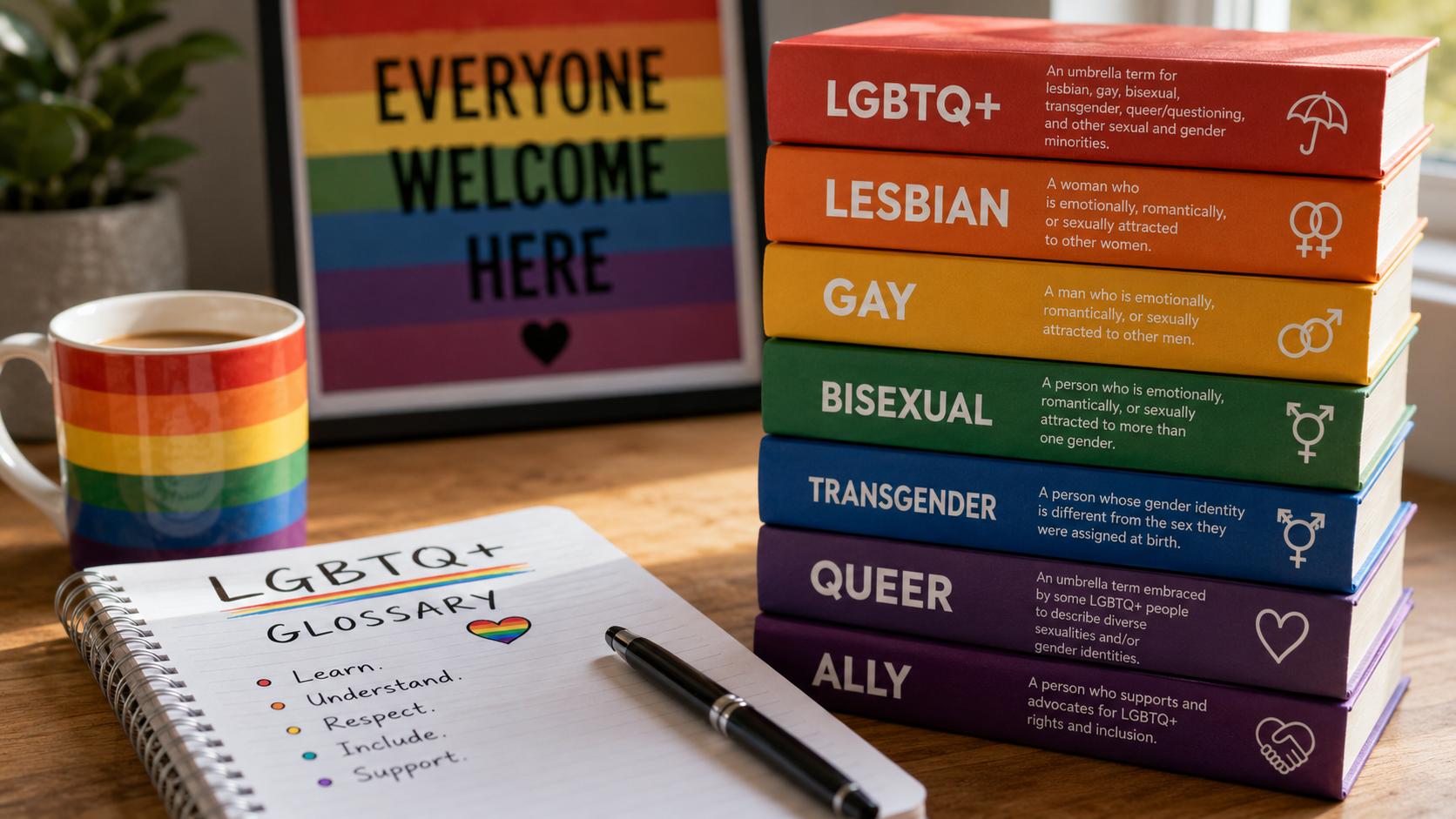
The acronym LGBTQ+ itself stands for lesbian, gay, bisexual, transgender and queer, with the plus sign deliberately included to represent the many additional identities within the wider community, including intersex, asexual and pansexual people among others. Some organisations use extended versions of the acronym, such as LGBTQIA+, specifically to make several of these additional identities more explicitly visible within the term itself.
Sexual orientation refers to who a person is romantically or sexually attracted to, encompassing terms including lesbian, describing women attracted to women, gay, generally describing men attracted to men though sometimes used more broadly, and bisexual, describing attraction to more than one gender. Pansexual describes attraction regardless of gender entirely, while asexual describes experiencing little or no sexual attraction to others at all.
Gender identity, by contrast, refers to a person's own internal sense of their gender, which may or may not align with the sex they were assigned at birth. Transgender describes someone whose gender identity differs from their sex assigned at birth, while cisgender describes someone whose gender identity matches the sex they were assigned at birth, a term that gives language to the previously unmarked, assumed default experience.
Non-binary is an umbrella term describing gender identities that fall outside the traditional binary categories of exclusively male or female, and some non-binary people use gender-neutral pronouns such as "they" and "them" rather than "he" or "she". Genderfluid describes someone whose sense of their own gender identity shifts or changes over time, rather than remaining fixed.
Queer functions today as a broad, deliberately inclusive umbrella term embracing a wide range of sexual orientations and gender identities, having been reclaimed by many within the community after historically being used as a slur. Some older LGBTQ+ people still associate the word with that painful history, meaning it remains genuinely appropriate to let individuals choose whether they personally identify with the term rather than assuming it applies to everyone.
Intersex describes people born with physical sex characteristics that do not fit typical binary definitions of male or female bodies, a naturally occurring variation affecting a meaningful proportion of the population, while ally describes someone who is not themselves LGBTQ+ but who actively supports and advocates for LGBTQ+ rights and equality, a role many Pride attendees each year genuinely take on themselves.
Coming out describes the ongoing personal process of a person recognising, accepting and openly sharing their own sexual orientation or gender identity with others, a process that looks different for every individual and often continues at different points throughout a person's life rather than happening as a single, one-off event.
Deadnaming, meaning referring to a transgender person by the name they used before transitioning, is generally considered genuinely disrespectful and hurtful, and avoiding it, along with respecting a person's current name and pronouns consistently, remains one of the simplest and most meaningful ways to show basic respect in everyday conversation.
Bisexual erasure describes the specific, often unintentional tendency to overlook or dismiss bisexuality as a genuine, valid identity, sometimes framed instead as a temporary phase or simple confusion, a pattern many bisexual people report experiencing from both heterosexual and gay communities alike, making genuine visibility and understanding particularly important for this specific part of the wider community.
Getting terminology exactly right every single time matters less than approaching these conversations with genuine openness and a willingness to listen and learn. Language around identity continues to evolve, and most people within the LGBTQ+ community genuinely appreciate a respectful, good-faith effort considerably more than a demand for flawless, technically perfect terminology delivered without any real warmth behind it.
Share your views.
Was any of this LGBTQ+ terminology new to you?
Lifestyle News
Understanding LGBTQ+ Terminology: A Beginner's Glossary
LGBTQ+ terminology continues to evolve, and understanding the basics helps everyone communicate with greater respect and clarity, whether at Pride or in everyday conversation.
Advertisement





Comments (0)
You must be logged in to post comments.
Don't have an account? Register here
No comments yet. Be the first to share your thoughts!