
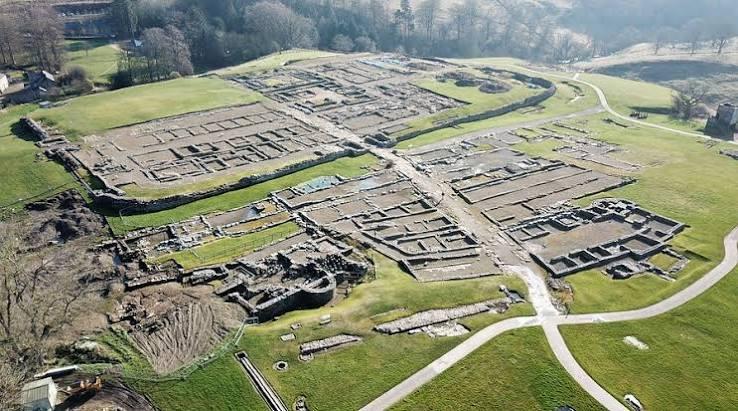
In the rolling countryside of Northumberland, just south of the line of Hadrian's Wall, lies one of the most important and fascinating Roman sites in Britain. Vindolanda is a Roman fort where ongoing excavations continue to reveal extraordinary insights into life on the very edge of the Roman Empire. For anyone interested in history, it is an unmissable and genuinely living archaeological site.
A Fort Older Than the Wall.
Vindolanda was a Roman auxiliary fort, established around the year AD 85, which means it predates the famous Hadrian's Wall by some four decades. It formed part of an earlier frontier system based on a road known as the Stanegate, which ran across northern Britain, and it guarded this important military route long before the great wall was conceived. Remarkably, the men stationed at Vindolanda would later play a part in building Hadrian's Wall and garrisoning its defences. The site is, in fact, not a single fort but a series of forts built one on top of another over the centuries, creating a deep and complex layering of history beneath the turf.
The Famous Writing Tablets.
What has made Vindolanda truly world-famous is the discovery of its writing tablets, among the most important archaeological treasures ever found in Britain. These thin, postcard-sized slivers of wood, covered in faded ink handwriting, were preserved for nearly two thousand years in the waterlogged, oxygen-free ground. They contain the everyday correspondence of the Roman community: military reports, requests for supplies, personal letters and more, offering an astonishingly intimate glimpse into the lives of soldiers, officers and their families. Among the most celebrated is a birthday invitation, one of the earliest known examples of writing in Latin by a woman, a touching link across the millennia.
Preserved by the Ground.
The secret to Vindolanda's remarkable wealth of finds lies in its unusual soil conditions. The waterlogged, anaerobic ground at the site has preserved organic materials that would normally have rotted away long ago, including not only the wooden tablets but also leather shoes, textiles, wooden objects and much more. This extraordinary preservation means that Vindolanda offers a richness of everyday detail rarely found at other Roman sites, allowing archaeologists to reconstruct the lives of ordinary people with unusual vividness. Each new dig has the potential to uncover further treasures, hidden and protected beneath the earth for centuries.
Archaeology in Action.
One of the things that sets Vindolanda apart from many historic sites is that it is a living, working excavation. During the summer digging season, visitors can watch archaeologists at work, carefully uncovering new finds and piecing together the story of the fort, and the site famously welcomes volunteers to take part in the excavations alongside the professionals. There is a real thrill in knowing that significant discoveries are still being made, and that the ground may yet yield further secrets. This sense of active, ongoing investigation gives Vindolanda an excitement and immediacy that few other Roman sites can match.
A Museum of Treasures.
The site is home to an excellent museum, run by the trust that cares for Vindolanda, where many of the remarkable finds are displayed. Here visitors can see the leather shoes, tools, jewellery, weapons and other everyday objects that bring the Roman world vividly to life, as well as learn about the famous writing tablets. The museum sets the finds in context, helping visitors to understand the daily reality of life on this distant frontier of empire. Alongside the excavated remains and full-scale reconstructions on the site, it makes for a rich and rewarding experience.
Part of Hadrian's Wall Country.
Vindolanda sits at the heart of the magnificent Hadrian's Wall landscape, one of the most evocative historic regions in the country and a World Heritage Site. The nearby fort of Housesteads, perched dramatically on the line of the wall itself, lies only a couple of miles to the north, and the whole area offers spectacular walking and a profound sense of history. Exploring this wild and beautiful frontier country, where the Roman Empire once met the unconquered north, is an experience that combines stunning scenery with one of the great stories of British history.
A Window Into the Roman World.
What makes Vindolanda so special is the way it brings the Roman past to life not through grand monuments alone, but through the small, human details of everyday existence. The letters, the shoes and the personal possessions speak directly to us across the centuries, reminding us that the people who lived and worked on this remote frontier were not so very different from ourselves.
For anyone exploring Northumberland and Hadrian's Wall country, Vindolanda offers an unforgettable encounter with the Roman world, and the rare chance to watch history being uncovered before your very eyes.
A Legacy of Discovery.
The remarkable story of Vindolanda owes a great deal to the dedicated archaeologists who have devoted their lives to uncovering its secrets. The famous writing tablets first came to light in the 1970s, a discovery that astonished the world and transformed our understanding of life on the Roman frontier. The excavations have continued ever since under the care of the trust that runs the site, with each season adding to the wealth of knowledge and finds. This ongoing commitment means that Vindolanda is never static; it is a place of continual discovery, where the story of the Roman past is still being written. The trust also welcomes volunteers and supporters, allowing members of the public to play a genuine part in the work, and the on-site museum ensures that the finds are shared with all who visit. This living legacy of discovery, passed down and continued over the decades, is part of what makes Vindolanda so endlessly fascinating and so important to the history of Roman Britain.
We want to hear from you.
Share your memories and opinions with fellow readers below, especially if you have visited the digs at Vindolanda.
What would you most hope to see archaeologists uncover from the Roman frontier?
Travel News
Vindolanda: Life on the Roman Frontier
A guide to Vindolanda, the Roman fort near Hadrian's Wall whose famous writing tablets reveal everyday life on the edge of the Roman Empire.
Advertisement


Comments (0)
You must be logged in to post comments.
Don't have an account? Register here
No comments yet. Be the first to share your thoughts!