
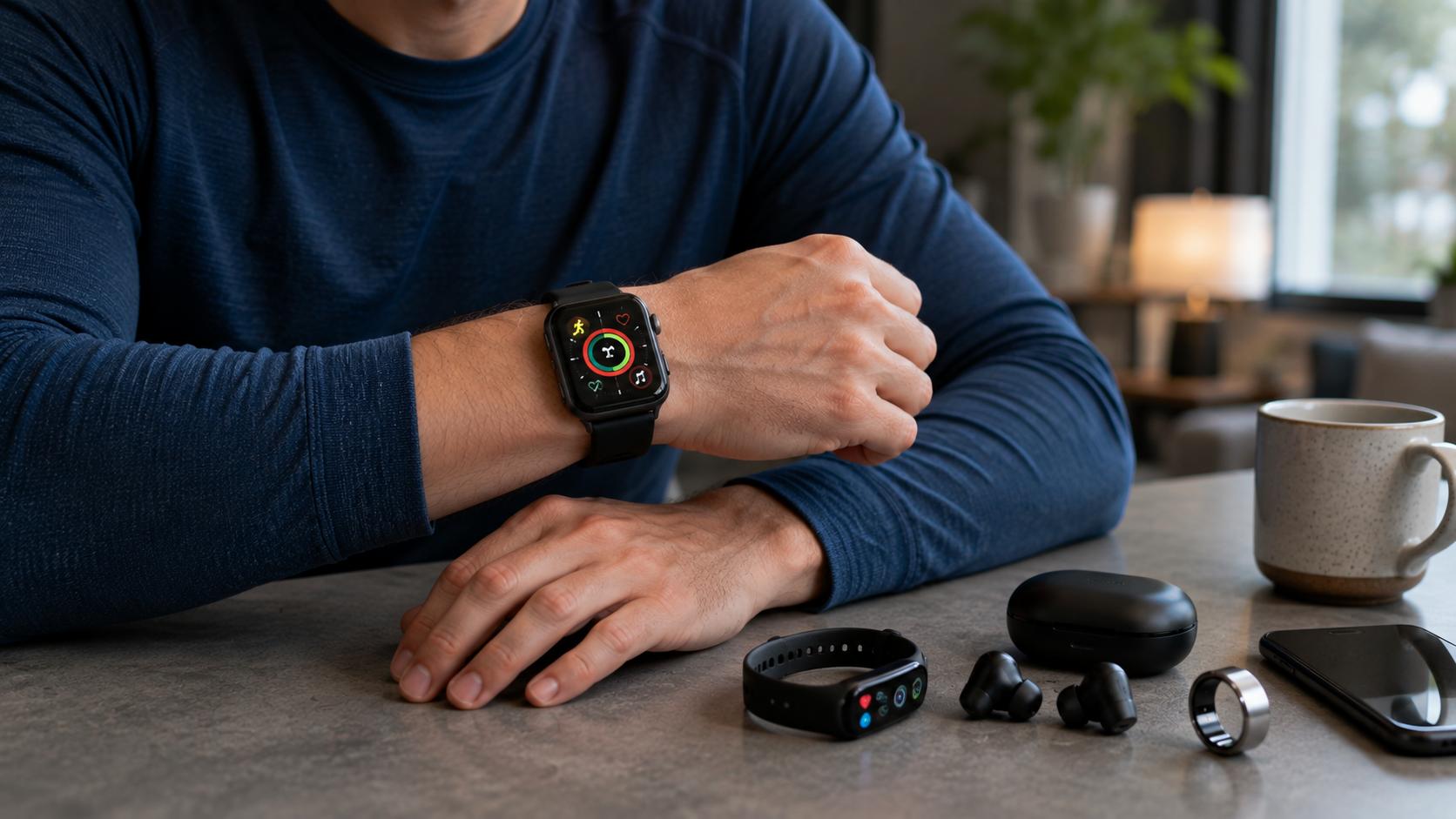
Wearable technology has come a long way from the basic step-counting pedometers that first popularised the category, with today's smartwatches and fitness trackers capable of monitoring heart rate, sleep quality and a wide range of other health metrics throughout the day, all from a device worn comfortably on your wrist.
Fitness trackers remain the more affordable, entry-level option for anyone primarily interested in monitoring general activity levels, steps taken and basic sleep tracking, without necessarily needing the full range of features, and often the higher price tag, that comes with a more fully featured smartwatch.
Smartwatches typically offer considerably more functionality beyond fitness tracking, including notifications, contactless payments and, in many cases, the ability to run dedicated apps directly from the wrist, making them a genuinely useful everyday companion device for people who want more than just basic activity monitoring from their wearable.
Battery life varies enormously between different wearable devices, with simpler fitness trackers often lasting a week or more on a single charge, while more feature-rich smartwatches with bright, always-on displays may need charging daily or every couple of days, a genuinely important practical consideration depending on your own personal habits and tolerance for regular charging.
Health monitoring features have expanded considerably in recent years, with many devices now capable of tracking metrics like blood oxygen levels and heart rhythm irregularities alongside more basic activity data, though it remains genuinely important to treat these consumer devices as a helpful general indicator rather than a substitute for proper medical-grade diagnostic equipment.
Compatibility with your existing smartphone is worth checking carefully before buying, since some wearable devices work considerably better, or in some cases only work at all, when paired with a specific smartphone operating system, potentially limiting your options depending on which type of phone you already own and use.
Price ranges for wearable technology have broadened considerably, with genuinely capable basic fitness trackers now available at a fraction of the cost of premium smartwatches, meaning there is a realistic entry point for most budgets rather than wearable tech remaining an exclusively premium, expensive category of device.
Comfort and design also deserve genuine consideration alongside pure features and specifications, since a wearable device only delivers real value if you actually want to wear it consistently every day, meaning trying a device on in person where possible, rather than buying based purely on a features list, remains a genuinely sensible approach.
Sports and fitness-specific wearables have also become increasingly specialised, with dedicated running watches, cycling computers and swim-tracking devices offering considerably more detailed, sport-specific data than a general-purpose smartwatch or fitness tracker typically provides, a worthwhile consideration for anyone seriously committed to a specific sport or training regime.
Reading independent reviews rather than relying purely on manufacturer marketing claims remains genuinely worthwhile too, since real-world battery life, accuracy of health tracking features and everyday comfort can vary noticeably from the more optimistic figures often quoted in official product advertising and packaging.
Whatever your specific needs, whether that is simply tracking daily steps or wanting a more fully featured smartwatch capable of replacing several other gadgets, taking time to consider exactly which features you will genuinely use day to day remains the most sensible approach before choosing which wearable device is actually worth your money.
The right choice ultimately comes down to genuine daily habits rather than simply chasing the newest, most feature-packed device available. Taking a little time to compare features against genuine daily needs remains the smartest way to avoid an expensive, underused purchase. Getting that balance right from the outset makes the whole experience considerably more rewarding over the long run.
Share your views.
Do you regularly wear a smartwatch or fitness tracker?
Tech News
Wearable Technology: What's Worth Buying in 2026
From fitness trackers to smartwatches, wearable technology has become genuinely useful for everyday life, but knowing what actually suits your needs can be confusing.
Advertisement




Comments (0)
You must be logged in to post comments.
Don't have an account? Register here
No comments yet. Be the first to share your thoughts!