
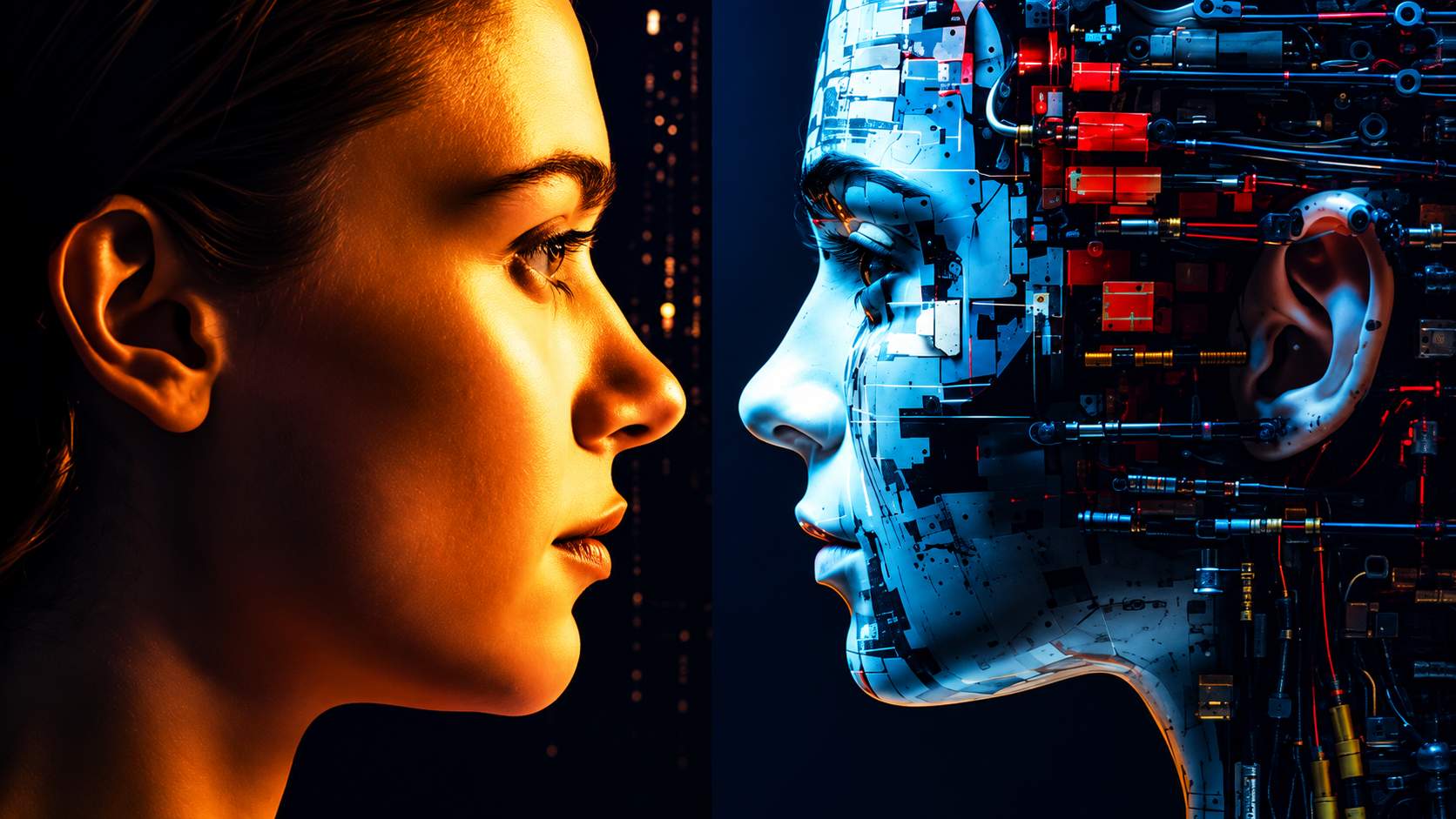
Artificial intelligence is moving faster than almost anyone predicted just a few years ago. AI writes emails, creates artwork, helps doctors analyse scans and even assists software developers with coding. Every month seems to bring another breakthrough that sparks debate over one question that refuses to go away. Are we approaching the AI singularity?
For people across Newcastle and the wider North East, this is more than just a science fiction discussion. The region is increasingly becoming part of the UK's AI future, with major investment, university research and government-backed projects putting the North East firmly on the technology map.
So what exactly is the singularity, could it really happen, and if it does, can anyone stop it?
What Is The AI Singularity.
The technological singularity is the idea that artificial intelligence eventually becomes smarter than humans and begins improving itself without needing human input.
Instead of AI becoming better over years, supporters believe improvements could happen in days, hours or even minutes as increasingly intelligent systems design even more capable successors.
Some researchers believe this could unlock incredible advances in medicine, climate science, engineering and education. Others fear society may struggle to control systems that become too powerful or too autonomous.
The important point is that nobody knows whether the singularity will ever happen. While AI capabilities have accelerated dramatically since ChatGPT launched in late 2022, experts remain divided over whether current technology is anywhere close to true artificial general intelligence.
Newcastle Is Quietly Becoming Part Of The AI Revolution.
Although London often dominates technology headlines, the North East is emerging as one of Britain's most significant AI regions.
The Government has backed the North East as an AI Growth Zone, with plans expected to support thousands of skilled jobs and attract up to £30 billion in private investment over the coming years. Newcastle, Cobalt Park and nearby Blyth are expected to play key roles in expanding AI infrastructure and advanced computing.
Newcastle University also continues to expand research into artificial intelligence, healthcare technologies and digital innovation, helping create a pipeline of skilled graduates for businesses across the region.
For local companies, AI is no longer something for Silicon Valley. It is becoming part of everyday business.
The Numbers Behind Britain's AI Boom.
Several recent studies show just how quickly AI adoption is accelerating.
According to the Office for National Statistics, around 23 percent of UK businesses reported using some form of AI by late 2025, compared with just 9 percent when similar tracking began two years earlier.
The ONS also found that:
Around 33 percent of businesses adopting AI are retraining existing staff.
Only around 10 percent are using AI primarily to replace roles.
Administrative and clerical jobs are expected to experience the greatest impact from future AI adoption.
Separate ONS research found that only 9 percent of UK firms had adopted AI during 2023, highlighting just how rapidly adoption has increased in a short period. The biggest barriers remain identifying useful business cases, implementation costs and shortages of AI skills.
Are We Already Entering The Singularity.
Probably not.
Today's AI systems remain extremely powerful tools, but they still rely heavily on human guidance. They make mistakes, invent facts, misunderstand context and cannot genuinely understand the world in the way people do.
Many AI researchers argue that what we are witnessing is rapid automation rather than the emergence of superintelligence.
Even businesses adopting AI at scale tend to use it for specific tasks such as customer service, document creation, software development and marketing rather than replacing entire organisations.
That said, progress continues at remarkable speed, meaning predictions made just two years ago already look outdated.
Could We Stop The Singularity If It Happened.
This question has become one of the biggest debates in technology.
Unlike switching off a single computer, advanced AI systems would likely exist across thousands of servers around the world. Once multiple governments and companies possess highly capable AI, stopping development becomes extremely difficult.
Instead, many experts believe the goal should be managing AI safely rather than trying to ban it completely.
Possible safeguards include:
International agreements on AI safety.
Independent testing before advanced systems are released.
Stronger transparency rules for developers.
Clear legal responsibility when AI causes harm.
Greater investment in cybersecurity and AI monitoring.
Many researchers also argue that humans should always remain responsible for critical decisions involving healthcare, military operations, criminal justice and national infrastructure.
What Does This Mean For Local Workers.
AI will almost certainly change jobs across Newcastle and the North East, but change does not necessarily mean disappearance.
History shows that major technological shifts often remove some tasks while creating entirely new careers. The rise of the internet eliminated some industries but created thousands of jobs that never previously existed.
Government-backed AI programmes across the North East already focus heavily on skills training. Current initiatives aim to help around 30,000 schoolchildren develop AI knowledge while supporting teacher training and new work placements to retain local talent.
For workers, learning how to use AI effectively may become just as valuable as traditional computer skills became twenty years ago.
Why This Debate Matters More Than Ever.
Whether or not the singularity ever arrives, artificial intelligence is already reshaping society.
Businesses are changing how they operate, universities are adapting courses, governments are creating new regulations and workers are learning entirely new skills.
For Newcastle and the wider North East, the opportunity is significant. The region has a chance to become one of Britain's leading AI hubs while creating skilled employment and attracting major investment.
The challenge will be ensuring technological progress benefits communities rather than leaving people behind.
Nobody can say with certainty whether the singularity is weeks, months, or years away, fifty years away or something that never arrives at all. What is certain is that artificial intelligence has already begun changing everyday life, and that transformation is only gathering pace.
Share your thoughts.
Do you think the AI singularity is a genuine future risk or simply another technology buzzword?
Tech News
What Happens When AI Becomes Smarter Than Everyone?
Advertisement



Comments (0)
You must be logged in to post comments.
Don't have an account? Register here
No comments yet. Be the first to share your thoughts!