
Food is the household cost most people feel most sharply, partly because you confront it weekly and partly because prices are visible in a way energy costs are not.
Newcastle has more options than the four big supermarkets, and several of them are substantially cheaper.
Here is what is available.
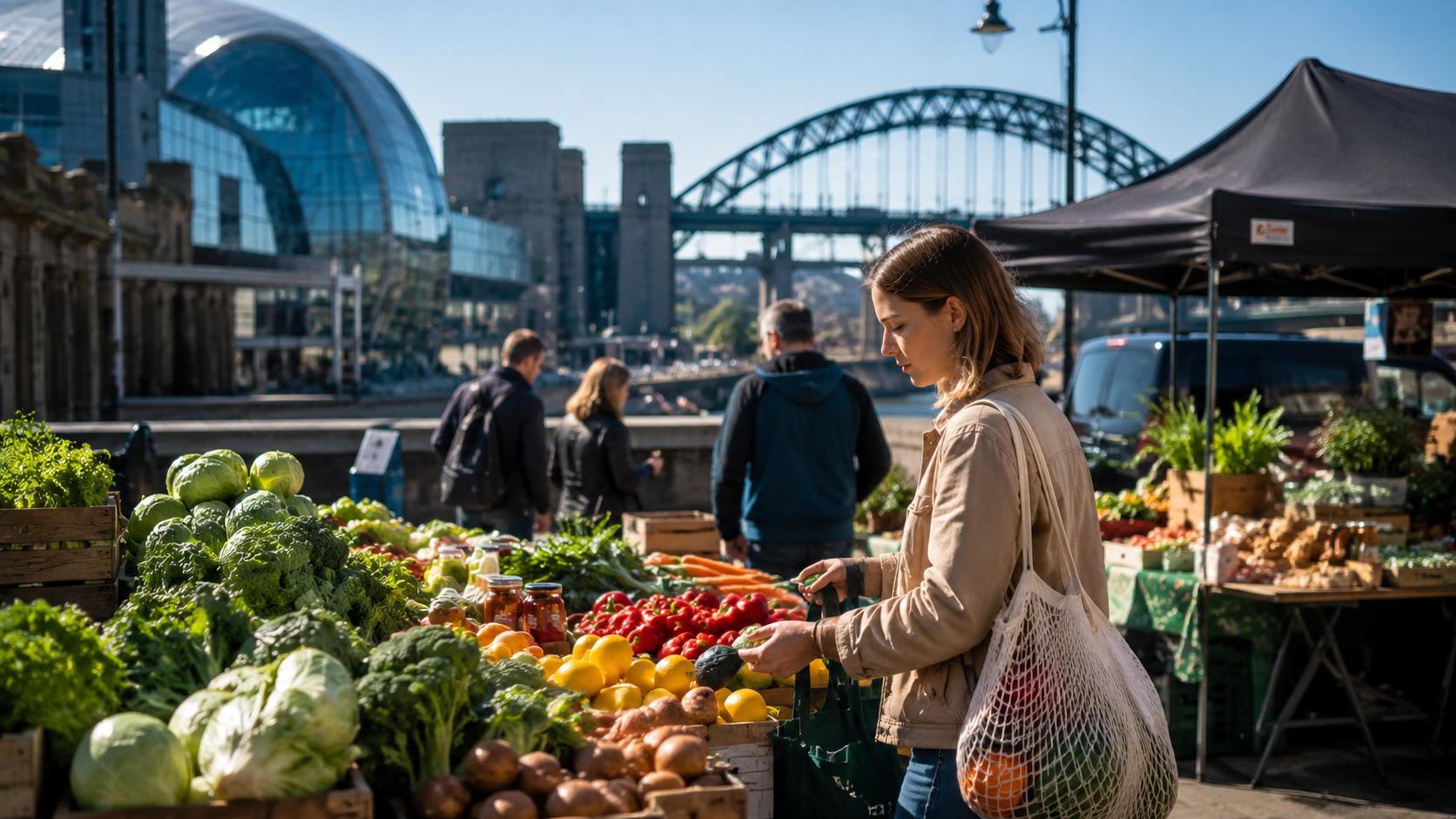
The Grainger Market is genuinely competitive.
The Victorian covered market in the city centre is frequently assumed to be a tourist attraction. It is a working market, and the fruit and vegetable stalls in particular are consistently cheaper than supermarkets for loose produce.
Butchers and fishmongers there sell at prices that compare well, and buying to order means you get the quantity you actually want rather than a pre-packed amount.
Prices drop further towards the end of trading, particularly on Saturdays, though selection narrows.
Other markets operate across the region, and Tyneside has a tradition of outdoor and covered markets worth exploring beyond the city centre.
Loose beats packaged.
Buying loose fruit and vegetables rather than pre-packed almost always reduces cost per kilogram and cuts waste, because you buy the amount you will use.
The same applies to the increasing number of refill and zero-waste shops across Newcastle, where dry goods including rice, pasta, pulses and oats are sold by weight. For staples bought in quantity, these can undercut supermarket prices.
Frozen vegetables and fruit are nutritionally comparable to fresh, cheaper, and eliminate waste entirely, which for many households produces the single largest saving available.
Community pantries change the maths.
A community pantry, sometimes called a social supermarket, works on membership rather than referral. Members pay a small weekly subscription and choose a set number of items.
Typical arrangements involve a few pounds a week for a basket worth considerably more, and they are designed for regular use rather than crisis.
Several operate across Newcastle and the surrounding area, generally through community organisations and churches. They are not means tested in the way a foodbank referral is, and the model exists specifically to reduce the stigma attached to food support.
Foodbanks remain available for anyone in crisis, accessed by referral through a GP, school, Citizens Advice or similar.
Surplus food apps work well here.
Apps redistributing surplus food from shops, bakeries and restaurants operate across Newcastle, offering discounted bags of unsold stock towards the end of trading.
Bakeries, supermarket branches, cafés and takeaways all participate. The contents are not chosen by you, which suits flexible cooks and frustrates rigid meal planners.
Some supermarkets and retailers also operate their own surplus schemes, and community fridges redistribute surplus free of charge in several parts of the city.
Reduction times are worth learning.
Every supermarket branch reduces items approaching their date, and the timing varies by store rather than by chain.
The pattern is generally an initial reduction in the afternoon and a deeper one shortly before closing. Staff will usually tell you if you ask politely.
Freezing on the day of purchase is what makes this genuinely useful, since reduced items usually need using immediately otherwise.
Own brands and unit pricing.
Supermarket own-brand and value ranges are frequently produced to similar specifications as branded equivalents at substantially lower cost, and blind comparisons rarely support the price difference.
Unit pricing, the cost per kilogram or litre shown in small print on shelf labels, is the only reliable way to compare. Larger packs are not always cheaper per unit, and multibuy offers are frequently worse value than the unit price on a single item.
Supermarket loyalty pricing has become widespread, with lower prices available only to cardholders. Whether to participate is a personal decision about data, but non-members now pay noticeably more on some items.
Plan around what you have.
The largest single saving available to most households is reducing waste, since food thrown away is money already spent.
Planning meals around what needs using, keeping a list, and shopping after eating rather than while hungry are unglamorous but effective.
Batch cooking and freezing portions reduces both cost and the temptation of takeaways on difficult evenings, and slow cookers and air fryers use considerably less energy than a full oven for many dishes.
Wholesale and bulk options.
Some cash and carry operations allow public access or membership, and for households buying in quantity, or for groups buying together, this can reduce unit costs significantly.
Food co-operatives and buying groups operate in some Newcastle neighbourhoods, pooling orders to access wholesale prices.
Storage is the limiting factor, and bulk buying is only a saving if the food is used.
Support beyond shopping.
Free school meals registration is worth checking even where a child already receives a universal infant meal, since registration unlocks additional support.
Healthy Start provides a prepaid card for pregnant women and families with young children on qualifying benefits, and take-up is well below eligibility.
Holiday activity and food programmes run through school holidays for eligible children, and details are published by the council.
Newcastle City Council's welfare rights service and Citizens Advice can run a full benefits check, which frequently identifies unclaimed entitlements worth considerably more than any shopping tactic.
Share your thoughts.
Where do you get the best value food shop in Newcastle?
Lifestyle News
Where to Find Cheaper Food in Newcastle
Beyond the big supermarkets, Newcastle has markets, pantries and apps that meaningfully reduce what a weekly shop costs.
Advertisement




Comments (0)
You must be logged in to post comments.
Don't have an account? Register here
No comments yet. Be the first to share your thoughts!