
For most Metro users across Newcastle and the wider North East, the daily commute is a routine part of life. Whether travelling into the city centre for work, heading to the coast for a day out, or making connections across Tyne and Wear, passengers generally share the same expectation: a comfortable journey with enough room for everyone.
But one issue continues to divide opinion on public transport networks around the world, including closer to home on the Tyne and Wear Metro. The phenomenon known as "manspreading" has become a recurring talking point among passengers, sparking debates about courtesy, personal space and commuter etiquette.
While some dismiss it as a minor annoyance, others argue it reflects a wider problem about how limited public space is shared. As Metro services continue to carry millions of passengers every year, the discussion shows no signs of disappearing.
What Is Manspreading.
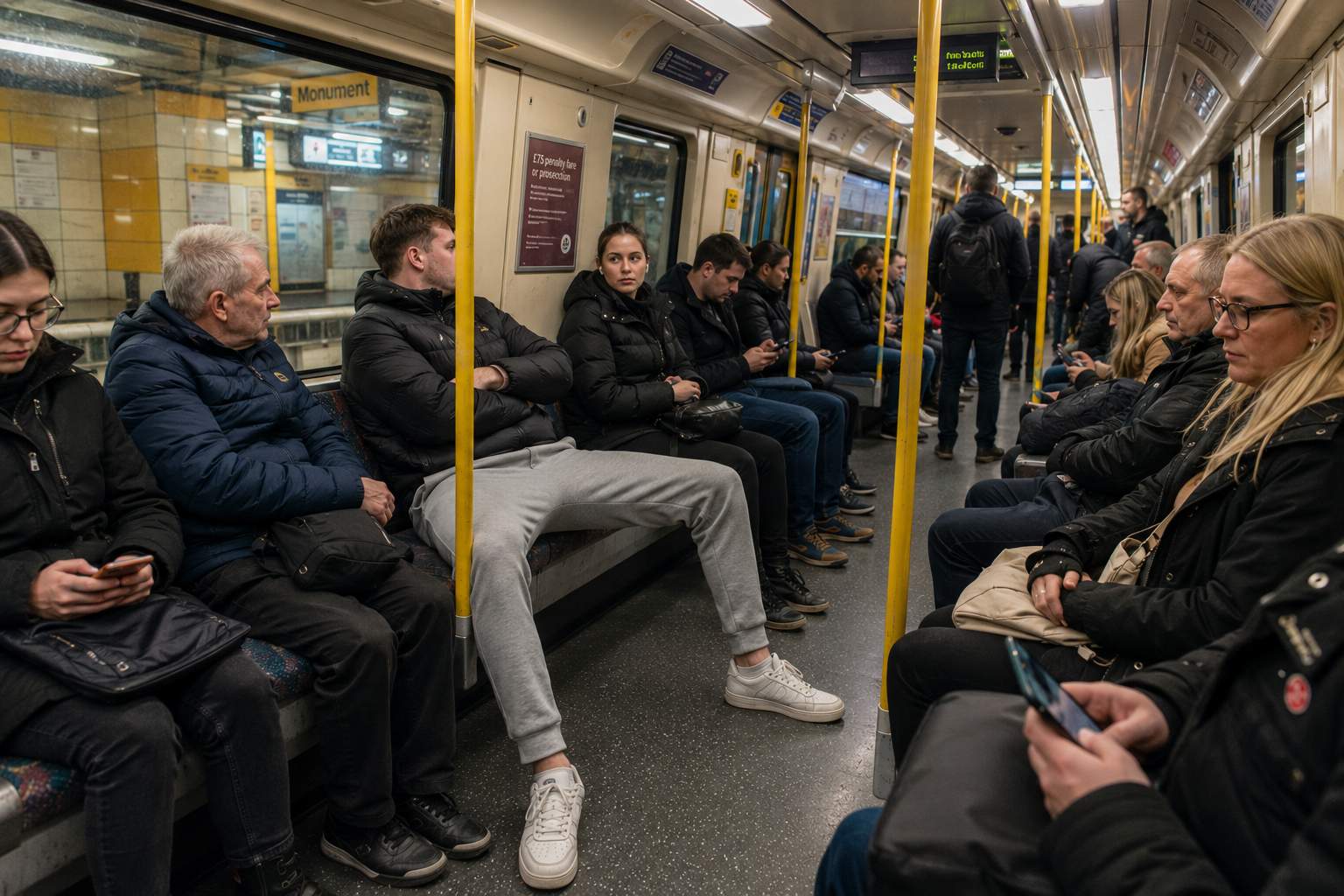
Manspreading is the term commonly used to describe someone sitting with their legs spread widely apart on public transport, often taking up more than one seat or encroaching into the space of neighbouring passengers.
The term first gained widespread attention in the early 2010s and has since become part of broader conversations about behaviour on buses, trains and underground systems.
Critics argue that the practice reduces available seating and can make journeys uncomfortable, particularly during busy periods when services are crowded. Others believe the term unfairly targets men and that issues of personal space affect people of all genders.
Regardless of where people stand in the debate, few would disagree that consideration for fellow passengers remains one of the most important aspects of travelling on public transport.
Why It Matters More During Busy Metro Journeys.
The Tyne and Wear Metro remains one of the busiest light rail systems outside London. The network covers more than 77 kilometres and connects Newcastle, Gateshead, Sunderland, North Tyneside and South Tyneside, carrying more than 30 million passenger journeys each year.
When trains are relatively quiet, seating positions rarely attract attention. However, during morning and evening peak periods, every seat becomes valuable.
Commuters regularly report frustrations ranging from bags placed on seats to passengers occupying extra space. Manspreading often becomes part of that wider discussion because it can reduce comfort levels for those sitting nearby.
In a region where many people rely on public transport for work, education and leisure, small behaviours can have a noticeable impact on the overall passenger experience.
Public Transport Is Recovering Across England.
Recent transport figures show public transport remains an important part of everyday life. According to the National Travel Survey, public transport accounted for around 9 per cent of all trips in England during 2024 and represented 17 per cent of distance travelled.
Meanwhile, broader travel data suggests people made an average of 922 trips per person in the year ending June 2024, highlighting the continued importance of shared transport systems.
For Metro users in Newcastle, these figures reinforce the fact that public transport remains a crucial part of the region's infrastructure. As passenger numbers continue recovering following the pandemic, issues relating to comfort and courtesy are likely to become increasingly relevant.
What Newcastle Passengers Say About Shared Space.
Anyone who uses the Metro regularly will recognise the unwritten rules of commuting.
Most passengers instinctively move bags from seats when services become busy. Many lower their voices during phone calls and avoid blocking doors. Others step aside to allow passengers to leave before boarding.
Manspreading often generates frustration because it appears to break those unwritten rules.
For some passengers, the issue is not necessarily about gender but about consideration. When a train is crowded and standing room is limited, occupying more space than necessary can be perceived as inconsiderate regardless of who is doing it.
That perception helps explain why discussions about seating behaviour continue appearing across social media, local forums and commuter conversations.
The Gender Conversation Behind Manspreading.
The debate also touches on wider questions about how men and women experience public transport differently.
Data from the Department for Transport shows that women generally make more bus trips than men, while men tend to make more rail journeys overall.
Separate Office for National Statistics research found men account for around 65 per cent of commutes lasting more than an hour across the UK. Interestingly, the North East stood out as the only UK region where women made more long-distance commutes than men.
These figures help explain why conversations around comfort, accessibility and personal space resonate with a wide range of passengers.
For many women, concerns about personal space on public transport extend beyond seating arrangements and include wider issues such as crowding, safety and comfort.
Are There Any Official Rules.
Like most transport systems, the Tyne and Wear Metro does not have a specific rule against manspreading.
Instead, passenger behaviour is generally covered under broader expectations around considerate travel and respecting fellow passengers.
Transport operators across the UK typically encourage people to be mindful of others, avoid obstructing seats and ensure journeys remain comfortable for everyone.
In practice, social expectations often prove more influential than formal regulations. Most passengers respond quickly when asked politely to make room or move belongings.
That means the solution to many seating disputes often comes down to communication and awareness rather than enforcement.
The Bigger Issue Is Courtesy.
While manspreading attracts headlines because of its catchy name, transport experts suggest the underlying issue is actually much broader.
Crowded public transport environments rely heavily on cooperation between passengers. Small actions can make a significant difference to overall comfort.
Examples include:
Removing bags from seats.
Keeping aisles clear.
Allowing passengers to exit first.
Using headphones instead of loudspeaker audio.
Being aware of personal space.
Viewed through that lens, manspreading becomes less about a specific behaviour and more about a wider culture of mutual respect.
Why The Topic Continues To Generate Debate.
Part of the reason manspreading remains a popular discussion topic is because everyone experiences public transport differently.
Some passengers see it as a genuine problem that reduces comfort and accessibility. Others feel it has been exaggerated and that overcrowding, service reliability and fare costs are much more important concerns.
In the North East, where public transport remains a vital link between communities, opinions often reflect personal experiences.
Someone travelling on a quiet Sunday afternoon may rarely notice the issue. A commuter boarding a packed Metro service into Newcastle city centre on a weekday morning may have a very different perspective.
The fact that experiences vary so widely helps explain why the debate continues years after the term first entered public conversation.
What The Future Could Look Like.
Passenger numbers on light rail networks continue to recover, with systems such as the Tyne and Wear Metro remaining among the strongest performers outside London.
As investment continues and new Metro trains are introduced across the network, discussions about passenger experience are likely to remain important.
While technology can improve reliability and capacity, courtesy remains something passengers themselves control.
Whether people view manspreading as a serious issue or simply an occasional irritation, most would agree on one point: public transport works best when everyone shares the space fairly.
For Newcastle Metro users, that simple principle may be the most important travel rule of all.
Share your experiences.
Have you experienced manspreading on the Newcastle Metro?
Community News
Why Manspreading Is Back In The Spotlight
Advertisement




Comments (0)
You must be logged in to post comments.
Don't have an account? Register here
No comments yet. Be the first to share your thoughts!