
Amsterdam is among the easiest European cities to reach from the North East, and one of the most rewarding for a short break. The flight is barely longer than a train to London.
The centre is compact, flat and almost entirely walkable, which makes it unusually manageable with children or with limited time.
Here is what to see, what to book ahead and how to make a weekend work.
Getting there from Newcastle.
Newcastle Airport has long been served on the Amsterdam route, with flying time around an hour and ten minutes. Airlines and frequencies change, so check current schedules before planning.
There is also the overnight ferry from North Shields to the Netherlands, which arrives at IJmuiden with onward transfer to Amsterdam. It takes a night rather than an hour, but you can take a car.
From Schiphol airport, trains to Amsterdam Centraal run frequently and take around fifteen to twenty minutes. The station is directly beneath the terminal, and tickets are bought from machines or by contactless tap on the gates.
Where it is and how it works.
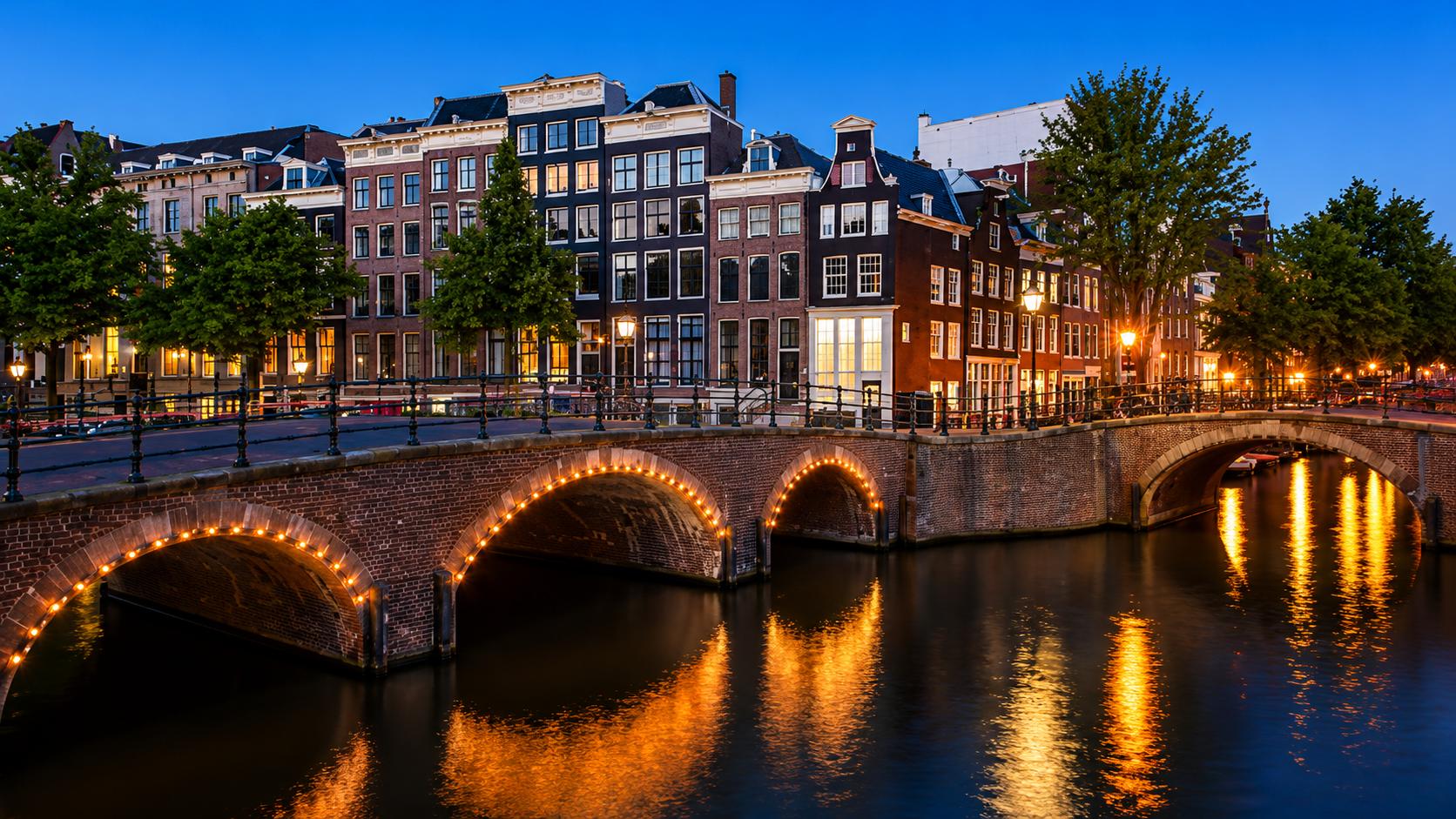
Amsterdam sits in the west of the Netherlands, close to the coast. The historic centre is built around a series of concentric canals dug in the seventeenth century, which is why the map looks like a spider's web.
That layout is genuinely disorienting at first. The canals curve, so streets that feel parallel are not, and it is easy to lose your bearings within minutes.
Centraal station sits at the top of the semicircle, and most of the main sights lie within a twenty-five minute walk of it.
The museums are the main draw.
The Rijksmuseum holds the national collection, including major Dutch Golden Age works. It is enormous, and attempting the whole thing in one visit is a mistake.
The Van Gogh Museum next door holds the largest collection of his work anywhere. Tickets are timed and sell out, so book online well ahead.
The Anne Frank House requires the most planning of all. Tickets are sold online only and released in advance on a rolling basis, and they go extremely quickly. Turning up on the day will not work.
The Rembrandt House, the Maritime Museum and the Stedelijk for modern art round out a strong museum offer.
Canals are best seen from water level.
A canal boat trip is genuinely worthwhile rather than a tourist obligation, because the city was designed to be seen from the water.
Options range from large glass-topped tour boats to small open electric boats and hop-on services. Evening trips when the bridges are lit are particularly good.
Walking the canal rings is free and just as rewarding. The Jordaan district, west of the centre, has the prettiest streets and the best concentration of small shops and cafés.
It works well with children.
NEMO Science Museum is excellent for families, with several floors of hands-on exhibits and a sloping roof terrace with city views that is free to access.
Artis is one of the oldest zoos in Europe, set in mature gardens with an aquarium and planetarium on site. Vondelpark, the city's main green space, has playgrounds and plenty of room to run.
The Amsterdam Museum and the Maritime Museum both have strong family programmes. Older children generally find the Anne Frank House deeply affecting, though the museum suggests it suits those aged around ten and above.
One practical note: the red light district and cannabis cafés are concentrated in specific central streets, and they are hard to avoid entirely if you walk through the old centre. Many families simply route around them, which is straightforward once you know where they are.
Bikes rule the road.
Amsterdam runs on bicycles, and cyclists have priority in ways British visitors find alarming. Cycle lanes are roads, not pavements, and stepping into one without looking is the single most common visitor mistake.
Hiring bikes is popular, but the city centre is not the place to learn. If you are not a confident cyclist in traffic, walking and trams are easier.
Trams are frequent and cover the centre well, with contactless payment on board.
Eating and drinking.
Dutch specialities worth trying include bitterballen, deep-fried crumbed beef ragout balls served with mustard, and stroopwafels made fresh at market stalls.
Indonesian food is a genuine Amsterdam speciality, reflecting historic ties, and a rijsttafel of many small dishes is a good group meal.
Brown cafés, the traditional wood-panelled pubs found throughout the centre, are the place for a quiet drink, and most serve food.
Practical points.
The Netherlands uses the euro. Card payment is near-universal, and some places no longer take cash at all. Note that many Dutch shops accept Maestro but not all accept every international card, so carry more than one.
English is spoken almost universally and to a very high standard.
Weather is similar to the North East, with more wind. Rain is likely at any time of year, and an umbrella is less useful than a hood given the wind.
When to go.
Spring brings the bulb fields and Keukenhof gardens, roughly late March to mid-May, which is the single most popular period.
Summer is busy and warm. Autumn and winter are quieter and cheaper, and the city looks its best in low winter light with the bridges lit.
King's Day in late April turns the whole city orange and is enormous fun, but accommodation prices rise sharply and it is not a relaxing time to visit with young children.
Share your thoughts.
Have you flown to Amsterdam from Newcastle, or taken the ferry instead?
Travel News
Amsterdam from Newcastle: A City Break Guide
Barely an hour in the air from Newcastle, Amsterdam packs world-class museums, canals and genuinely good family attractions into a walkable centre.
Advertisement


Comments (0)
You must be logged in to post comments.
Don't have an account? Register here
No comments yet. Be the first to share your thoughts!