
On almost any given weekend, Newcastle city centre is alive with activity. Shoppers fill Northumberland Street, tourists visit Grey Street and the Quayside, and businesses rely on a steady flow of visitors to keep trade moving.
Increasingly, however, residents and business owners are finding themselves navigating another regular feature of city life: protests.
From political demonstrations and environmental campaigns to industrial action, international conflicts and social justice movements, Newcastle has become a frequent venue for public demonstrations in recent years.
For many, the right to protest is a fundamental part of a healthy democracy. Others argue that repeated disruptions are beginning to impact businesses, public transport, emergency services and the overall experience of visiting the city centre.
As protests become more visible, a growing question is emerging across Newcastle. Are city centre protests becoming too frequent, or are they simply a reflection of an increasingly engaged society?
Newcastle Has A Long History Of Public Demonstrations.
Protests are nothing new in Newcastle.
The city has a proud history of political activism stretching back generations. From miners' marches and anti-war demonstrations to workers' rights campaigns and climate protests, Newcastle has often played an important role in regional and national debates.
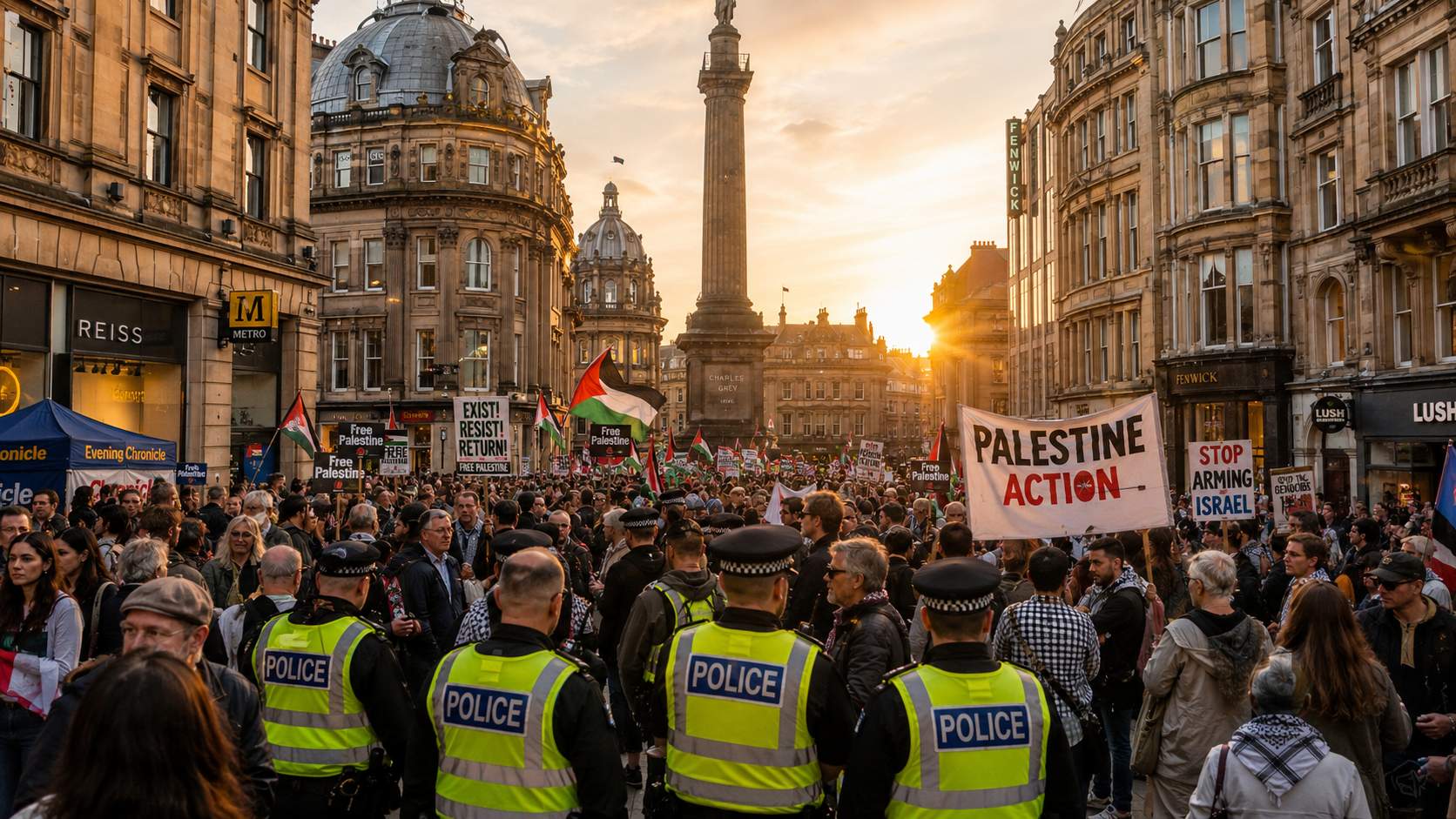
Large public gatherings regularly take place around Grey's Monument, Old Eldon Square and the Civic Centre. These locations have become symbolic focal points for residents seeking to make their voices heard.
In recent years, demonstrations linked to international conflicts, climate activism, NHS funding, cost of living concerns, immigration policy and workers' rights have all attracted significant crowds.
Many Newcastle residents view this as a positive reflection of civic engagement.
Others are beginning to question whether the frequency of events is creating unintended consequences.
How Often Are Protests Taking Place?
Unlike some major cities, Newcastle does not publish a dedicated annual protest count.
However, local news coverage suggests the city centre has hosted dozens of demonstrations, marches and organised gatherings annually over recent years.
Some weekends see multiple events taking place simultaneously.
Large demonstrations can attract hundreds or even thousands of participants depending on the issue. National campaigns often select Newcastle as one of several regional protest locations due to its population size, transport links and political significance within the North East.
For businesses operating in the city centre, this can create both opportunities and challenges.
While some demonstrations increase footfall and visibility, others result in road closures, transport disruption and reduced customer access.
What Impact Do Protests Have On Newcastle Businesses?
For many city centre businesses, predictability is crucial.
Retailers, restaurants, cafes and hospitality venues rely heavily on weekend trade. Unexpected disruptions can affect customer numbers, deliveries and staffing arrangements.
Business groups across the UK have previously raised concerns regarding the cumulative impact of repeated demonstrations in major urban centres.
In Newcastle, some business owners report little impact beyond temporary inconvenience. Others say road closures and public transport diversions can discourage visitors from travelling into the city.
The effect often depends on the size and location of the protest.
A small demonstration near Grey's Monument may have minimal impact. Larger marches involving multiple streets can affect traffic flow across significant parts of the city centre.
For independent businesses already dealing with inflation, rising energy costs and changing consumer habits, even small reductions in footfall can be noticeable.
Residents Are Divided On The Issue.
Public opinion appears mixed.
Many residents support the right to peaceful protest regardless of the cause being represented. They argue that democratic societies depend upon free expression and public accountability.
Others express frustration when demonstrations result in delays, congestion or changes to public transport services.
Commuters frequently report disruption when major routes are temporarily closed or diverted.
Families visiting the city centre for shopping or entertainment may also find themselves navigating unexpected crowds and security measures.
Yet despite occasional frustration, Newcastle remains far from the scale of disruption seen in cities such as London, where protests regularly involve tens of thousands of participants.
For many residents, the inconvenience remains manageable.
The question is whether growing protest activity could eventually change that perception.
Crime Statistics And Public Safety Concerns.
Whenever large crowds gather, public safety becomes an important consideration.
According to recent crime data, Newcastle records approximately 120 to 125 crimes per 1,000 residents annually, placing it above the national average in several categories.
Violence and sexual offences remain among the most commonly reported crime categories, followed by anti-social behaviour and public order offences.
Importantly, the vast majority of organised protests in Newcastle remain peaceful.
Northumbria Police regularly work with organisers to manage routes, minimise disruption and maintain public safety.
Nationally, most protests proceed without serious incidents. However, isolated examples of disorder, arrests and confrontations seen elsewhere in the UK often influence public perception.
Some residents worry that larger demonstrations could increase pressure on policing resources already facing significant demands.
Police representatives generally emphasise that peaceful protest remains lawful and that public safety planning forms part of every major event.
The Cost To Taxpayers.
One aspect rarely discussed is the financial cost associated with managing large public demonstrations.
Major protests often require additional police officers, traffic management teams, council staff and public transport coordination.
While exact costs vary considerably, large UK demonstrations can require significant public resources.
Supporters argue that these costs are justified because protecting democratic freedoms is a core responsibility of government.
Critics question whether repeated demonstrations on similar issues represent the most effective use of public resources.
The debate reflects broader tensions between civic rights and practical governance.
Social Media Is Fueling More Demonstrations.
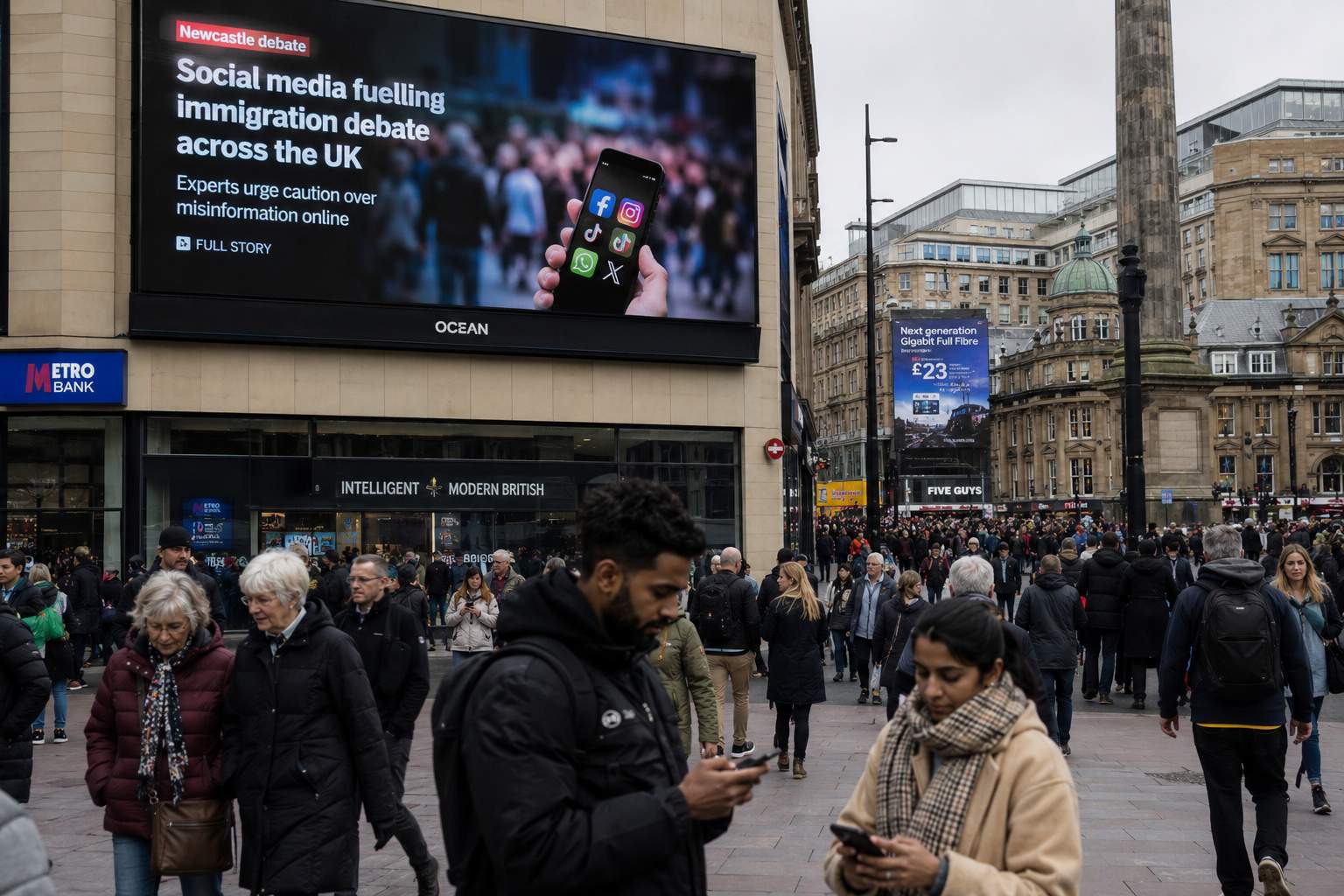
One reason protests appear more common may be the influence of social media.
Organisers can now reach thousands of potential participants within hours.
Platforms such as Facebook, X and Instagram allow campaigns to gain momentum rapidly and mobilise supporters with relatively little notice.
Events that might once have attracted a few dozen participants can now draw hundreds.
Social media also amplifies visibility.
Residents may encounter images and videos from demonstrations even if they never attended or witnessed the event in person.
This can create the impression that protests are occurring more frequently than they actually are.
Nevertheless, digital communication has undoubtedly made organising public demonstrations easier than at any point in modern history.
Newcastle's Economy Relies On A Positive City Centre Experience.
The city centre remains a critical economic engine for Newcastle.
Millions of visitors pass through the city annually, supporting shops, restaurants, hotels, cultural attractions and entertainment venues.
Tourism contributes hundreds of millions of pounds to the regional economy each year.
Business leaders often stress the importance of maintaining Newcastle's reputation as a welcoming and accessible destination.
Most demonstrations pass without incident and attract little negative attention.
However, concerns emerge when protests result in extensive road closures, transport delays or confrontations that generate national headlines.
For a city competing for investment, visitors and economic growth, perception matters.
This explains why some business groups are increasingly interested in finding a balance between public protest rights and minimising disruption.
Are Protests Becoming More Frequent Or More Visible?
Perhaps the most important question is whether protests are genuinely increasing or simply receiving more attention.
The growth of social media, 24-hour news coverage and online community groups means demonstrations are far more visible than they were a decade ago.
Events that might previously have gone unnoticed now appear instantly across multiple platforms.
At the same time, modern political debates have become increasingly polarised.
Issues ranging from climate policy and immigration to international conflicts and economic pressures generate strong public emotions.
As a result, more people may feel motivated to participate in demonstrations than in previous years.
Whether this represents a temporary trend or a lasting shift remains unclear.
Finding The Right Balance For Newcastle.
The debate over city centre protests ultimately comes down to balance.
Few residents would argue against the right to peaceful demonstration. It remains one of the cornerstones of democratic society.
Equally, businesses and residents have legitimate concerns about repeated disruption, accessibility and public safety.
Newcastle's challenge is not deciding whether protests should occur, but determining how they can be managed in ways that protect both democratic freedoms and the city's economic wellbeing.
So far, the city has largely succeeded in maintaining that balance.
Most demonstrations remain peaceful, organised and relatively short-lived. Yet as public activism continues to evolve, the conversation surrounding protest frequency is unlikely to disappear anytime soon.
Do you think Newcastle city centre protests are becoming too frequent, or are they an important part of democratic life?
Community
Are Frequent Demonstrations Damaging Newcastle's City Centre?
Advertisement



Comments (0)
You must be logged in to post comments.
Don't have an account? Register here
No comments yet. Be the first to share your thoughts!