
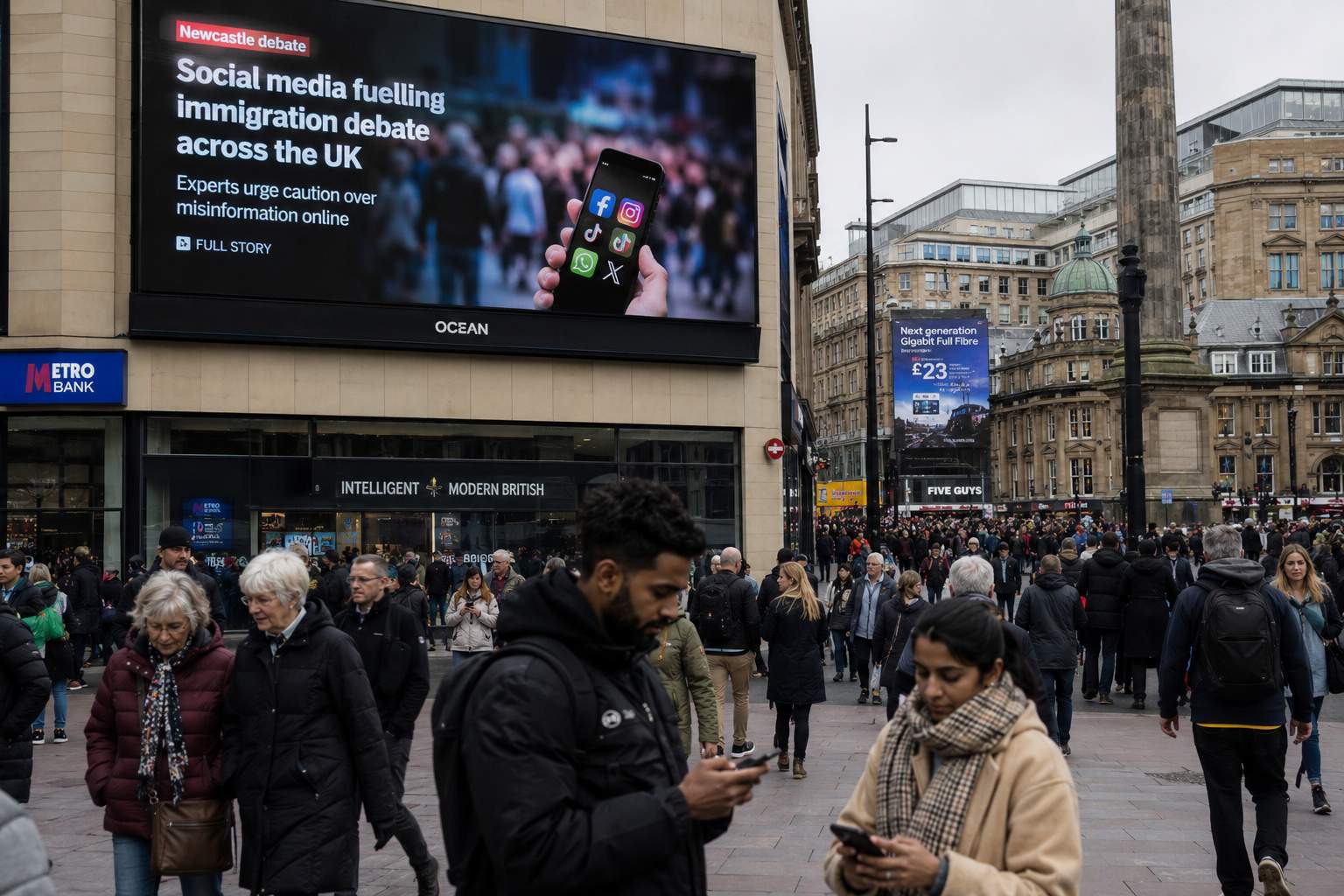
Immigration has become one of the most discussed topics in Newcastle and across the UK in recent years. While debates around migration have long existed, the rise of social media has transformed how information is shared, consumed and challenged. Platforms that allow people to instantly access news and opinions have also created opportunities for misinformation to spread at unprecedented speed.
In Newcastle, conversations about immigration increasingly take place online, where local Facebook groups, X posts, TikTok videos and community forums often shape public opinion before facts can be verified. As a result, concerns about misinformation have become closely linked to wider debates surrounding migration, community cohesion and public safety.
The issue is not unique to Newcastle, but local experts and national studies suggest that the city's residents are experiencing many of the same challenges facing communities across Britain.
The Growing Influence Of Social Media.
Social media is now one of the primary ways people access news and information. According to Ofcom research, a significant proportion of UK adults regularly encounter misinformation online, while separate studies suggest that more than 90 percent of people in Britain report seeing misinformation on social media at some point.
This shift has fundamentally changed how immigration issues are discussed. Stories that once relied on traditional journalism can now spread across thousands of users within minutes, often without verification. In many cases, emotionally charged posts receive more engagement than factual reporting.
Researchers have also warned that algorithms frequently promote content that generates strong reactions, regardless of whether the information is accurate. This means immigration stories, particularly those involving crime, housing or public services, can quickly gain traction online.
For Newcastle residents, social media offers an easy way to discuss local concerns. However, it also increases the risk that misleading claims become accepted as fact before evidence is available.
Why Immigration Debates Generate Strong Reactions.
Immigration remains one of the most politically sensitive topics in Britain. Questions about housing availability, NHS waiting times, school places and employment opportunities often become intertwined with discussions about migration.
According to recent UK migration figures, net migration has remained historically high in recent years, contributing to intense public debate. While many economists highlight the benefits of immigration for labour shortages and economic growth, others express concerns about pressure on local infrastructure.
Newcastle has seen demographic changes over recent decades, with international students, skilled workers and refugees contributing to the city's growing diversity. Many residents view this as a positive development that supports local businesses, universities and cultural life.
However, concerns can emerge when information is presented without context. Statistics may be shared online without explanation, creating confusion about the actual impact of migration at a local level.
Misinformation And The Newcastle Conversation.
One of the biggest challenges facing local communities is distinguishing fact from fiction. A recent report examining local social media groups found misinformation was significantly more common in areas where trusted local journalism was less prominent. Immigration was among the most frequent subjects of false or misleading claims.
Examples of misinformation can include fabricated quotes, misleading crime statistics, edited videos or false claims about local council decisions. While many users share such content without malicious intent, the cumulative effect can influence public attitudes.
Experts warn that misinformation often spreads because it confirms existing beliefs. When users encounter content that supports their views, they may be less likely to question its accuracy.
This creates challenges for Newcastle residents seeking reliable information about immigration and community issues. Local journalists, councils and police forces increasingly find themselves responding to online claims that gain widespread attention before official facts emerge.
Crime Statistics And Immigration Claims.
Crime is one of the most frequently discussed topics within immigration debates. Social media posts often attempt to connect rising crime levels with migration, yet experts caution against drawing simplistic conclusions.
National crime data shows that crime trends are influenced by numerous factors including deprivation, policing resources, economic conditions and demographic changes. There is no single statistic that proves immigration causes crime increases.
At the same time, hate crime figures demonstrate how misinformation can contribute to social tensions. Home Office statistics recorded 140,561 hate crimes in England and Wales in the year ending March 2024. Around 70 percent of those offences were racially motivated, representing nearly 99,000 incidents.
These figures highlight how public narratives can have real-world consequences. When false information about migrants spreads online, it can contribute to hostility towards entire communities rather than addressing specific issues through evidence-based discussion.
The Role Of Viral Content.
One reason misinformation spreads so effectively is the speed of viral content. A short video clip or image can be shared thousands of times before its authenticity is verified.
Parliamentary research examining online misinformation found that misleading content circulated rapidly following major national incidents, often contributing to heightened tensions and public disorder. Investigators concluded that recommendation algorithms frequently amplified harmful content because engagement levels were high.
This phenomenon has become particularly important during immigration debates. Partial information, edited footage or unverified claims can quickly dominate online discussions.
For Newcastle residents, this means that local incidents can become national talking points within hours, sometimes attracting commentary from people with little understanding of the city's communities or circumstances.
Public Trust In Information Sources.
Another factor influencing immigration debates is declining trust in information sources. Surveys show many Britons are concerned about their ability to identify misinformation online.
Research conducted ahead of the 2024 General Election found widespread concern about misinformation and political content. Additional studies found that many people believe they can recognise false information, yet evidence suggests overconfidence may actually increase vulnerability to misleading content.
Trust remains higher in established news organisations than in anonymous social media accounts. However, younger audiences increasingly consume information through platforms where professional journalism appears alongside unverified content.
This creates a complex environment where accurate reporting must compete directly with sensational claims designed to attract clicks and engagement.
How Newcastle Communities Are Responding.
Community organisations across Newcastle have worked to promote dialogue and understanding around immigration issues. Local charities, faith groups and educational institutions frequently host events designed to encourage discussion based on facts rather than assumptions.
Universities in Newcastle also play a significant role in fostering international connections. Thousands of overseas students contribute to the local economy every year while bringing cultural diversity to the city.
Many community leaders argue that improving media literacy is one of the most effective ways to reduce the impact of misinformation. Teaching people how to verify sources, identify manipulated content and question sensational claims can help create more informed public debate.
There is also growing recognition that social media companies have responsibilities. Regulators and policymakers have increasingly called for stronger action to prevent harmful misinformation from spreading during periods of social tension.
What The Future May Hold.
The relationship between social media, misinformation and immigration debates is unlikely to disappear. Advances in artificial intelligence, deepfake technology and content recommendation systems may make identifying false information even more difficult.
Research suggests public concern is already high. Surveys indicate that around 90 percent of people express concern about the growth of deepfake content and manipulated media online.
For Newcastle, the challenge will be maintaining constructive conversations while ensuring public debate remains grounded in evidence rather than speculation. Local communities, journalists, educators and policymakers all have a role to play in shaping how information is shared and understood.
Immigration will continue to be discussed, and social media will remain central to those discussions. The question is whether public discourse can evolve to prioritise facts over viral narratives.
Building Better Conversations Online.
The debate surrounding immigration in Newcastle reflects wider national questions about identity, community and the future of Britain. Social media has made these discussions more accessible, but it has also increased the risk that misinformation shapes public opinion.
Accurate information remains essential for meaningful debate. When communities rely on evidence, verified reporting and open discussion, they are better equipped to address challenges and opportunities alike.
As Newcastle continues to grow and diversify, ensuring that conversations are informed rather than inflamed may be one of the city's most important tasks in the years ahead.
Have you seen misinformation spread online, or do you think platforms are improving at tackling false claims?
Community
The Hidden Role Of Misinformation In Newcastle's Immigration Debate
Advertisement



Comments (0)
You must be logged in to post comments.
Don't have an account? Register here
No comments yet. Be the first to share your thoughts!