
For many people in Newcastle and across the North East, one of the biggest questions after reporting a crime is simple: how likely is it that police will solve it?
The answer depends heavily on the type of offence, the evidence available, whether a suspect is known and how quickly officers can secure CCTV, phone data, witness accounts or forensic material. Some crimes can be resolved quickly, particularly when a suspect is arrested at the scene or caught on clear footage. Others can take weeks or months, especially complex cases involving domestic abuse, sexual offences, fraud or organised crime.
Northumbria Police covers Newcastle, Gateshead, Sunderland, Northumberland, North Tyneside and South Tyneside, making it one of the largest force areas in England by geography and population. That means the force deals with everything from city centre shoplifting and nightlife-related violence to rural theft, domestic abuse, vehicle crime and serious organised offending.
What the latest figures show.
Recent performance data shows Northumbria Police has made progress in several areas, but crime outcomes remain a major challenge. In the 12 months to March 2025, total recorded crime across the Northumbria force area fell by around 3 percent, equal to roughly 5,040 fewer crimes compared with the previous year.
Vehicle crime saw one of the clearest improvements, falling by around 12 percent. That included notable reductions in theft from motor vehicles and theft of motor vehicles, which police and crime leaders linked to targeted activity and quicker responses in problem areas.
The wider picture is more complicated when it comes to solved crime rates. Northumbria Police reported a total positive outcome rate of 17.7 percent in the 12 months to April 2025. For victim-based crimes, 13.9 percent were recorded as brought to justice over the same period.
In plain English, that means a minority of reported crimes end with a formal positive outcome such as a charge, summons, caution, community resolution or another accepted outcome. However, the rate is still higher than the national picture for many common crimes, where large numbers of investigations are closed because no suspect can be identified or victims no longer support further action.
Which crimes are usually solved fastest.
The crimes most likely to be solved quickly tend to be those where police have strong evidence from the start. Assaults where the suspect is still at the scene, shop thefts with clear CCTV, domestic incidents where the offender is known and drink-related disorder in busy areas can often move faster than offences with no obvious suspect.
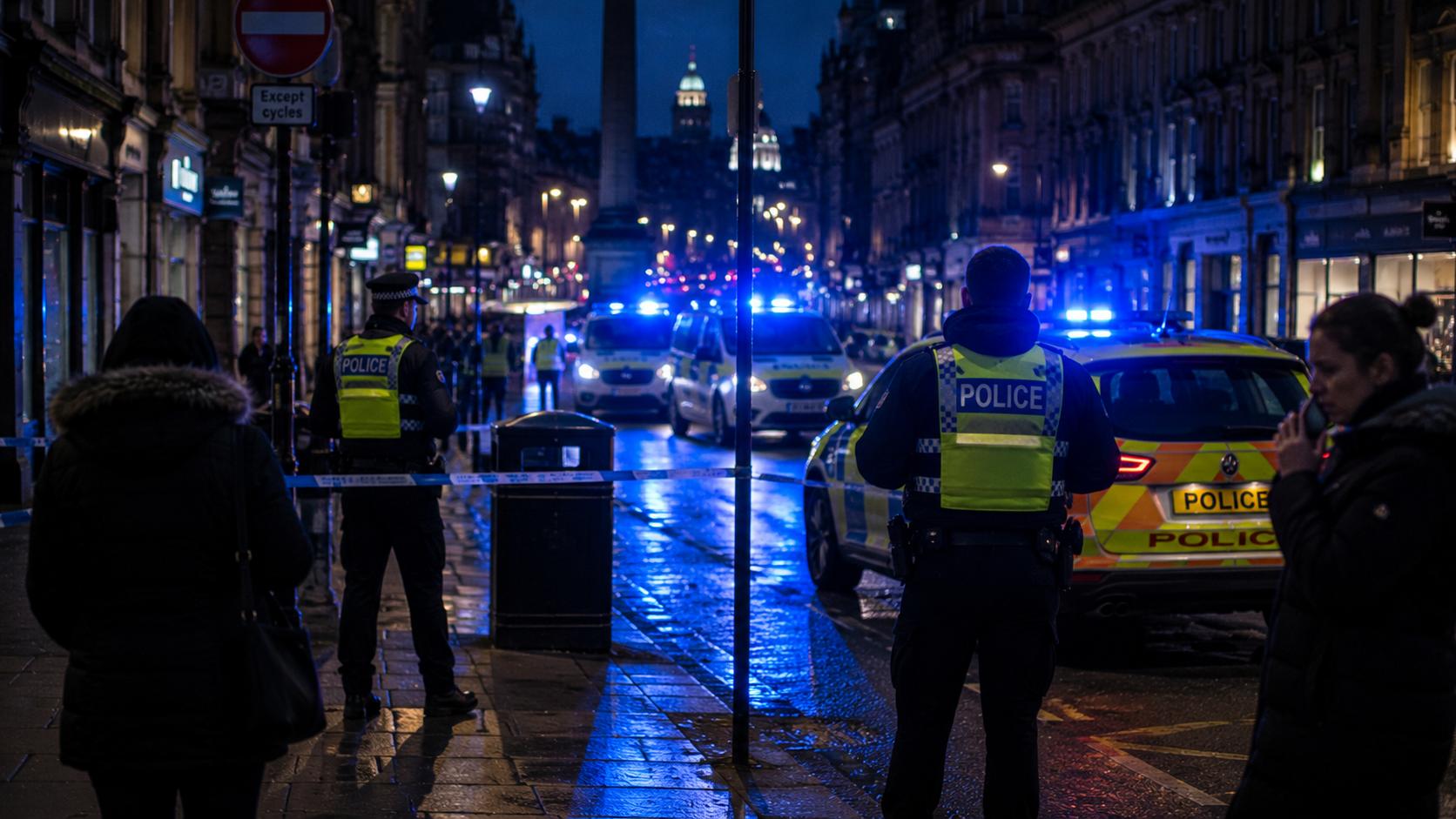
City centre Newcastle has some advantages here. Busy areas around Northumberland Street, the Bigg Market, Grey Street, Central Station and the Quayside often have CCTV coverage, witnesses, door staff, transport staff and nearby police patrols. When an incident happens in a well-covered public space, investigators may have a stronger starting point than they would with a crime committed out of sight.
That does not mean every case is straightforward. Even when a suspect is identified, officers still need enough evidence to meet charging standards. Victim statements, medical evidence, camera footage and Crown Prosecution Service advice can all affect how quickly a case progresses.
Which crimes take longer to investigate.
Some offences naturally take much longer. Domestic abuse, sexual offences, stalking, serious violence, fraud and online crime can involve large amounts of digital evidence, safeguarding work and repeated contact with victims.
HMICFRS, the police inspectorate, said Northumbria Police needed to improve how consistently it achieves appropriate outcomes for victims. It also said the force should make sure investigation plans are created where needed, with effective supervision so that all reasonable lines of enquiry are followed.
Northumbria Police has responded by saying it is delivering an investigations strategy designed to improve supervision, strengthen case quality and help officers pursue more lines of enquiry. Training sessions for investigators began in 2025 and are expected to continue into 2026.
These details matter because the speed of solving crime is not just about how fast officers arrive. It is also about whether the investigation is properly managed after the first report.
How fast do Northumbria Police respond.
Response times are another important part of public confidence. In the 12 months to April 2025, Northumbria Police attended 84 percent of grade 1 incidents within its service level agreement. These are the most urgent calls, where there may be immediate danger or a serious incident in progress.
For grade 2 incidents, the figure was lower at 64 percent within the target time. Police leaders have acknowledged that response rates have improved but remain below service level agreements, with further work taking place around call handling, deployment decisions and keeping callers updated when delays happen.
This matters in crime-solving terms because the first hour after a report can be crucial. Early attendance can improve the chances of finding witnesses, preserving forensic evidence and locating suspects before they leave the area.
What issues affect solved crime rates.
There are several reasons why crimes may not be solved. In many theft, burglary and criminal damage cases, there may be no CCTV, no witnesses and no forensic opportunity. In other cases, police may identify a suspect but lack enough evidence to charge them.
Victim withdrawal is another major issue, particularly in domestic abuse, violence and sexual offence cases. Some victims may feel too frightened, exhausted or unsupported to continue with a prosecution. Others may simply lose confidence if the process takes too long.
Technology is also a challenge. Northumbria Police has acknowledged that an ageing IT system has limited its ability to meet the needs of modern policing. A new records system is expected to improve mobile working, digital note-taking, identity checks and frontline access to information.
Why Newcastle residents may see mixed results.
People in Newcastle may have very different experiences depending on the crime they report. A city centre assault with witnesses and CCTV might be dealt with quickly. A stolen bike with no footage, no tracker and no suspect may be much harder to progress. A domestic abuse case may involve urgent safeguarding at first, followed by a longer evidence-gathering process.
This is why headline solved crime rates never tell the full story. They show whether outcomes are improving, but they cannot fully capture the difficulty of individual investigations.
The latest Northumbria figures suggest improvement in recorded crime levels and some outcome measures, particularly compared with the national pressure facing policing. However, inspection findings also show there is still work to do on investigation quality, victim updates and consistency.
For residents, the practical message is clear. Reporting crime quickly, preserving evidence, sharing CCTV, keeping reference numbers and staying in contact with officers can all improve the chances of a case being progressed.
What happens next for Northumbria Police.
Northumbria Police is under pressure to keep improving both response times and investigation outcomes. The force has already moved from three area commands to six, aligning policing more closely with local authority areas including Newcastle. The aim is to improve local accountability and make policing feel more connected to communities.
Projects targeting antisocial behaviour and serious violence have also reported results. Between April 2024 and March 2025, Project Shield recorded a 20 percent reduction in antisocial behaviour and a 13 percent reduction in serious violence in targeted areas, alongside 227 arrests.
For Newcastle, the challenge is not just solving more crimes but solving the crimes that residents notice most, including burglary, shop theft, vehicle crime, street violence and antisocial behaviour.
Northumbria Police is showing signs of progress, but the figures also reveal why many victims still feel frustrated. Solving crime quickly remains one of the biggest tests for policing in Newcastle and across the North East.
Share your experiences below.
Have you reported a crime to Northumbria Police, how did you find the response time?
Crime News
Are Northumbria Police Actually Solving Crimes?
Advertisement




Comments (0)
You must be logged in to post comments.
Don't have an account? Register here
No comments yet. Be the first to share your thoughts!