
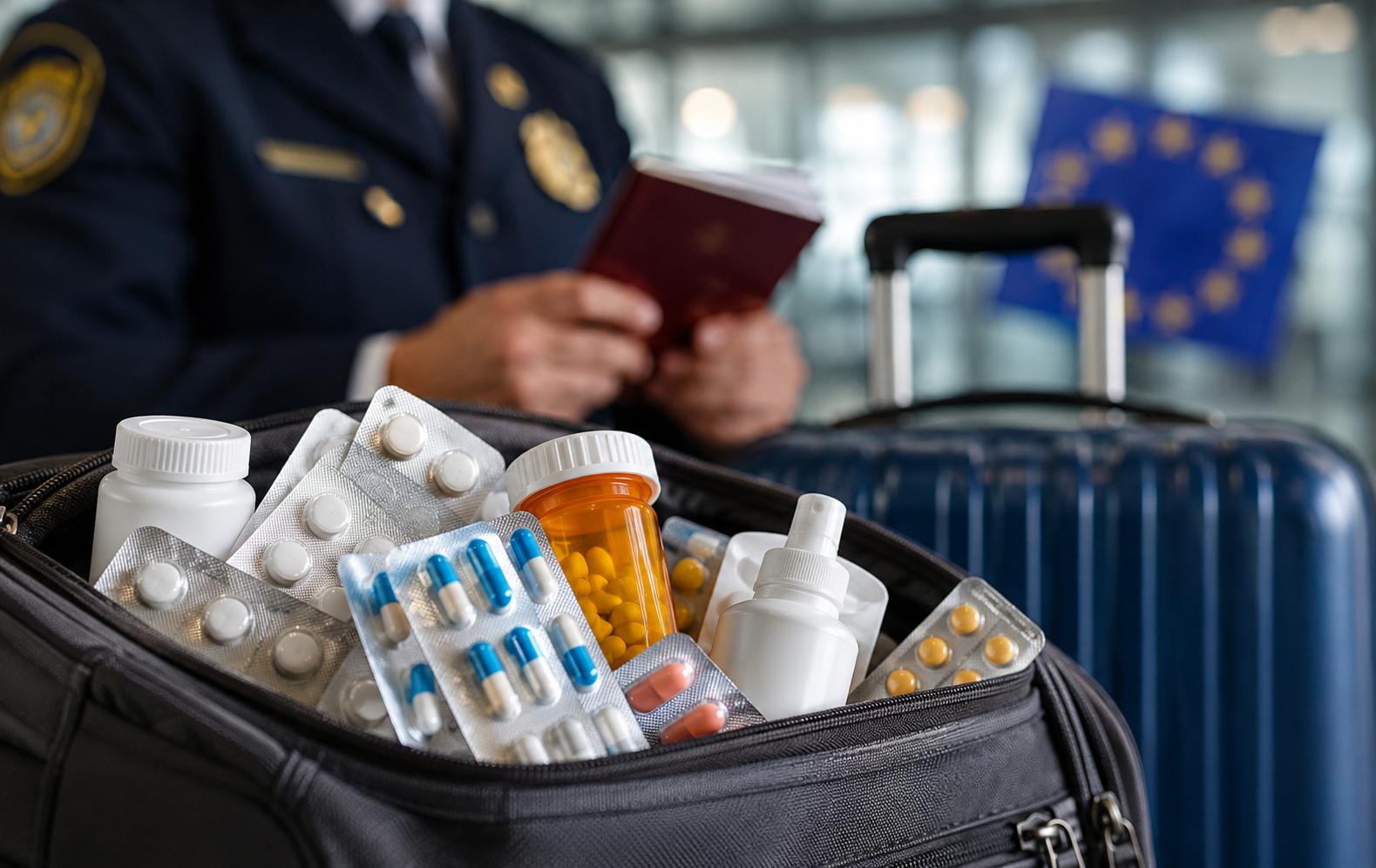
Travelling to Europe from the UK now involves more than checking passports and luggage allowances. British tourists are increasingly discovering that common prescription and over-the-counter medications legal in the UK can cause serious problems abroad. Medicines used daily by millions of Britons may be restricted, heavily controlled or completely banned in certain European countries.
From painkillers containing codeine to ADHD medication and sleeping tablets, travellers have reported customs checks, confiscations and fines after unknowingly carrying restricted substances into Europe. Travel experts say many holidaymakers still assume medicines sold legally in Britain are automatically accepted across the continent, but national drug laws vary significantly between countries.
As summer holidays approach, pharmacists and travel specialists are urging UK tourists to research medication laws carefully before departure.
Why medication rules vary across Europe.
European countries regulate medicines independently, particularly drugs linked to addiction, misuse or narcotics legislation. Some nations operate far stricter controls than the UK, especially regarding opioids, stimulants and sedatives.
Countries such as France, Greece, Norway and Sweden closely monitor certain pharmaceutical ingredients that are commonly prescribed or sold over the counter in Britain. In some cases, travellers can legally carry medication only with a prescription, doctor’s letter or prior government approval.
Health experts warn that ignorance of local medication laws rarely protects travellers if customs officials decide rules have been breached.
Codeine medications can cause problems in several countries.
Codeine-based painkillers remain one of the most common medication issues affecting British tourists. Products including co-codamol, Solpadeine and Nurofen Plus are widely available in UK pharmacies, but codeine is treated as a controlled narcotic in multiple European countries.
France.
France introduced strict restrictions on codeine sales after concerns surrounding misuse and dependency. Travellers carrying large quantities without supporting documentation may face questioning at customs.
Greece.
Greek authorities apply strict narcotics laws to opioid-based medications. Tourists carrying codeine products without prescriptions or medical proof have occasionally encountered legal difficulties.
Norway.
Norway enforces tight import controls on opioid medications. Visitors are usually limited to small personal quantities and may need medical documentation.
Sweden.
Sweden also regulates codeine strictly under narcotics legislation. Carrying excessive amounts or failing to declare controlled medication can create problems at border checks.
Travel experts recommend keeping codeine medicines in original pharmacy packaging and carrying printed prescriptions during travel.
ADHD medication faces strict controls in parts of Europe.
ADHD prescriptions are another growing concern for British families travelling abroad. Medicines such as Elvanse, Ritalin and Concerta contain stimulant ingredients including methylphenidate and lisdexamfetamine, which are controlled substances in many countries.
Finland.
Finland imposes strict regulations on stimulant medication imports. Travellers may need a Schengen medical certificate when carrying ADHD treatment.
Sweden.
Swedish customs authorities monitor stimulant medication carefully due to narcotics regulations. Documentation proving legitimate medical use is strongly advised.
Norway.
Norway applies tight rules to amphetamine-based medicines and may limit the quantity travellers can legally bring into the country.
Iceland.
Icelandic authorities also regulate stimulant medication strictly and may require supporting paperwork for entry.
Families travelling with children prescribed ADHD medication are advised to check embassy guidance well before departure to avoid airport complications.
Sleeping tablets and anti-anxiety drugs may trigger customs checks.
Prescription medicines used for insomnia, anxiety and panic disorders can also create legal complications abroad. Drugs containing diazepam, lorazepam, clonazepam and alprazolam fall under controlled substance regulations in several European countries.
Spain.
Spain allows many anxiety medications with prescription proof, but authorities can question travellers carrying large quantities or unlabelled tablets.
Italy.
Italy applies controls to benzodiazepines and sedatives. Tourists are advised to carry prescriptions and avoid transferring pills into unmarked containers.
Croatia.
Croatia closely regulates tranquilizers and sleeping medications under narcotics legislation. Medical certificates may be requested during checks.
United Arab Emirates connections through Europe.
Although not in Europe, many British tourists transit through airports connecting to Dubai or Abu Dhabi. The UAE maintains some of the world’s strictest medication laws regarding sedatives and anti-anxiety drugs. Even transit passengers can face issues without proper documentation.
Doctors advise travellers to carry only the amount needed for their trip and keep all medicines clearly labelled.
Cold and flu medicines may be restricted in some countries.
Some over-the-counter cold and flu treatments commonly sold in British supermarkets can also attract attention abroad. Medicines containing pseudoephedrine are more tightly regulated in certain countries because the ingredient can be used in illegal drug production.
Poland.
Polish authorities monitor pseudoephedrine-based medicines closely and may impose quantity limits.
Denmark.
Denmark regulates some decongestants more strictly than the UK and travellers may face questions regarding larger supplies.
Germany.
Germany allows pseudoephedrine medications but customs officers may still investigate unusually large quantities brought across borders.
Experts say travellers should avoid packing unnecessary amounts of cold remedies, especially when flying with hand luggage only.
Medical cannabis products remain legally risky.
The growing use of cannabis-based treatments in Britain has created fresh confusion for international travellers. Although some cannabis-derived medications are legal under specialist prescription in the UK, they remain prohibited or heavily restricted in parts of Europe.
Slovakia.
Slovakia historically maintained very strict anti-cannabis laws, including restrictions on CBD products containing THC traces.
Serbia.
Serbia enforces tough drug regulations and cannabis-based products may create legal complications even with foreign prescriptions.
France.
France allows limited CBD use under strict conditions but cannabis-derived medicines remain tightly controlled.
Norway.
Norwegian authorities apply strict narcotics rules to cannabis products and travellers should seek official guidance before travel.
Legal experts warn tourists never to assume UK-issued medical cannabis prescriptions are recognised internationally.
What travellers should do before flying.
Travel health specialists recommend checking medication regulations several weeks before departure. Embassy websites, official government pages and airline guidance often provide country-specific rules for controlled substances.
Tourists should always:
Carry medicines in original packaging.
Bring printed prescriptions where possible.
Obtain a doctor’s letter for controlled drugs.
Research local restrictions before departure.
Carry only quantities needed for the trip.
For travellers visiting Schengen Area countries with controlled medication, a Schengen medical certificate may sometimes be required. This document confirms the medicine is prescribed legally for personal treatment.
Pharmacists also recommend packing medication in hand luggage to reduce the risk of delays or lost baggage disrupting treatment.
More British tourists are checking medication laws.
UK pharmacists say awareness surrounding medication restrictions abroad has increased sharply in recent years. Reports of tourists facing airport delays, customs seizures and legal confusion have encouraged more travellers to seek advice before holidays.
Despite this, experts believe many Britons still underestimate how different pharmaceutical laws can be between neighbouring countries. A medicine considered routine in Britain may be viewed entirely differently elsewhere in Europe.
As international travel becomes busier again, specialists say preparation is essential. Checking medication rules before flying could save travellers from serious legal trouble and prevent expensive disruptions during holidays.
Have you experienced airport checks or customs questions about medication while travelling in Europe? Share your story in the comments to help other British tourists avoid unexpected travel problems abroad.
Travel News
British Medications Banned in Europe Tourists Must Check Before Travel
Advertisement




Comments (0)
You must be logged in to post comments.
Don't have an account? Register here
No comments yet. Be the first to share your thoughts!