
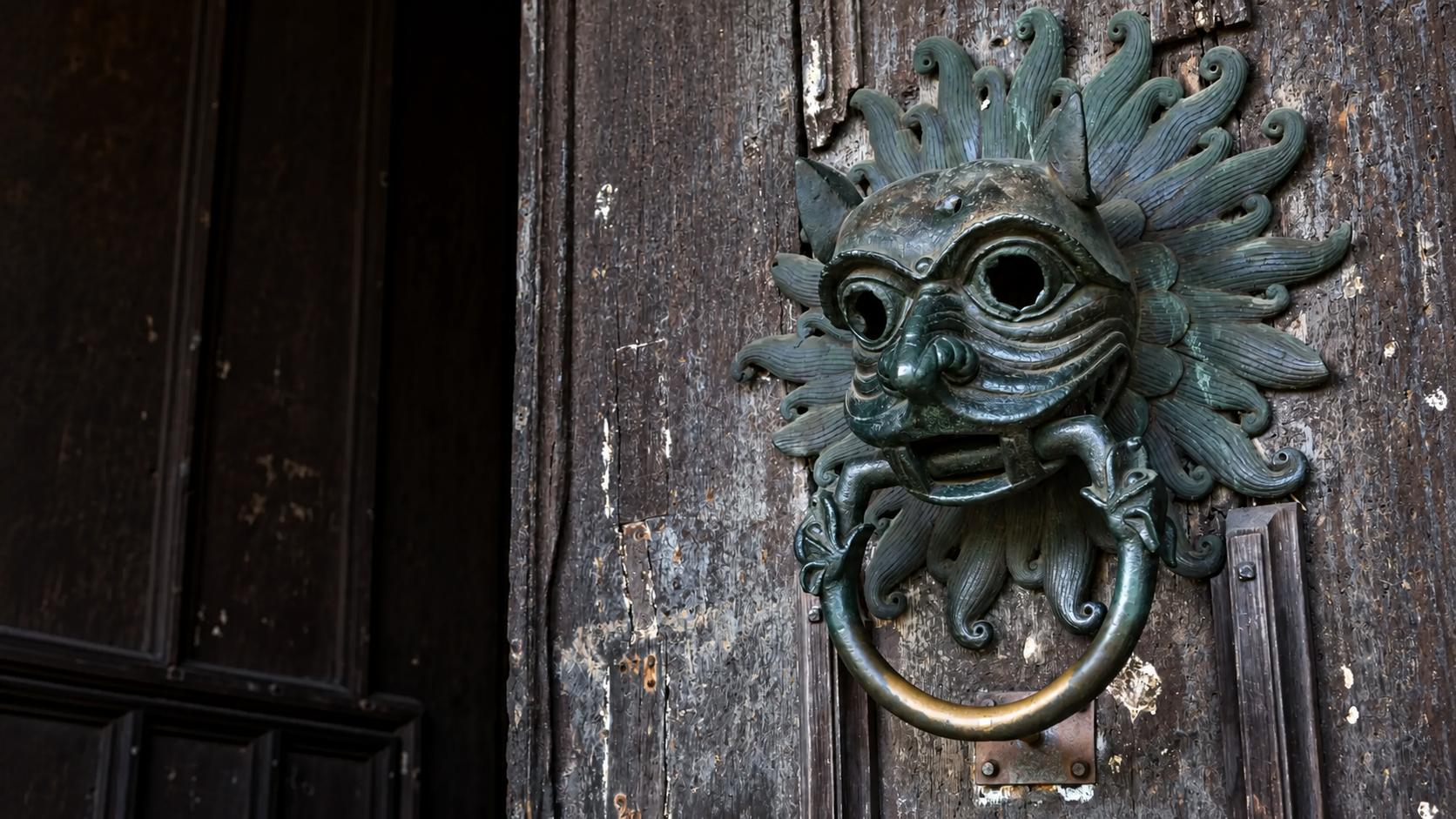
On the great north door of Durham Cathedral hangs one of the most famous and evocative objects in the North East, a fierce bronze beast-head clutching a heavy ring. This is the Sanctuary Knocker, and for centuries it was a symbol of one of the most remarkable features of medieval law: the right of sanctuary, by which a fugitive from justice could find refuge within the walls of the cathedral. The story of the sanctuary knocker is a fascinating glimpse into the workings of medieval justice and the power of the Church.
An Ancient Right.
The right of sanctuary was an important feature of medieval law, by which certain holy places offered refuge to those fleeing justice. A fugitive who reached a place of sanctuary and claimed its protection could not be seized by the authorities, but was instead granted a period of safety within which to seek a resolution to their plight. This right, deeply rooted in the traditions of the Church, reflected the special status of holy places and the protective role of the Church in medieval society. Sanctuary offered a fugitive a breathing space, a temporary refuge from the law, and it was an important and widely recognised principle of the medieval legal order.
The Knocker on the Door.
At Durham, the right of sanctuary was symbolised by the famous knocker on the great north door of the cathedral. This striking bronze object, dating from the medieval period, takes the form of a fierce beast-head, often described as a lion, with a ring held in its mouth. The design, based on a fearsome image intended to ward off evil, is a remarkable work of medieval craftsmanship and one of the finest surviving bronze objects of its kind. A fugitive seeking sanctuary would grasp the ring, and watch was kept so that the claim of sanctuary could be recognised and the protection of the cathedral extended. The knocker became the symbol of the refuge that Durham offered.
Watching for the Fugitive.
The granting of sanctuary at Durham was a carefully managed process. Watch was kept over the door, so that when a fugitive grasped the ring and claimed sanctuary, their arrival would be noticed and the protection of the cathedral could be granted. The fugitive would then be received into the sanctuary of the cathedral, marked out by a special garment as a person under the protection of the Church, and housed within the precincts. The cathedral community took responsibility for those who claimed sanctuary, providing for their needs during their stay. This organised system reflected the importance and the formality of the right of sanctuary, and the seriousness with which it was administered.
A Limited Refuge.
The protection offered by sanctuary was real but limited. A fugitive who claimed sanctuary at Durham was granted a period of refuge, traditionally a set number of days, during which they were safe from the authorities. This period gave them time to consider their position, to seek reconciliation with their accusers, to prepare a defence, or to make arrangements to leave the country and go into exile. Sanctuary did not offer permanent protection or escape from justice, but rather a temporary refuge and a breathing space. At the end of the period, the fugitive had to make a decision about their future, whether to face the law or to go into exile, and the protection of sanctuary came to an end.
A Place of Saints.
The power of sanctuary at Durham was bound up with the special status of the cathedral as the resting place of a great saint, whose presence gave the place its sacred authority. The cathedral was one of the most important holy places in the north of the country, and its association with the saint lent particular weight to the sanctuary it offered. The refuge that Durham provided was thus rooted in the religious significance of the place and the power attributed to its saint, and the right of sanctuary at Durham was correspondingly important and respected. The combination of the sanctuary knocker and the sacred status of the cathedral made Durham a notable place of refuge.
The End of Sanctuary.
The right of sanctuary, like many features of the medieval legal order, eventually came to an end. As the state grew stronger and ideas about law and justice changed, the privileges of sanctuary were curtailed and finally abolished. The right that had offered refuge to fugitives for centuries was swept away, and the practice of claiming sanctuary passed into history. The ending of sanctuary reflected the changing relationship between the Church and the state and the development of a more centralised system of justice. Yet the memory of sanctuary endured, preserved above all in the famous knocker that still adorns the cathedral door.
An Enduring Symbol.
The Durham sanctuary knocker remains one of the most famous and evocative objects in the North East, a powerful symbol of the medieval right of sanctuary and the protective role of the Church. The fierce bronze beast-head on the cathedral door connects us directly to a fascinating feature of medieval law and to the fugitives who once grasped its ring in search of refuge. As a remarkable work of medieval craftsmanship and a symbol of a vanished legal world, the sanctuary knocker is a treasured part of the region's heritage. It stands as a reminder of the days when the cathedral offered refuge to the hunted, and of the remarkable workings of justice in the medieval age.
The Church and the Law.
The right of sanctuary embodied by the Durham knocker reflected the complex relationship between the Church and the law in the medieval period. In an age when the Church wielded great power and authority, holy places enjoyed a special status that set them apart from the ordinary jurisdiction of the secular authorities, and the right of sanctuary was one expression of this special status.
By offering refuge to fugitives from justice, the Church asserted its own authority and its protective role, providing a check on the power of the secular law and a means by which mercy might temper justice. The right of sanctuary reflected the belief that holy places were under the special protection of God and the saints, and that this protection extended to those who sought refuge within them.
This arrangement, in which the Church could shelter those fleeing the secular law, embodied the division of authority between Church and state that characterised the medieval period, and the tensions that could arise between them.
The eventual abolition of sanctuary, as the secular state grew stronger and asserted its authority, reflected the changing balance of power between Church and state and the development of a more unified system of justice. The history of sanctuary thus illuminates the complex relationship between religious and secular authority in the medieval period, and the gradual assertion of the state's authority over matters that had once been the province of the Church.
The Durham sanctuary knocker stands as a symbol of this fascinating aspect of medieval law and society, a reminder of the days when the Church could offer refuge from the secular law and when holy places enjoyed a special and protected status. It connects us to a world in which the relationship between the Church and the law was very different from that of today.
We want to hear from you.
The Durham sanctuary knocker symbolised the medieval right of refuge for fugitives from justice.
What do you make of the medieval right of sanctuary and the refuge it offered?
Crime News
Refuge for the Hunted: The Durham Sanctuary Knocker
A look at the famous Durham Cathedral sanctuary knocker and the medieval right of sanctuary, by which a fugitive could claim refuge within the cathedral.
Advertisement





Comments (0)
You must be logged in to post comments.
Don't have an account? Register here
No comments yet. Be the first to share your thoughts!