
England's decision to ban the sale of high-caffeine energy drinks to under-16s from April has attracted widespread attention, but it is far from the first country to introduce age restrictions.
For families, retailers and schools across Newcastle and the wider North East, the new legislation may feel like a major change. However, several European countries have already introduced similar laws, with some choosing even tougher age limits than those planned for England.
Supporters believe the restrictions help protect children's health, while critics argue education and parental responsibility should play a greater role. Either way, England is joining a growing international trend rather than leading it.
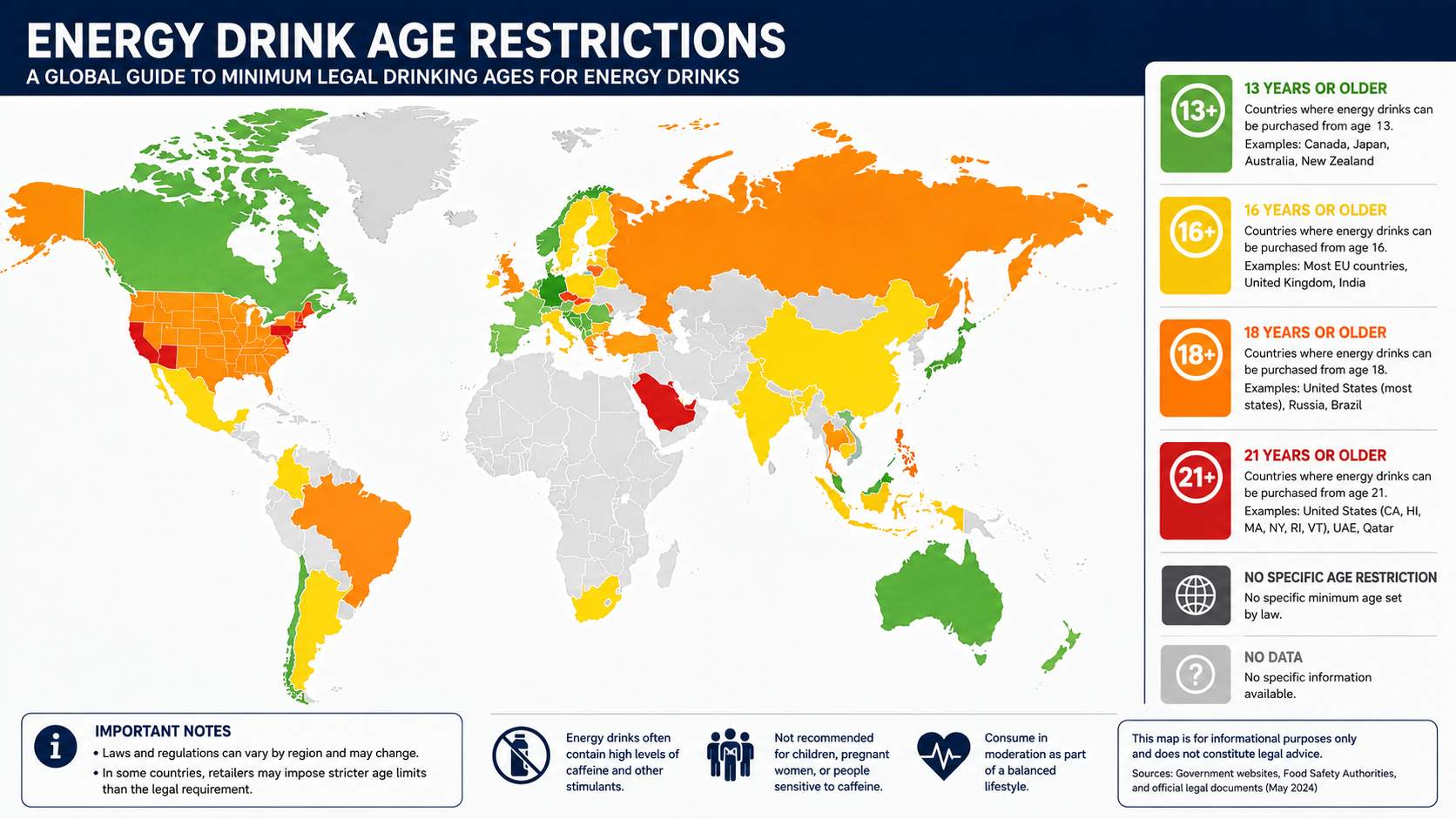
Which Countries Already Have Energy Drink Age Limits?.
Several countries now have national laws restricting the sale of energy drinks to young people, although the age limits vary.
Lithuania became the first country in the world to introduce a nationwide ban on selling energy drinks to anyone under 18 in 2014. Latvia followed with its own under-18 restrictions in 2016, introducing additional rules covering advertising, retail displays and sales in schools.
More recently, Poland and Romania introduced nationwide bans on sales to under-18s in 2024. Norway introduced a minimum purchasing age of 16 in 2026, making its approach similar to the new law coming into force in England.
Elsewhere, countries including Turkey, Kazakhstan, Kyrgyzstan and Uzbekistan also have national restrictions, while Spain has announced plans to introduce an under-16 ban.
Why Governments Are Taking Action.
Although the details vary from country to country, the reasons behind the legislation are remarkably similar.
Health authorities have raised concerns that excessive caffeine consumption among children can contribute to disrupted sleep, anxiety, headaches and reduced concentration in school. England's new legislation follows evidence that around 100,000 children consume an energy drink every day, with consumption generally higher in more deprived communities.
Many high-caffeine energy drinks contain well over 150mg of caffeine per litre, with some products providing caffeine levels comparable to two cups of coffee in a single serving.
Governments introducing restrictions generally argue that younger children are more sensitive to caffeine because their brains and bodies are still developing.
Europe Has No Single Rule.
One reason the rules differ is that there is currently no European Union law setting a minimum age for buying energy drinks.
Instead, individual countries decide whether restrictions are necessary. That has created a varied picture across Europe.
While Lithuania, Latvia, Poland and Romania have national bans, countries including France, Germany and Italy still have no nationwide age restriction, although some retailers voluntarily refuse sales to younger customers. Sweden also relies largely on voluntary supermarket policies rather than legislation.
For Newcastle residents travelling abroad, that means the rules can vary considerably depending on the destination.
What Does This Mean For Newcastle?.
The new law will affect convenience stores, supermarkets, cafés, restaurants, vending machines and online retailers throughout Newcastle and the North East.
Many of the region's major supermarkets already operated voluntary under-16 policies before the legislation was announced, but the new rules will now apply across all retailers.
Businesses selling drinks containing more than 150mg of caffeine per litre will be expected to carry out age verification, with local authorities responsible for enforcement. Retailers that fail to comply could face fines of up to £2,500.
For parents, schools and youth organisations across Newcastle, the legislation may also encourage more conversations about healthy hydration, sleep and balanced diets.
Will More Countries Follow?.
The international trend suggests further restrictions are possible.
The European Parliament has highlighted that more governments are considering age-based sales limits as research into caffeine consumption among children continues to develop. Several countries are reviewing proposals, while others have already expanded restrictions to include schools, vending machines and advertising aimed at children.
As awareness grows, England's new law may influence discussions elsewhere in the UK, with Scotland, Wales and Northern Ireland continuing to consider similar measures.
For Newcastle families, the changes represent another example of governments placing greater emphasis on children's health. Whether more countries follow England's approach remains to be seen, but the direction of travel is becoming increasingly clear as concerns about high-caffeine drinks continue to grow.
Share your opinions.
Do you think England has made the right decision by introducing an under-16 energy drink ban?
Political News
England Joins Global Energy Drink Crackdown From April 2027
Advertisement

Comments (0)
You must be logged in to post comments.
Don't have an account? Register here
No comments yet. Be the first to share your thoughts!