
Whether you're buying your first home in Newcastle, selling a property in Sunderland or renting a flat in Gateshead, you've probably come across an Energy Performance Certificate, better known as an EPC. While many people glance at the coloured A to G chart before moving on, an EPC can reveal far more than simply how energy efficient a property is.
With energy prices remaining a major concern for households across the North East, understanding EPC ratings has become increasingly important. A higher rating can often mean lower heating costs, improved comfort and greater appeal to buyers and tenants, while a lower rating may indicate that expensive improvements could be needed in the future.
According to the Office for National Statistics, the median EPC score for homes in England is 69, placing the average property in Band C, although performance varies depending on property age and location.
What is an EPC rating.
An Energy Performance Certificate measures how energy efficient a property is. Accredited assessors inspect factors including insulation, heating systems, windows, lighting and construction before producing a score between 1 and 100.
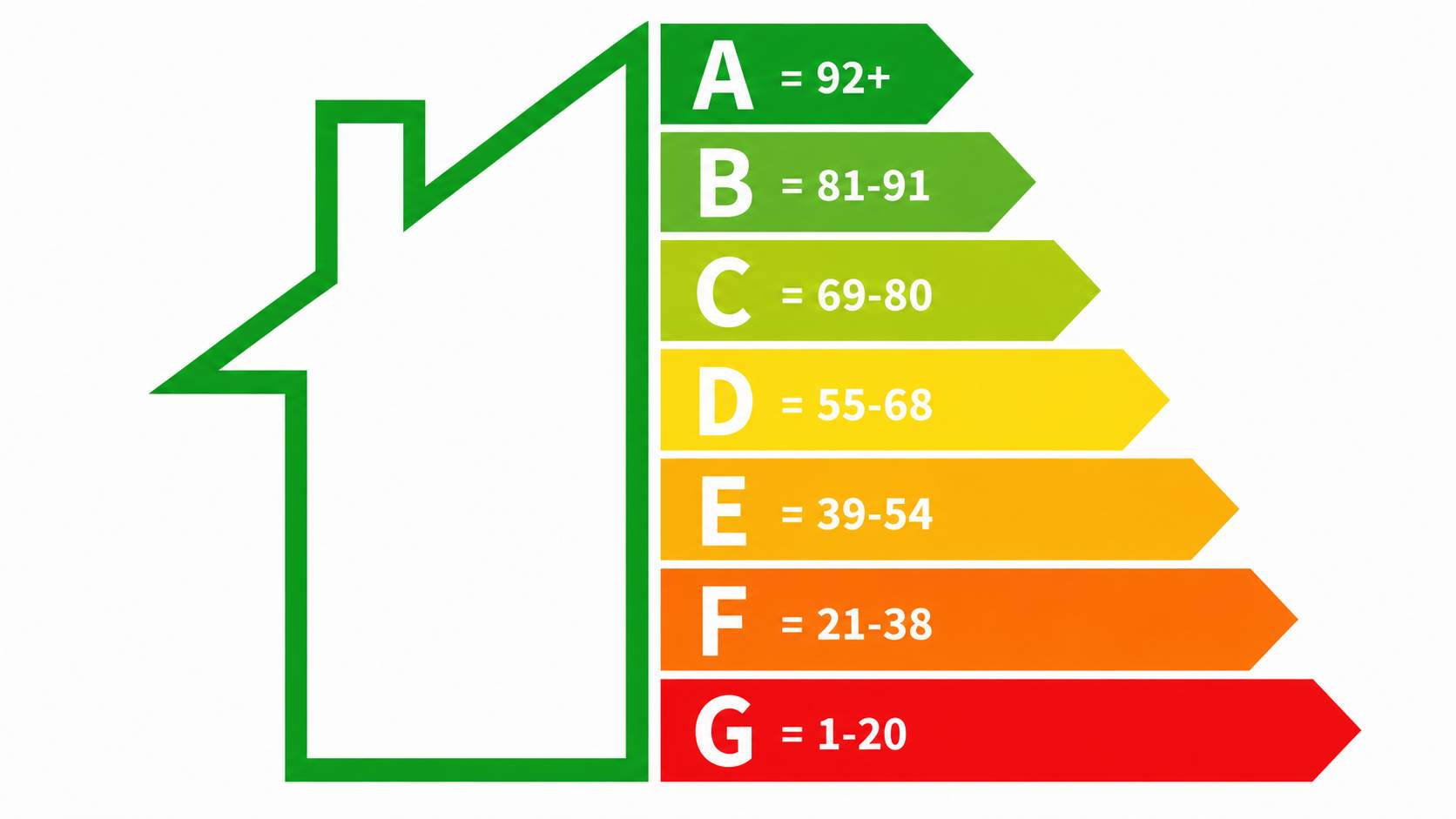
That score is then converted into a band:
Band A - 92 to 100
Band B - 81 to 91
Band C - 69 to 80
Band D - 55 to 68
Band E - 39 to 54
Band F - 21 to 38
Band G - 1 to 20
The certificate also estimates annual energy costs, carbon emissions and suggests improvements that could raise the property's rating. EPCs are generally required whenever a property is built, sold or rented and remain valid for 10 years.
Why EPC ratings matter in the North East.
The North East contains thousands of older Victorian terraces, Edwardian homes and post-war properties. While these homes offer plenty of character, many were built before modern insulation standards existed.
That often means older homes receive lower EPC ratings than newer developments unless improvements such as loft insulation, cavity wall insulation or upgraded heating systems have been installed.
For buyers, an EPC provides an early indication of likely heating costs. For landlords, minimum efficiency standards mean most rental properties must already achieve at least an EPC rating of E, with proposals continuing to focus on improving the efficiency of rented homes in future years.
How each EPC band affects household costs.
Although every property is different, EPC ratings have a significant impact on estimated annual energy bills.
A property rated Band A or B is likely to feature excellent insulation, efficient heating and modern glazing, resulting in much lower energy use.
Band C is considered good performance and is where many modern homes fall.
Band D, the most common rating for older UK homes, often indicates reasonable insulation but room for improvement.
Homes rated Band E, F or G generally lose heat more quickly, making them more expensive to heat during North East winters.
Independent comparisons suggest households living in a typical three-bedroom semi-detached property could see estimated annual energy costs rise from around £1,900 at EPC Band C to approximately £2,500 at Band D, more than £3,400 at Band E, and over £5,400 at Band G. Actual bills vary depending on occupancy, tariffs and usage, but the trend demonstrates how strongly energy efficiency influences running costs.
Can improving your EPC save money.
In many cases, yes.
Some of the most commonly recommended improvements include:
Loft insulation.
Cavity wall insulation.
Upgrading to an efficient boiler or heat pump.
Installing smart heating controls.
Replacing older lighting with LED bulbs.
Draught-proofing doors and windows.
Government EPC statistics show insulation and heating controls remain among the most frequently installed improvements across England and Wales, helping reduce energy use and improve ratings.
For many older homes in Newcastle, relatively modest upgrades can move a property up by one EPC band, improving comfort while reducing heating costs.
Do EPC ratings affect house prices.
Estate agents increasingly report that buyers are paying closer attention to energy efficiency than they did a decade ago.
Higher-rated homes can be more attractive because they usually cost less to run, while lower-rated properties may require future investment. Mortgage lenders are also beginning to introduce products that reward more energy-efficient homes.
Consumer organisation Which? has also called for improvements to the EPC system after highlighting cases where assessments contained inaccuracies, reminding homeowners to view EPCs as a useful guide rather than a perfect measurement.
Finding your home's EPC.
If you're unsure about your property's rating, you can search the Government's free online EPC register using your postcode.
The certificate provides an overall rating, estimated energy costs and practical recommendations that could improve efficiency over time.
Government data now includes millions of EPC records across England and Wales, giving homeowners access to detailed information about their property's energy performance.
Energy efficiency is becoming a bigger priority.
As energy prices continue to influence household budgets, EPC ratings are becoming more than just a document required during a property sale. They offer valuable insight into how efficiently a home performs, what improvements are worth considering and how much energy a household could potentially save.
For homeowners across Newcastle and the North East, understanding an EPC can make future renovation decisions easier while helping buyers and tenants better understand the likely running costs of a property. Whether your home sits in Band C or Band F, knowing where improvements can be made is the first step towards creating a warmer, more efficient and more affordable place to live.
Share your score.
Have you checked your home's EPC rating recently?
Local News
EPC Bands Explained in Simple Terms (And How To Find Yours)
Advertisement





Comments (0)
You must be logged in to post comments.
Don't have an account? Register here
No comments yet. Be the first to share your thoughts!