
Long-haul travel from Newcastle almost always involves a connection. The airport has direct services to a range of destinations, but the great majority of long-haul journeys from the North East run through a hub, whether that is Amsterdam, Paris, Dublin, Heathrow or one of the Gulf airports.
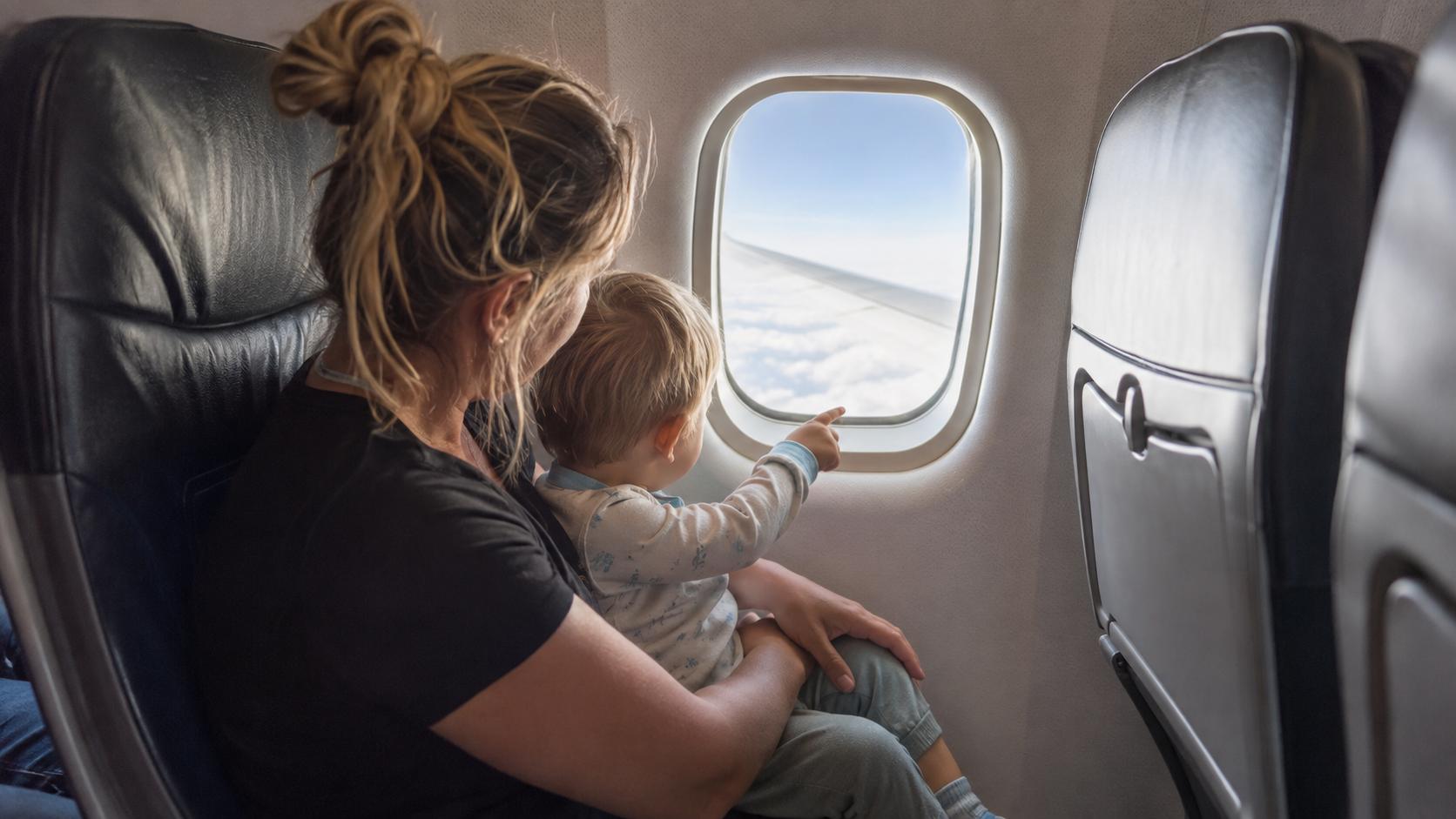
Adding a connection to a long flight with children changes the nature of the trip considerably, and most of what makes it survivable is decided before you leave the house.
Choosing the connection matters more than the airline.
The temptation is to book the cheapest itinerary, and the cheapest itinerary frequently has the tightest connection.
Minimum connection times published by airports assume a fit adult moving briskly with hand luggage. They do not assume a toddler who needs the toilet, a buggy to be collected at the aircraft door, or a five-year-old who has decided to have a meltdown at passport control.
Allow considerably longer than the minimum. Two hours is comfortable at most European hubs, and more is better if the connection involves changing terminals or clearing security again.
Book the whole journey on a single ticket wherever possible. If a connection is missed on a single ticket, the airline is responsible for rebooking you. If you booked two separate tickets and miss the second, you have simply lost it.
Consider which hub actually suits you. Some airports are far easier with children than others, with better facilities, shorter walks and play areas. Schiphol is generally well regarded on that count and is a short first hop from Newcastle.
Timing the flights.
Overnight long-haul sectors work well for some families and badly for others. Younger children frequently sleep well on a night flight, and arriving in the morning helps with adjusting to a new time zone.
Against that, a night flight after a full day is brutal if the child does not sleep, and nobody else on the aircraft is having a good time either.
Daytime flights are more predictable and easier to manage with entertainment and activity, at the cost of arriving exhausted.
There is no universally right answer, and parents who know their own child's sleep patterns should trust that knowledge over general advice.
Seats, bassinets and the things you have to ask for.
Bassinets for infants attach to bulkhead walls, are limited in number, have weight and length limits, and must be requested in advance. They are allocated on a first come basis and are worth phoning about rather than assuming.
Seat selection is worth paying for when travelling with children, because the alternative is being separated. Airlines are expected to seat children with an accompanying adult, but relying on that at the gate is a poor plan.
Children's meals must generally be ordered in advance and are frequently served before the main service, which is genuinely useful.
Extra legroom seats often cannot be occupied by children under a certain age for safety reasons, so check before paying for them.
Passports, visas and entry requirements.
Children need their own passports, and children's passports are valid for five years rather than ten, which catches families out regularly.
Check validity requirements for the destination, since many countries require a period of validity beyond the return date, commonly six months.
Electronic travel authorisations and visa requirements apply to children as well as adults, and are frequently overlooked because the parent only checks their own.
Where a child is travelling with one parent, or with a different surname, carrying documentation such as a birth certificate or a letter of consent from the other parent avoids difficult conversations at borders. Some countries actively require it.
The practical kit.
Take more changes of clothing than seems reasonable, for the child and at least one spare top for you. Anything that can happen on a twelve-hour flight will eventually happen.
Ear pressure on ascent and descent is the most common source of distress. Feeding, a bottle, a dummy, a drink or something to chew helps, and older children can be taught to swallow or yawn deliberately.
Download entertainment before leaving. Aircraft entertainment systems fail, and airport wifi will not save you at the gate.
Snacks that are not sugary, a refillable water bottle filled after security, wipes, medication in hand luggage with prescriptions, and a small bag of new and unfamiliar things to produce at strategic moments.
Buggies can generally be taken to the aircraft door and are returned there or at reclaim, which varies by airline and airport and is worth confirming.
Car seats are a decision worth making in advance, since checked car seats can be damaged and hire seats abroad vary in quality and legality.
Managing the time change.
Jet lag affects children and adults differently, and children frequently adjust faster if put onto local time immediately rather than being allowed to nap at odd hours.
Daylight is the strongest cue. Getting outside during the local day helps enormously.
Build a recovery day into the start of the holiday rather than scheduling something significant for the first morning.
Keep expectations modest.
Every parent who has done it will tell you the same thing: it is a day to be endured rather than enjoyed, and the holiday starts afterwards.
Cabin crew are generally sympathetic and have seen far worse than whatever your child does. Most other passengers are considerably less bothered than anxious parents imagine.
Share your thoughts.
What is your best tip for a long flight with young children?
Travel News
Flying Long-Haul With Children From Newcastle
Advertisement

Comments (0)
You must be logged in to post comments.
Don't have an account? Register here
No comments yet. Be the first to share your thoughts!