
For many visitors walking through Pink Lane today, the street appears to be little more than a busy route connecting Newcastle Central Station with the city centre's bars, cafes and independent businesses. Yet beneath its modern image lies one of Newcastle's most fascinating and controversial stories.
Pink Lane has existed for centuries and has witnessed everything from medieval fortifications and industrial expansion to crime, poverty and prostitution. During the Victorian era, the street developed a reputation that spread far beyond Tyneside, becoming associated with Newcastle's sex trade and attracting the attention of newspapers across Britain.
Its notoriety even led to an unexpected connection with one of the most infamous criminal mysteries in history, when a letter claiming to be from Jack the Ripper threatened to target prostitutes working on Pink Lane. More than a century later, the street's darker past continues to fascinate historians and true crime enthusiasts alike.
The Medieval Origins of Pink Lane.
Long before Pink Lane gained a reputation as part of Newcastle's red-light district, it played a role in the city's medieval defences. The lane dates back to the Middle Ages and ran alongside Newcastle's town walls. Its name originated from the nearby Pink Tower, one of the defensive towers that formed part of the city's fortifications.
The area was strategically important, helping people move between sections of the wall and providing access to key parts of the growing town. While much of the original structure has disappeared through centuries of redevelopment, remnants of Newcastle's medieval past can still be found nearby, including the remains of Gunner Tower.
As Newcastle expanded during the Industrial Revolution, the character of Pink Lane changed dramatically. The arrival of the railway station in the nineteenth century transformed the area into a bustling commercial district filled with hotels, pubs, lodging houses and businesses catering to travellers arriving in the city.
How Pink Lane Became Associated With Prostitution.
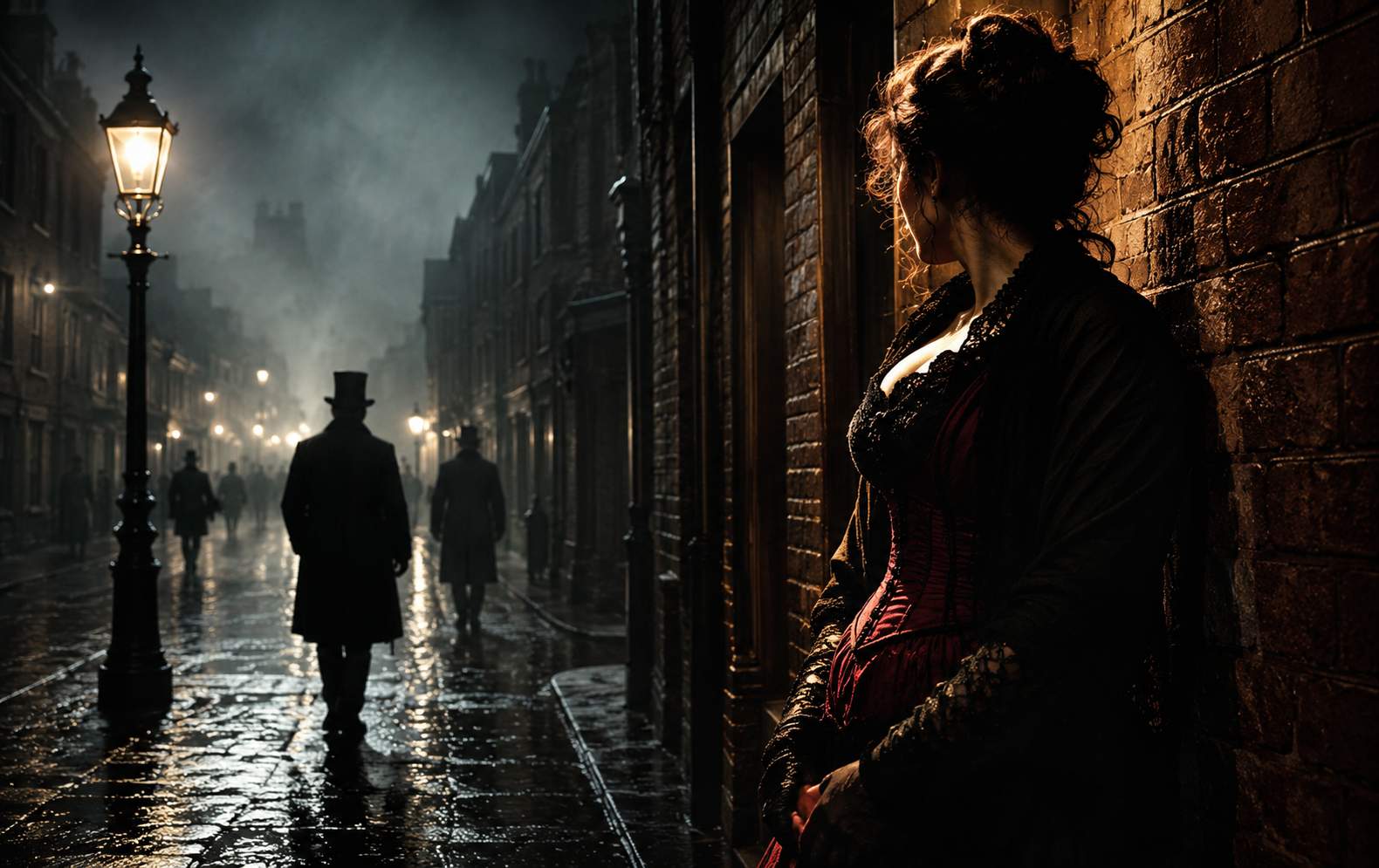
Like many districts surrounding major railway stations across Victorian Britain, Pink Lane became a hotspot for vice and prostitution.
The combination of transient visitors, sailors, labourers and businessmen created conditions in which prostitution flourished. By the late nineteenth century, Pink Lane had developed a reputation as one of Newcastle's most recognised red-light areas. Historical accounts regularly describe the street as a place where sex workers solicited customers, particularly during the evening hours.
Victorian Britain experienced widespread prostitution, driven largely by poverty and limited employment opportunities for women. The issue was not unique to Newcastle. In London's East End, authorities estimated there were approximately 1,200 prostitutes working in Whitechapel in 1888, operating from around 62 brothels.
While reliable figures for Newcastle are difficult to establish, historians generally agree that prostitution was a visible part of life in several parts of the city during the Victorian period. Pink Lane's proximity to transport links made it particularly attractive to those involved in the trade.
Many women entered prostitution through economic necessity. Employment options for working-class women were limited and often poorly paid. Domestic service, factory work and laundry jobs frequently provided insufficient income to survive, leading some women to supplement their earnings through sex work.
Victorian Newcastle's Reputation For Vice.
The growth of prostitution around Pink Lane reflected broader social issues affecting Victorian cities.
Rapid industrialisation created enormous wealth for some but left many others living in overcrowded and unhealthy conditions. Newcastle's booming industries attracted workers from across Britain, increasing demand for accommodation and entertainment while also contributing to social problems.
Newspapers of the era often portrayed districts associated with prostitution as dangerous places filled with criminal activity. Although such reports were sometimes exaggerated, there were genuine concerns about theft, violence and public disorder.
Police patrols frequently monitored areas where prostitution was common. Authorities struggled to balance public concerns with the practical reality that prostitution remained widespread despite efforts to control it.
Pink Lane's reputation became deeply embedded in local folklore, and by the late nineteenth century it was widely recognised throughout Newcastle as a centre of nightlife and vice.
When Jack The Ripper's Name Reached Newcastle.
Perhaps the most intriguing chapter in Pink Lane's history came during the height of the Jack the Ripper panic in 1888.
The Whitechapel murders in London dominated newspaper headlines and generated intense public fear. The unidentified killer targeted women involved in prostitution, leading to widespread speculation and countless hoaxes.
In October 1888, the Newcastle Evening Chronicle received a letter supposedly written by Jack the Ripper. The writer claimed he intended to travel north and murder prostitutes in Newcastle. According to reports, the letter specifically stated that Pink Lane would be the starting point for the killings.
The message claimed the writer would "put away about 12 of the prostitutes that walk Newcastle's streets" and identified Pink Lane as his first target.
Although the letter is now widely regarded as a hoax, it caused understandable concern at the time. The Ripper murders had already gripped the public imagination, and any suggestion that the killer might move to another city generated fear and sensational headlines.
The fact that Pink Lane was specifically mentioned demonstrated just how well known its reputation had become.
More Ripper Communications Linked To Newcastle.
The October 1888 letter was not the only communication linking Newcastle to the Jack the Ripper mystery.
In January 1889, Newcastle's mayor received another bizarre letter. This time, the writer claimed to be a friend of Jack the Ripper and offered information that could supposedly help authorities identify the killer. The letter described the Ripper as an escaped American lunatic and claimed he had recently spent time in Newcastle before leaving because of the cold weather.
Whether the writer possessed any genuine knowledge remains highly doubtful. Like many Ripper letters sent throughout Britain, it was almost certainly the work of a hoaxer seeking attention.
The scale of the phenomenon was extraordinary. Historians estimate that police investigated thousands of leads connected to the Whitechapel murders. More than 2,000 people were interviewed, over 300 individuals were investigated and around 80 suspects were detained during the inquiry.
The flood of letters, rumours and false sightings created an atmosphere of fear that extended far beyond London.
Why Prostitutes Were Central To The Ripper Story.
The connection between Pink Lane and Jack the Ripper was not accidental.
Most of the victims associated with the Whitechapel murders were women involved in prostitution. Historians generally identify five victims as the "canonical five", although several other murders were investigated as potentially connected.
Because prostitution was common in many industrial cities, local communities worried that similar crimes could occur elsewhere. Areas like Pink Lane naturally became focal points for those fears.
The murders also sparked broader debates about poverty, women's safety and living conditions in Britain's poorest districts. Public concern eventually helped draw attention to overcrowded housing and social deprivation, contributing to later reform efforts.
The Decline Of Pink Lane's Red-Light Reputation.
Throughout the twentieth century, Pink Lane gradually changed.
Urban redevelopment, changing social attitudes and increased regulation reduced the visibility of prostitution in the area. Newcastle's city centre evolved significantly, and many of the conditions that had supported Victorian red-light districts disappeared.
By the late twentieth century, Pink Lane had become better known for its pubs, music venues and independent businesses than for the activities that once defined its reputation.
Investment in Newcastle city centre further transformed the area. Historic buildings were restored, new businesses opened and the street developed a more diverse identity.
While prostitution did not vanish entirely from Newcastle, the city's sex trade became less concentrated in a single location and increasingly moved away from the traditional street-based model that characterised the Victorian era.
What Visitors Can See Today.
Despite its controversial history, Pink Lane remains one of Newcastle's most historically significant streets.
Visitors can still trace elements of its medieval heritage through surviving fragments of the town wall and nearby historical landmarks. The area's architecture offers clues about the different periods that shaped the street's development.
For local historians, Pink Lane serves as a reminder of how cities evolve. It illustrates the complex relationship between economic growth, social challenges and urban change.
The stories associated with the lane also reveal how quickly reputations can form. What began as a medieval route beside a defensive wall eventually became known across Britain as a centre of prostitution and vice before emerging once again as a thriving part of the modern city.
Why Pink Lane's Story Still Fascinates Today.
Few streets in Newcastle can claim such a varied history.
From medieval towers and railway expansion to prostitution, crime and unexpected links to the Jack the Ripper legend, Pink Lane reflects many of the forces that shaped Victorian Britain. Its story combines local history with one of the world's most enduring true crime mysteries, helping explain why it continues to attract interest from researchers and visitors alike.
While much has changed since the nineteenth century, the historical significance of Pink Lane remains. Understanding its past offers a deeper appreciation of Newcastle's development and the social realities that once existed behind the city's bustling streets.
Have you heard stories about Pink Lane's past or explored its historic landmarks?
Newcastle History
From Medieval Defences to Prostitution: Pink Lane's Remarkable History
Advertisement


Comments (0)
You must be logged in to post comments.
Don't have an account? Register here
No comments yet. Be the first to share your thoughts!